Explore Topics & Reading Guides
Explore Queens history, Freemasonry, symbolism, the liberal arts, and classical stories.
Choose a reader’s guide for an introduction, browse a historical index, or begin a connected article series. You do not need to read everything in order. Start with the place, question, or story that interests you.
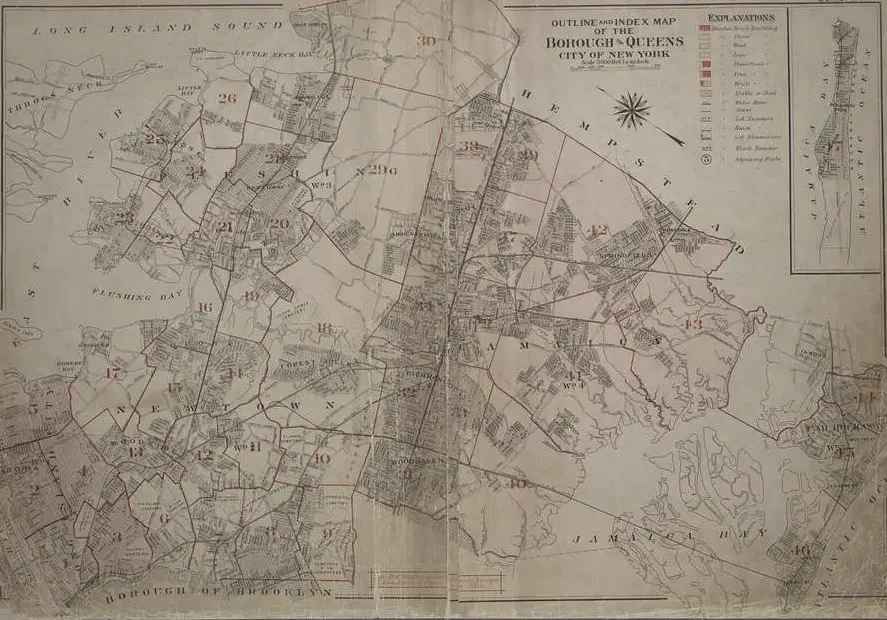
Queens & New York City History
Discover the neighborhoods, waterways, transportation routes, people, and institutions behind modern Queens—and their connections to the wider city.
Start with Queens History: A Reader’s Guide
Neighborhoods & Places
- Queens Neighborhood History Index
- Astoria Before the Skyline
- How Long Island City Was Created in 1870
- Early Newtown, Queens: From Mespat to Modern Queens
- Flushing, Queens
- Far Rockaway: A Queens History Hub
Waterways, Transportation & Change
- Queens in Motion: Ferries, Rails, Roads, and the Shape of a Borough
- The Water Was the First Street
- Jamaica Bay: Nature, Industry, and the Lost Edge of New York
- Bowery Bay and the Poor Bowery: Queens Before the Airport
- Rikers Island Before the Jail
Understanding Freemasonry
What is Freemasonry? Why does it teach through stones, tools, and symbols? What separates the pursuit of understanding from the pursuit of a title?
Begin with the reader’s guide, or follow these three pairs of introductory essays. Within each pair, read Part 1 before Part 2.
Start with Freemasonry: A Reader’s Guide
What Freemasonry Is
- Part 1 — From Anderson’s Constitutions to the Symbolic and Observant Lodge
- Part 2 — Ritual, Symbol, and Moral Formation
Why Masons Talk in Stones, Tools, and Symbols
Some Men Want Light. Some Just Want a Title.
Masonic History, Lodges & Buildings
Explore Freemasonry through its people, records, meeting places, and local institutions. These histories connect the life of the lodge with the changing communities around it.
Historical Indexes
- Queens History and Freemasonry
- The History of Masonic Lodges in Queens
- Masonic Buildings in Queens: Temples, Lodge Rooms, and Lost Meeting Places
- Notable Freemasons of Queens
Selected Lodge Histories
- Advance Service Mizpah Lodge No. 586: A Living Inheritance of Six New York Lodges
- Advance Lodge No. 635
- Island City Lodge No. 586 and the Temple That Served the City
- City Lodge No. 408
Masonic Symbols & Symbolic Thinking
Why teach through a stone, a working tool, a pair of pillars, or a carefully arranged room?
This thirteen-essay series explores how Freemasonry uses objects, spaces, ritual, and relationships to raise questions about character, attention, responsibility, and fellowship. Its concern is not simply what a symbol means, but how thinking with it might influence what we notice and how we act.
Begin Masonic Symbols & Symbolic Thinking — Series Introduction & Reading Order
Selected Essays from the Series
- Why Masons Talk in Stones, Tools, and Symbols: From Working Tools to Inner Work
- Rough and Perfect Ashlar: The Masonic Work of Self-Improvement
- The Two Pillars
- The Working Tools
- Why the Lodge Room Is Laid Out Like a Map of the Mind
- Why Symbols Say Things Plain Language Cannot
Related Reading
The Twenty-Four-Inch Gauge, Benjamin Franklin, and the Problem of Time connects the measuring rule with questions about time and daily conduct.
Ideas, Symbols & the Liberal Arts
How do we learn to think carefully, speak responsibly, and recognize the difference between understanding and merely repeating an opinion?
Explore connected essays on language, reason, geometry, harmony, symbolic interpretation, and the work of education.
Start with Ideas & Symbols: A Reader’s Guide
Start with a Series
- The Liberal Mind and the Crowd — Liberal Arts, Education, and Moral Independence
- The Work of Light — Caves, Understanding, and Return
Explore Individual Questions
- What the Liberal Arts Are For
- Grammar and the Moral Life
- Logic Against the Lie
- Rhetoric and the Responsible Tongue
- The Quadrivium and the Recovery of Order
- Geometry, Architecture, and Moral Proportion
- Music in the Lodge
- The Tree, the Ladder, the Road, and the Labyrinth
Philosophy & Classical Stories
Begin with a story. Follow the questions it raises.
These series explore desire, courage, judgment, love, responsibility, and the examined life through classical stories and philosophical interpretation. No background in philosophy or Freemasonry is required.
Start with Philosophy & Classical Stories
Choose a Series
- Plato — The Chariot Within
- Heracles — Heracles Within: The Labors of the Soul
- Odysseus — The Long Way Home: Ulysses, the Soul, and the Philosophy of Return
- Jason and the Argonauts — The Golden Fleece Within
- Cupid and Psyche — The Soul and Love
- Prometheus — Bound to the Rock
- Apuleius and The Golden Ass — The Ass and the Soul
- Aeneas — Aeneas Below the Earth
- Orpheus and Eurydice — Don’t Look Back Yet
- Hermes — Hermes at the Crossroads
Benjamin Franklin: Time, Notes & Self-Education
Explore practical questions about using time, examining conduct, preserving useful ideas, and taking responsibility for your own learning.
Begin with Benjamin Franklin, Journaling, Time, and Self-Education
Continue Reading
- The Twenty-Four-Inch Gauge, Benjamin Franklin, and the Problem of Time
- Benjamin Franklin’s Daily Routine: Journaling, Virtue Tracking, and Self-Improvement
- Benjamin Franklin, Commonplace Books, and the Discipline of Keeping Useful Notes
- Benjamin Franklin’s Self-Education and the Discipline of Learning for Yourself
Fraternal Orders & Esoteric Traditions
Explore related organizations and ideas through historical context, local institutions, and careful distinctions between traditions.
- Secret Societies, Fraternal Orders, and Esoteric Traditions in Queens
- The Lodge, the Thoughtform, and the Work — An Introduction to the Egregore Series
Browse the Complete Collection
Looking for a particular article, or prefer to explore without a suggested reading path?
For work published elsewhere, visit Publications & Selected Writing.