Bound to the Rock
Prometheus, Suffering, and the Liberation of the Higher Self
Prometheus is remembered as the thief of fire. But he is also Forethought: the power that sees ahead, gives humanity skill, and pays dearly for knowledge that outruns obedience. Bound to a rock, wounded each day by an eagle, and finally freed by Heracles, he becomes one of antiquity’s most difficult images of suffering, endurance, intelligence, and liberation.
Prometheus is usually introduced as the man who stole fire from the gods.
This is memorable, but incomplete.
His name means Forethought. He is the figure who sees ahead. He plans. He anticipates. He makes tools, arts, skills, and civilization possible. In one ancient tradition, he gives humanity fire; in another, he gives it technical knowledge, practical arts, numbers, letters, medicine, navigation, and the ability to shape the world rather than merely endure it.
This makes him admirable.
It also makes him dangerous.
Forethought can give humanity fire.
Wisdom must still decide what humanity does with it.
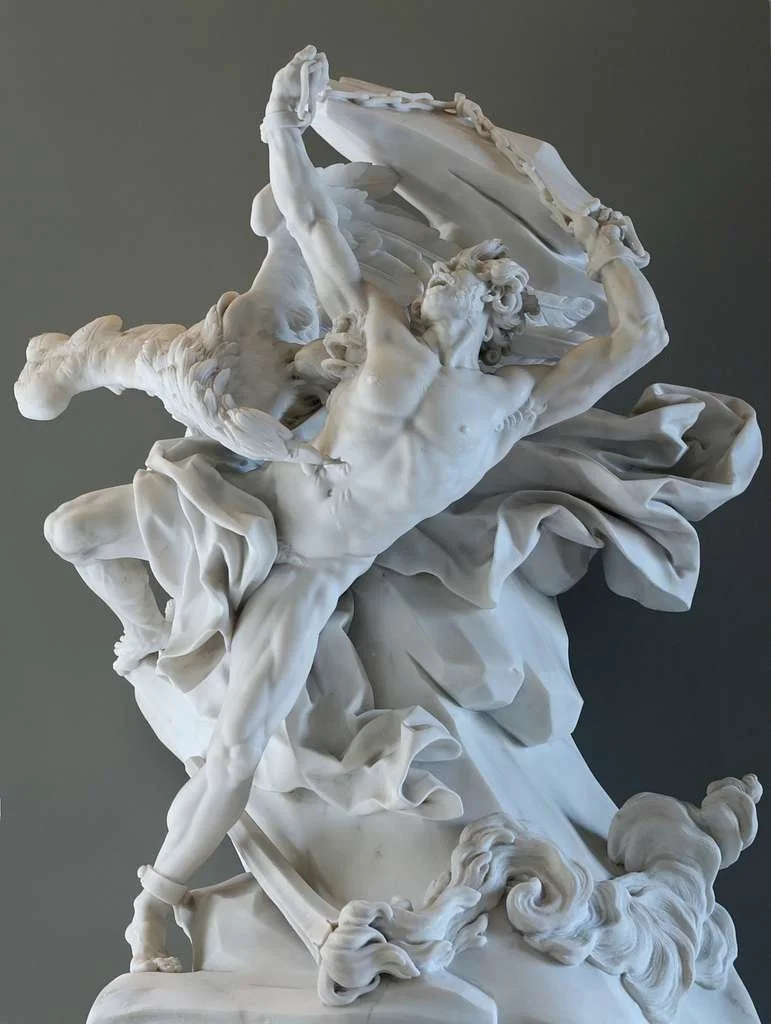
Prometheus’ punishment is severe. Zeus has him chained to a rock. An eagle comes each day and consumes his liver. The liver grows back. The eagle returns. The pain is not a single blow but a recurrence. The wound heals only so that it can be opened again.
Eventually, Heracles kills the eagle and frees Prometheus.
In the late Platonic tradition, especially in Damascius’ interpretation of the Prometheus–Heracles story in his commentary on Plato’s Phaedo, this myth becomes more than divine punishment and heroic rescue. It can be read as a drama of the soul: the higher rational or foreseeing element bound within mortal conditions, repeatedly afflicted by the forces of necessity, and finally liberated by a heroic power capable of breaking what has held it captive.[1][1]
This series does not claim that Damascius supplied a neat code in which eagle equals one modern psychological problem and chain equals another. Late Platonists did not reduce myths to a single flat meaning. They treated myths as capable of operating at several levels at once—cosmic, divine, ethical, psychological, and ritual.
But the philosophical question remains clear:
What happens when the highest part of a person remains alive, aware, and capable of foresight, yet is bound by conditions it cannot simply wish away?
This is Prometheus’ question.
It is also ours.
The series
Forethought, technical intelligence, fire, and the dangerous distinction between what human beings can do and what they ought to do.
Recurring suffering, repeated wounds, and the difficult work of living with what does not disappear after one act of courage.
Strength becomes moral when it liberates rather than dominates. Heracles’ rescue of Prometheus offers an ancient image of freeing the higher self from bondage.
A late Platonist’s approach to myth, necessity, providence, and the soul’s liberation through a world that remains difficult but not meaningless.