Benjamin Franklin’s Self-Education and the Discipline of Learning for Yourself
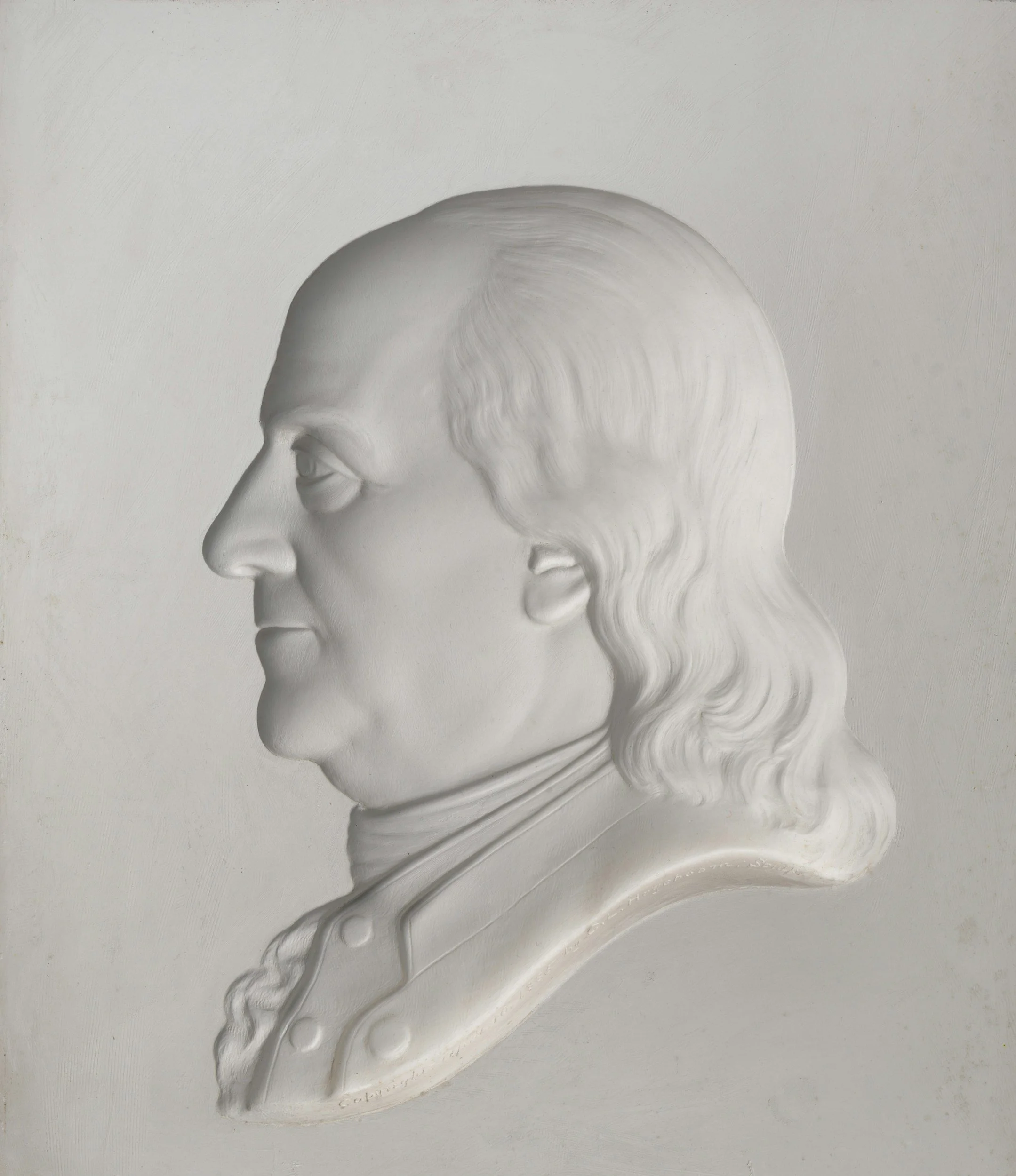
With little formal schooling, Benjamin Franklin built himself through reading, imitation, writing, and relentless curiosity. His life remains a practical example of self-education by method rather than by accident.
Benjamin Franklin’s Self-Education and the Discipline of Learning for Yourself
Benjamin Franklin is often remembered as a printer, inventor, diplomat, and founder. What is easier to overlook is how much of his education he gave himself.[1]
He had only limited formal schooling. Money was short, and his time in school ended early.[1] But lack of schooling did not produce resignation in him. It produced method. Franklin read what he could find, studied how good prose worked, and treated learning less as a credential than as a discipline.
That distinction still matters. Many people admire learning in the abstract. Fewer build a structure for it.
A Short Schooling and a Long Education
Franklin’s formal education was brief, but his informal education was extensive.[1] Apprenticed young in his brother’s printing shop, he gained access to books, pamphlets, newspapers, and arguments. He did not merely consume them. He used them.
This is an important difference. Reading can be passive entertainment, or it can be active formation. Franklin read with the ambition to understand and to improve.
Biographical summaries of his early life regularly note the narrow limits of his schooling and the breadth of what he taught himself afterward.[2] The usual lesson drawn from this is that Franklin was exceptionally gifted. That is true, but incomplete. He was also disciplined.
How Franklin Taught Himself to Write
One of the most revealing passages in Franklin’s Autobiography describes how he improved his writing.[1] He would read strong essays, reduce them to hints, set them aside, and later try to reconstruct the argument in his own words. He also converted prose into verse and then back into prose to expand his vocabulary and flexibility.
This is not romantic inspiration. It is training.
Franklin understood that admiration is not the same as imitation, and imitation is not the same as practice. He built exercises that forced him to notice structure, sequence, diction, and clarity.
Modern readers often want better writing through exposure alone. Franklin wanted it through repetition and effort.
The Printing Shop as a School
The printing shop gave Franklin more than employment. It gave him an education in language, persuasion, and public argument.[1]
In such a setting, reading and writing were not isolated academic tasks. They were connected to trade, controversy, and public life. A sentence had to do something. It had to inform, persuade, provoke, or clarify.
That practical context matters because Franklin’s learning was never entirely detached from use. He learned in order to do.
Self-Education Requires Selection
One challenge in self-education is not only finding material, but deciding what deserves attention. Franklin benefited from exposure to authors who sharpened his judgment and enlarged his range.[2]
Reading widely is useful, but reading indiscriminately is not the same thing. Franklin’s example suggests that self-education improves when a reader asks:
What is worth rereading? What is worth imitating? What is worth writing down? What should be practiced, not just admired?
Those questions convert reading from consumption into study.
Curiosity Was Not Enough
Franklin was deeply curious, but curiosity alone does not produce mastery. It can scatter attention as easily as it can deepen it.
What made Franklin formidable was that he paired curiosity with procedure.[1] He built habits. He set exercises. He revisited material. He made learning visible through work.
That is why his example remains useful. Self-education is often spoken of as freedom, and it is. But it is also discipline. Without structure, curiosity tends to dissipate.
The Enduring Lesson
Franklin’s life does not prove that formal schooling is unimportant. It proves that education cannot be reduced to schooling.
A person can leave school and stop learning. A person can also leave school and begin educating himself in earnest.
Franklin did the second. He read actively, wrote deliberately, practiced imitation, and used each stage of learning to strengthen the next.[1] His example still offers a plain but demanding lesson: if you want to learn for life, you must do more than admire knowledge. You must work at it.
Notes
- [1] Benjamin Franklin, Autobiography, for Franklin’s account of his early schooling, apprenticeship, reading habits, and writing exercises.
- [2] See also modern summaries of Franklin’s self-education, including Benjamin Franklin’s Self-Education: The Blueprint for Lifelong Learning, FluentCards, and James J. Dillon, “Benjamin Franklin: A Wonder-Based Approach to Life and Learning,” University of West Georgia.