Don’t Look Back Yet
Orpheus, Eurydice, and the Discipline of Return
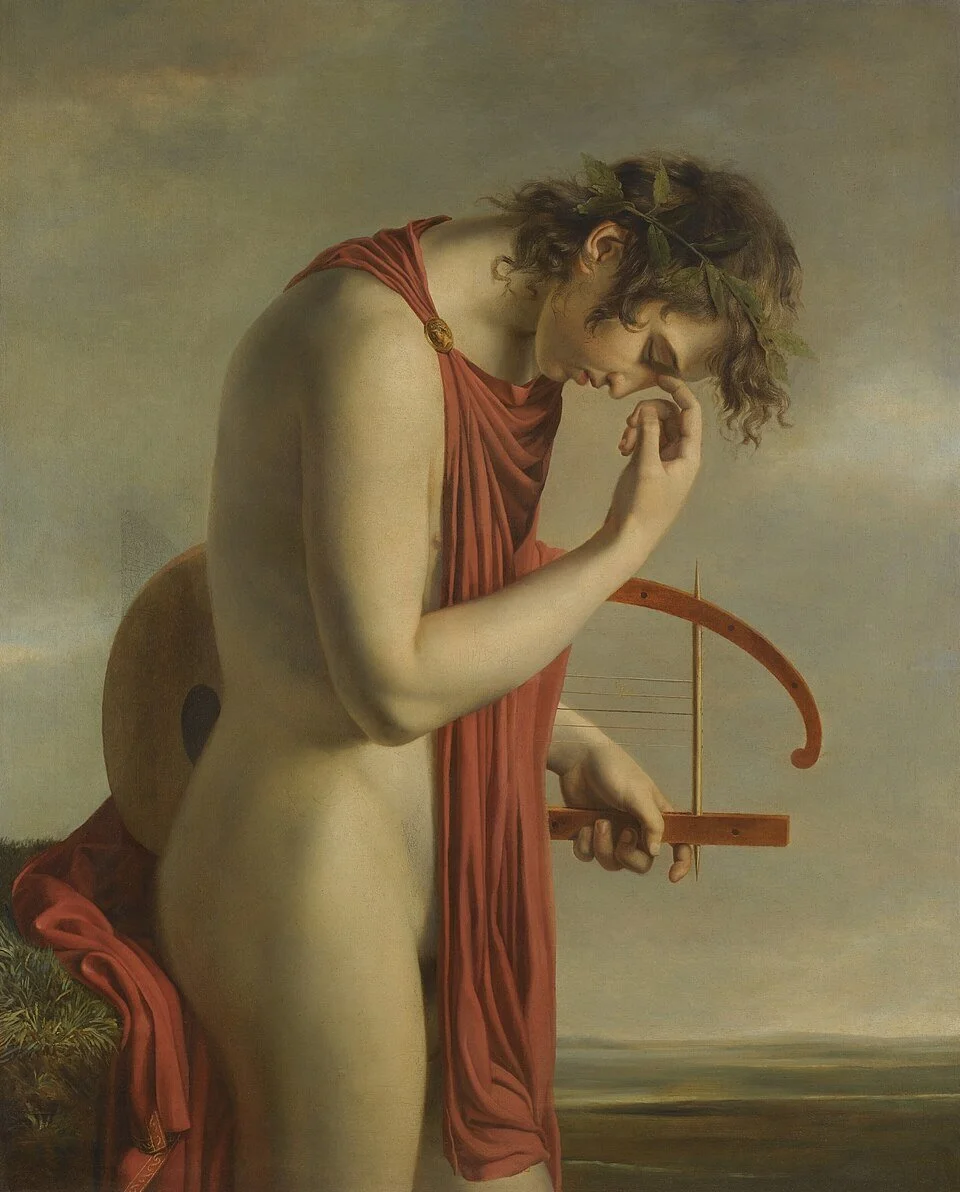
Orpheus can charm stones, trees, animals, and the rulers of the dead. Yet he cannot master one final impulse: the need to look back before the work of return is complete. His story asks whether grief can become music, whether love can survive possession, and whether a person can trust a path he cannot yet fully see.
Orpheus can do what no other Greek hero can do.
Heracles can defeat monsters. Odysseus can outthink danger. Jason can gather a fellowship. Daedalus can build what no one else can build.
Orpheus can sing.
His music moves stones. Trees follow him. Animals gather. The Argonauts receive order from his song. In later tradition, even the rulers of the dead listen. He descends into the underworld for Eurydice, sings before Hades and Persephone, and wins an impossible concession.
She may return to the world of the living.
There is one condition.
He must walk ahead of her.
He must not look back.
Orpheus walks.
Then, near the end, he turns.
Eurydice is gone.
The story is so simple that it has been retold for centuries. It is also so difficult that no retelling can finish it. Why did Orpheus look back? Doubt? Love? Impatience? Fear? Possessiveness? The need to be certain? The inability to trust a promise that had not yet become visible?
The myth does not answer neatly.
That is why it survives.
The series question
Can a person carry grief forward without trying to possess what has already been lost?
This series uses Orpheus and Eurydice as a philosophical story of music, grief, trust, memory, descent, and return. It also explores the ancient associations between Orpheus, the soul, afterlife, purification, music, and Platonic thought.
The historical caution is important.
The Orpheus–Eurydice myth does not survive as a single ancient Platonic allegory comparable to Porphyry’s interpretation of the Cave of the Nymphs. “Orphism” is not one unified doctrine, and the relationship among Orphic poems, mystery traditions, Plato, and later Platonists is complicated. Olympiodorus’ late antique claim that Plato borrows widely from Orpheus tells us much about late-Platonic reception, but it does not prove that every Platonic teaching came from a single Orphic source.[1][1]
That complexity is not an obstacle. It is the subject.
Orpheus became a figure through whom ancient and later thinkers explored:
The power of music to order the soul.
The relation between death and memory.
The descent of the soul into difficult conditions.
The longing for return.
The danger of looking backward before the work of return is complete.
The possibility that harmony can educate desire.
The limits of human art before grief, mortality, and fate.
The series
Orpheus, harmony, and the ancient idea that the soul can be tuned.
The underworld journey as grief, knowledge, courage, and the refusal to let loss remain unexamined.
Doubt, impatience, possession, and the desire for proof before trust has ripened.
A careful philosophical reading of Eurydice as memory, beauty, wholeness, or the part of the self that cannot be recovered through force.
What the ancient evidence actually supports about Orphic influence, purification, rebirth, and the soul.
Music, proportion, concord, and the ethical role of harmony in a fellowship of distinct people.