The Liberal Mind and the Crowd
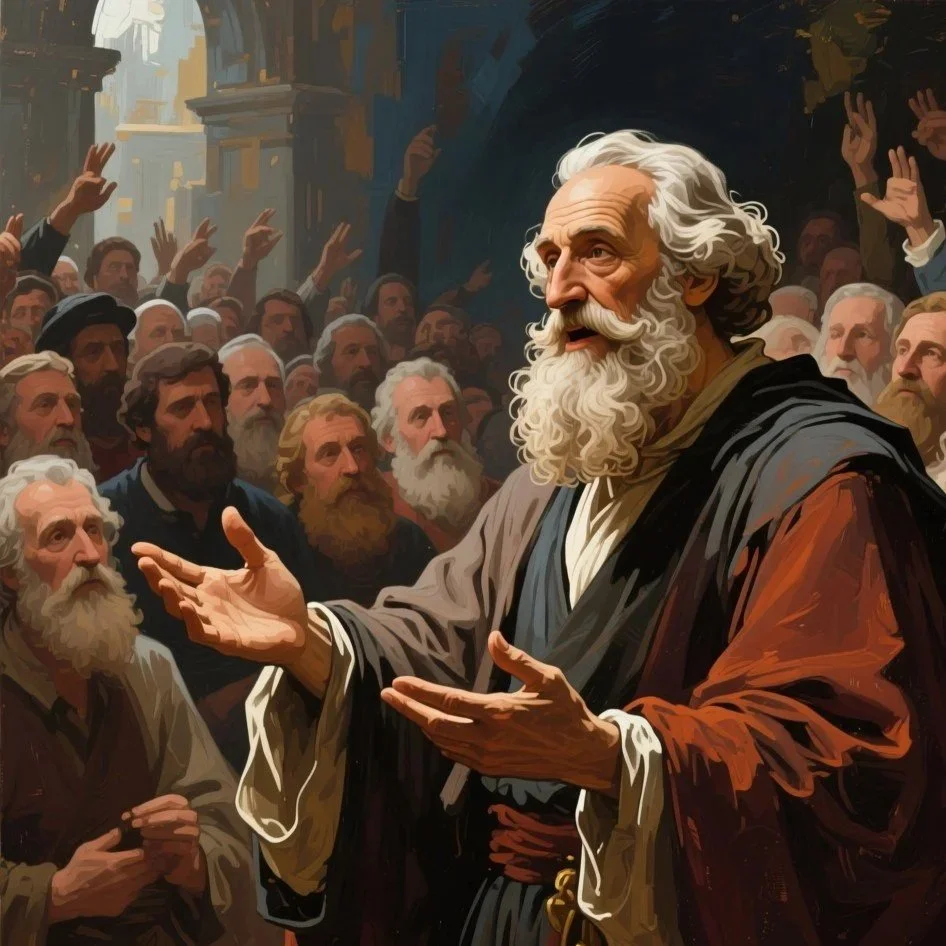
A twelve-part series on the liberal arts, moral independence, and the Masonic task of becoming a person who can think, judge, and stand upright amid the pressures of the age.
Series Introduction
Every age has its machinery of distraction. Ours happens to be fast, portable, persuasive, and nearly continuous. It trains reaction more easily than reflection and rewards alignment more quickly than judgment. Under those conditions, the old ideal of a free mind can begin to sound quaint.
It is not quaint. It is urgent.
This series argues that the liberal arts are not educational ornaments or relics of a vanished curriculum. They are disciplines of mental and moral freedom. Properly understood, they help form a person who can read carefully, reason soundly, speak truthfully, resist manipulation, and remain a person in the presence of the crowd.
That aim belongs naturally to Freemasonry.
At its best, Masonry does not ask a man merely to join, repeat, or identify. It asks him to work: to refine judgment, govern speech, cultivate proportion, and become less available to vanity, confusion, and imitation. Its symbols point beyond ceremony toward formation. The same is true of the liberal arts. Both are concerned with what kind of mind and character a man is building within.
The essays that follow move from first principles to modern pressures. They begin with the meaning of liberal education, then explore language, logic, rhetoric, solitude, conformity, mass society, scientific discipline, and the difference between genuine self-improvement and public performance. Along the way, they draw on classical, Christian, and modern voices — among them Cicero, Seneca, Marcus Aurelius, Hugh of St. Victor, Tocqueville, Kierkegaard, Bonhoeffer, and Arendt.
The subject, finally, is not academic fashion.
It is human freedom.
A man who cannot examine words will be governed by them.
A man who cannot test an argument will mistake force for truth.
A man who cannot endure solitude will become dependent on the noise of his time.
And a man who cannot stand inwardly on his own feet will bring very little of himself into brotherhood, citizenship, or faith.
The crowd will always exist. So will slogans, vanities, and approved opinions. The question is whether one has built any inner chamber from which such things may be judged.
That is the work of liberal education.
It is also, in no small part, the work of Masonry.
The twelve essays in this series move from first principles to modern pressures, examining how the liberal arts and the Masonic ideal of self-formation help a man become more capable of judgment, contemplation, and inward freedom.
IN THIS SERIES
1. What the Liberal Arts Are For
An introduction to liberal education as the formation of a free person — one capable of judgment, self-command, and resistance to the pressures of the crowd.
2. Grammar and the Moral Life
A reflection on how careful attention to language forms verbal honesty, mental clarity, and the habits of thought on which moral seriousness depends.
3. Logic Against the Lie
An argument for logic as a discipline of intellectual conscience that helps a person resist contradiction, manipulation, and self-deception.
4. Rhetoric and the Responsible Tongue
A study of persuasion as both a danger and a necessity, and of how speech may be governed by truth rather than vanity or effect.
5. Leisure Is Not Idleness
An exploration of leisure as the inward freedom necessary for contemplation, study, friendship, worship, and the recovery of a fully human life.
6. Tocqueville and the Soft Despotism of the Crowd
A warning from Tocqueville about how democratic societies can produce conformity, dependency, and the quiet weakening of independent judgment.
7. Kierkegaard and the Untruth of the Crowd
A meditation on the crowd as a refuge from personal responsibility and on the difficult work of becoming a self in earnest.
8. Hannah Arendt and the Banality of Evil
A reflection on how evil can proceed through thoughtlessness, cliché, and the surrender of judgment rather than through dramatic wickedness alone.
9. Bonhoeffer and the Problem of Stupidity
An examination of Bonhoeffer’s claim that stupidity can be more dangerous than evil when people lose the capacity for independent judgment.
10. The Quadrivium and the Recovery of Order
A reconsideration of arithmetic, geometry, music, and astronomy as disciplines that train the mind in proportion, harmony, and reality beyond preference.
11. Solitude, Silence, and the Inner Chamber
A defense of solitude as one of the necessary conditions for reflection, conscience, prayer, and freedom from the noise of the age.
12. The Work of Becoming Unavailable to the Crowd
A concluding essay on the lifelong task of becoming inwardly substantial enough not to be easily absorbed by fashion, fear, vanity, or managed opinion.
Related Articles
- What Freemasonry Is: Ritual, Symbol, and Moral Formation
- Rough and Perfect Ashlar: The Masonic Work of Self-Improvement
- Why Masons Talk in Stones, Tools, and Symbols: From Working Tools to Inner Work
- The Middle Chamber of the Mind
- The Work of Light Series
- Why the Lodge Room Is Laid Out Like a Map of the Mind