The Ass and the Soul
Apuleius on Curiosity, Humiliation, and Becoming Human Again
Lucius wants secret knowledge, experimental magic, and the thrill of becoming something more than himself. He gets turned into a donkey. Ancient literature can be remarkably direct.
Lucius wants to become a bird.
This is understandable. Birds fly. They see the world from above. They belong to the air rather than the road, the stable, the tax collector, the landlord, or the household schedule. A bird is free in the way a restless young man imagines freedom: light, elevated, admired, and not required to explain itself to anyone.
Lucius has heard that a woman named Photis knows magic. He wants to see what she can do. Then he wants to do it himself. He watches her transform into an owl, obtains the ointment, applies it enthusiastically, and waits for wings.
He gets hooves.
Instead of becoming a bird, Lucius becomes an ass.
The mistake is comic. The consequences are not.
Lucius retains his human mind. He can think, remember, judge, fear, hope, resent, and regret. But he loses speech, status, bodily autonomy, ordinary dignity, and the ability to tell anyone that he is not merely an animal.
He is beaten, overloaded, exploited, sold, threatened, humiliated, and passed through a world in which everyone assumes he is exactly what he appears to be.
This is the joke.
It is also the philosophical point.
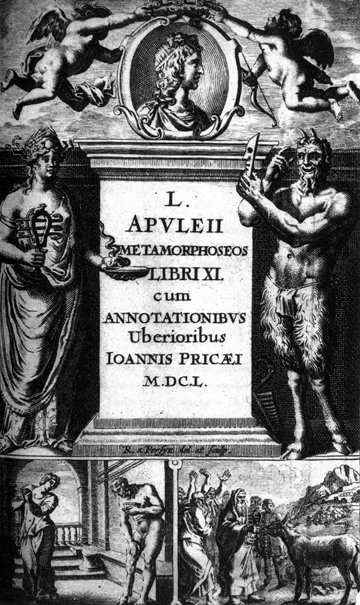
Apuleius’ Metamorphoses, commonly called The Golden Ass, is a comic novel, a tale of magic and adventure, a satire on curiosity and social life, a story of religious transformation, and a work written by an author who identified himself as a Platonist. It should not be reduced to a single allegory. Lucius is not simply “the soul,” the ass is not simply “the body,” and Isis is not simply a philosophical concept in a veil. The novel is too rich, too funny, too bawdy, and too alert to human absurdity for that.[1]1
Yet the narrative invites philosophical reflection.
What happens when a person seeks transformation without wisdom?
What does it mean to retain human intelligence while living under the rule of appetite, fear, humiliation, and external circumstance?
Can humiliation reveal truths that pride has kept hidden?
What does restoration require once a person has been returned to himself?
These are not merely questions for a man with ears.
A historical guardrail
Apuleius’ novel contains Platonic, religious, comic, folkloric, satirical, and literary elements. The final books present Lucius’ devotion to Isis and Osiris in language that deserves historical respect. It should not be flattened into generic self-help, a simplistic “pagan baptism,” or a fixed Neoplatonic formula.
This series therefore distinguishes among:
The narrative of Lucius in Apuleius’ Metamorphoses.
Apuleius’ own Platonist identity and the novel’s philosophical possibilities.
Ancient ideas about appetite, body, soul, curiosity, transformation, and virtue.
A modern philosophical reading of Lucius’ ordeal.
A careful Masonic comparison focused on humility, self-mastery, symbolic education, responsibility, and the recovery of human dignity.
The purpose is not to turn Lucius into a Mason in donkey form. The purpose is to ask why a man who seeks to become extraordinary must first learn what it means to become human.
The series
Lucius seeks power, novelty, and transformation without wisdom. The result is a lesson in the difference between freedom and escape.
Lucius wants hidden knowledge. But curiosity becomes dangerous when it seeks spectacle, status, and possession rather than truth.
Lucius retains his reason while losing his human form. The comedy becomes a study of appetite, fear, vulnerability, and the lower life of the soul.
Lucius loses control, status, speech, and dignity. Humiliation does not automatically make him wise, but it destroys several illusions pride had made comfortable.
Lucius is restored through divine mercy, ritual obedience, gratitude, and a new manner of life. The question becomes not merely whether he has regained his body, but what kind of human being he will now become.
Psyche learns that love cannot be possessed. Lucius learns that humanity cannot be taken for granted. Together, the two tales form Apuleius’ great comedy of the soul.