Heracles Within: The Labors of the Soul
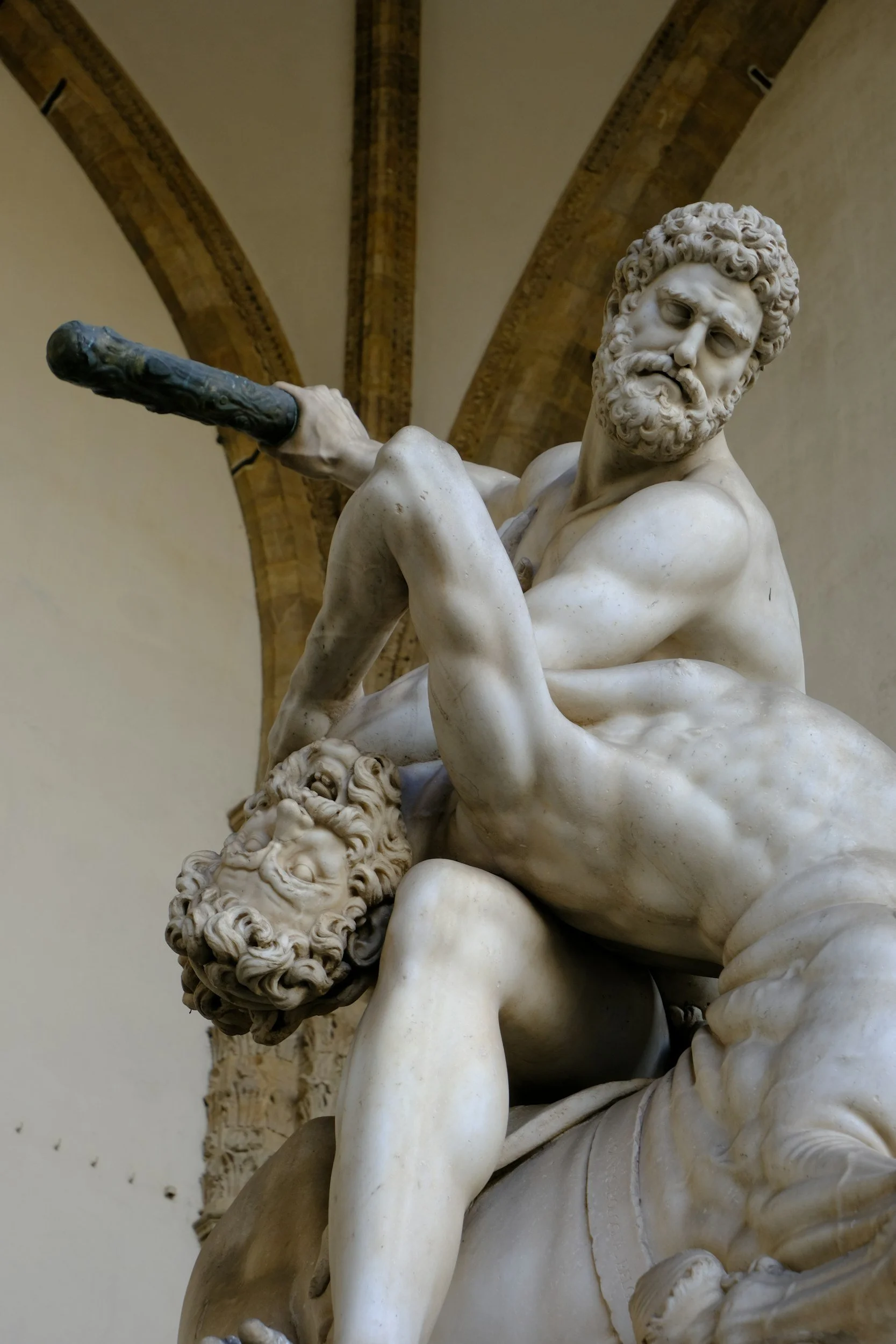
The Twelve Labors have been treated as feats of muscle for so long that we have nearly missed the more unsettling possibility: the monsters live indoors. From ancient Stoics and moral allegorists to Plotinus and Porphyry, philosophers found in Heracles a drama of self-command, service, purification, and the divided human soul.
Series introduction
Heracles was never merely the fellow with the club, the lion skin, and an unfortunate talent for attracting very large animals.
Ancient readers found in him something more durable: a person who is forced to work on himself by working in the world. The monsters are real enough in the story—lions, bulls, serpents, tyrants, an underworld dog with too many heads—but they also invited a second reading. What if the beast is appetite? What if the wilderness is the ungoverned soul? What if the final ascent to Olympus is not an escape from life, but the discovery that one’s truest life had been obscured by fear, anger, vanity, and pain?
This series follows that question through ancient moral allegory, Stoicism, Platonism, and Neoplatonism. It also makes a cautious connection with the Masonic reader: not because the Greek myths secretly “are” Masonry, nor because every old story was an initiation manual in disguise, but because both traditions ask what a human being must do to become better material for the work of life.
Article 1
The First Monster Is Already Inside the House
Long before modern psychology gave us a vocabulary for compulsion, rage, self-sabotage, and bad habits with excellent PR departments, ancient moral allegorists saw Heracles’ monsters as images of disorders within the human soul.
Article 2
The Soul as Wilderness: Dio Chrysostom’s Heracles
Dio Chrysostom imagined the unexamined soul as a trackless country filled with wild beasts. Heracles’ true achievement, he argued, was not merely to civilize the earth but to make his own heart gentle.
Article 3
Heracles at the Crossroads: Why Virtue Never Promises an Easy Route
Before the Labors, ancient moral tradition placed Heracles at a more basic trial: the choice between a life of ease and a life of difficult, useful excellence.
Article 4
Hercules Had Two Addresses: Plotinus and the Divided Soul
Why does Homer place Heracles both among the gods and as a shade in Hades? Plotinus turned the paradox into one of Neoplatonism’s most striking images of human double nature.
Article 5
From Good Citizen to Contemplative: Plotinus’ Ladder of Virtue
For Plotinus, ordinary decency matters enormously—but it is not the end of the journey. Civic virtue orders the self; purificatory virtue frees it; contemplation turns it toward what is highest.
Article 6
The Pyre on Oeta: What Heracles Leaves Behind
Heracles’ final fire is not merely an ending. Through Plotinus’ divided-soul image and the later Neoplatonic ladder of virtue, the death on Mount Oeta becomes a meditation on what must be shed—and what may endure.