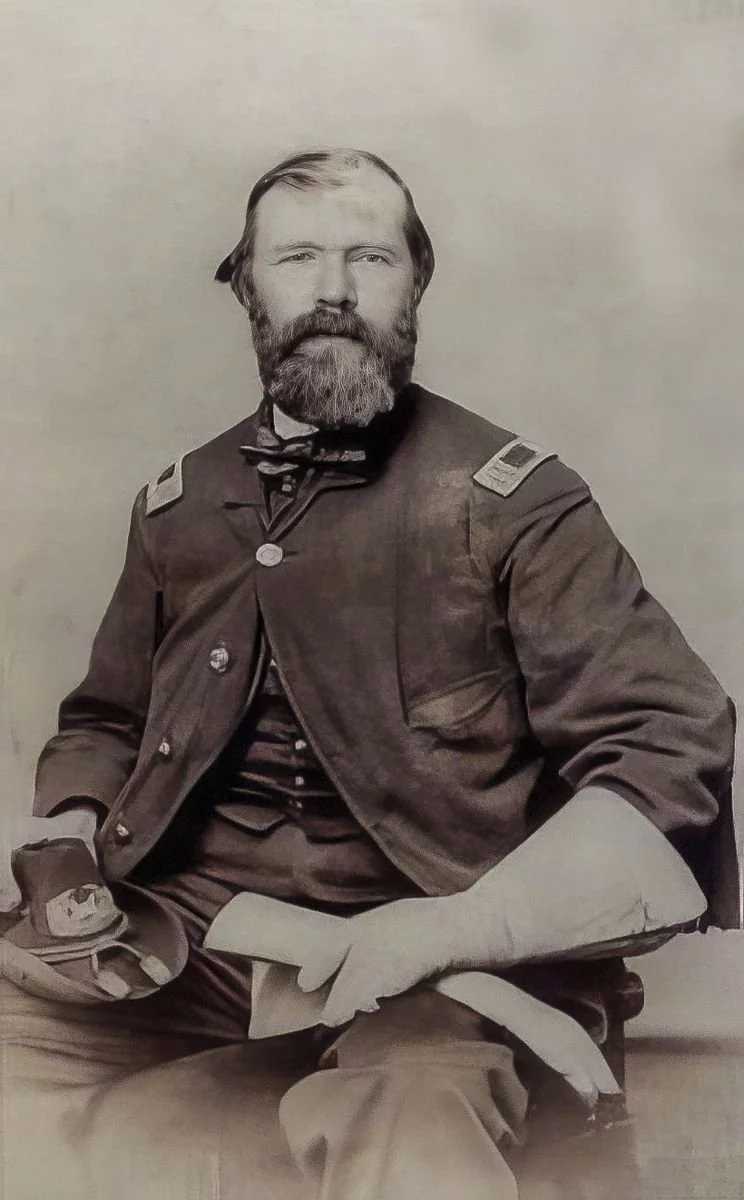
From the reefs beside Astoria to the waterways of the Civil War, Benjamin S. H. Maillefert made a career of working where others could scarcely see. His story survives in patents, newspaper reports, military photographs, and the records of an Astoria lodge — and perhaps in an extraordinary artifact recovered from a Georgia river.
A dangerous passage
Before federal engineers tunneled beneath the East River, Benjamin Maillefert tried to clear its dangerous rocks from above.
His equipment was comparatively simple: a boat, a means of locating the submerged rock, a charge of gunpowder, and an electric battery. The obstacle was not.
At Hell Gate, powerful tidal currents swept through a passage broken by reefs and rocky projections. Ships traveling between Long Island Sound and New York Harbor had to negotiate hazards close to Astoria’s shore.
An Army Corps of Engineers history of Hell Gate describes the passage’s notorious combination of submerged obstructions and conflicting currents. Clearing it promised safer navigation and a more useful route for commerce.
Maillefert’s proposal was direct: lower a powder charge onto the rock and fire it electrically.
The results would be harder to control.
From Barcelona to the East River
Born in Barcelona, Spain, Maillefert became known in the United States for underwater blasting and engineering experiments. His biographical entry places him among the early figures who attempted to improve navigation through Hell Gate.
His work belonged to a period when private inventors and contractors could take on problems that would later demand sustained government investment.
The Corps history credits a New Yorker named E. Meriam with collecting contributions from merchants to support the early Hell Gate work. Before the great federal demolition projects, the attempt to remove the rocks depended on private initiative.
Maillefert supplied the method.
Powder on the rock
Maillefert’s approach avoided drilling holes into the submerged rock before placing the explosive.
Instead, a charge rested on the surface. Water surrounding the charge provided resistance to the explosion, allowing the blast to act against the rock beneath it.
His U.S. Patent No. 8,776, issued March 2, 1852 concerned this method of blasting underwater.
The distinction matters. Maillefert should not be credited with inventing electrical detonation itself. His patent described electrical firing underwater as already known; his claim concerned the placement of the charge without drilling.
For a contractor working in difficult currents, avoiding the boring operation offered an obvious practical attraction. But placing and firing explosives from boats introduced dangers of its own.
An explosion and an inquest
In March 1852, an explosion killed workers and left Maillefert badly injured.
The New York Herald of March 30 reported an inquest in Astoria. Its opening named Captain Southard and Joseph Martin as dead and said that another man, Whalen, had not been found. Maillefert’s condition was serious enough that the coroner took his testimony at his bedside.
The newspaper’s headline announced his “entire exoneration.”
A later account, reproduced in the Corps history, describes an accident involving the firing wires and a 125-pound powder charge. It reports three deaths and injuries to Maillefert and his assistant.
The accounts should not be treated as interchangeable. The Herald excerpt documents the immediate investigation and its reported finding. The later history supplies a more detailed explanation of the accident.
Without the full inquest testimony, the precise sequence remains a subject for further research. The consequences do not: men had died, and Maillefert had narrowly survived the work.
Gains measured in feet
The blasting nevertheless removed rock.
The Corps history describes improvements at Pot Rock and other obstructions. Such gains mattered in a passage where a few feet of additional clearance could affect whether a vessel passed safely.
Yet removing a projection was not the same as clearing a broad reef to a dependable depth.
Surface blasting had limits. The work also faced currents, shipping traffic, and the difficulty of positioning charges over a bottom that could not readily be inspected.
Federal money followed the privately supported experiments. The Corps history records a congressional appropriation of $20,000 for continued work under army engineers. That funding was exhausted without resolving the larger problem.
Maillefert had demonstrated a useful method. He had not solved Hell Gate.
An inventor of Astoria
Another patent places him unmistakably in the neighborhood beside the passage.
His 1858 diving-bell patent identifies him as “of Astoria, New York.”
The invention addressed a different underwater problem: how divers could move between the bell and the surface without repeatedly raising the entire apparatus.
Its stated purpose was to permit divers to leave the bell and reach the surface under their own control, reducing the labor involved in lifting the equipment.
The patent offers a revealing connection between his projects. Maillefert was interested not only in breaking submerged rock, but in making underwater work more practicable.
Astoria was more than a location near one of his contracts. It appeared in the formal record of his inventive life.
An Astoria lodge connection
Maillefert’s place in Astoria also survives in the history of Advance Lodge No. 635.
The lodge and Grand Lodge records summarized for this project identify him as a charter member. Those records give July 3, 1867, as the date of the warrant and July 5 as the first meeting under it.
The connection adds a civic dimension to a career otherwise documented largely through engineering work.
The patent identifies where he lived. The lodge records place him within an organized local association. Together, they help recover Maillefert as a participant in Astoria’s community, not simply a contractor who worked in the nearby river.
They do not, by themselves, explain his friendships, business relationships, or influence within the lodge. Those questions belong to the minutes, correspondence, and membership records still to be examined.
The war on the James
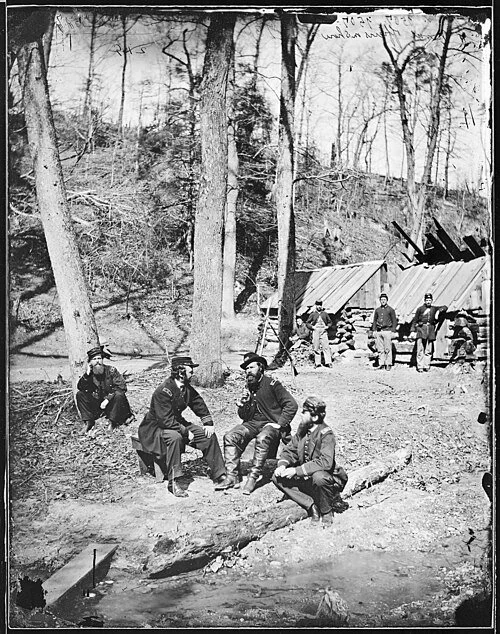
During the Civil War, Maillefert’s underwater experience brought him into work with Union forces.
A 2025 Civil War News article by William Griffing, drawing on an October 1864 letter from Maillefert’s partner Levi Hayden, describes their involvement in removing obstructions and working with torpedoes.
The article places the partners with Burnside’s North Carolina expedition in 1862 and on the James River in 1864. It describes work involving boom torpedoes, channel defenses, and submerged obstructions.
Those activities should not be expanded into a claim that Maillefert invented the weapons concerned. The evidence assembled for this article supports his practical involvement with them.
Official engineering reports also place him at Dutch Gap, where Union forces attempted to create a canal across a bend in the James.
One report referred to “Professor Maillefert, now on duty with the navy” and his representations that explosive charges could deepen the water. Another recorded continued blasting work in January 1865.
Photographic records preserve another part of that service. Captions identify him with naval officers at the “Sleepy Hollow” torpedo station on the James during the closing period of the war, in connection with removing Confederate torpedoes.
A separate stereograph identifies “Prof. Maillefert” in the foreground at Dutch Gap after the bank had been blown out.
These records show a civilian specialist whose skills were useful to military operations. They do not establish a military rank.
The work that followed
Maillefert’s firm later returned to Hell Gate.
His New York Times obituary recalled a contract involving Pot Rock and Sheldrake Reef and judged the result less than satisfactory. The supplied newspaper transcription is damaged around the contract dates and depth measurements, so those figures are not repeated here.
The larger transition is clearer.
In January 1867, according to the Corps history, John Newton was assigned to study the removal of Hell Gate’s obstructions. The subsequent work moved beyond surface charges to excavation beneath the reefs.
Hallett’s Point was blasted in 1876. Flood Rock followed on October 10, 1885.
The scale had changed: tunnels, sustained federal investment, and carefully distributed explosives replaced the comparatively modest operations of the earlier period.
Maillefert’s contribution belonged to that earlier phase. Its importance does not require assigning him credit for the later achievements.
A possible survivor in Georgia
One of the most intriguing possible connections to Maillefert lies far from Astoria.
A nineteenth-century diving bell recovered from Georgia’s Chestatee River became the subject of historical and archaeological investigation.
According to the Lumpkin County Historical Society’s account, the bell was used in an effort to recover gold from the riverbed. The apparatus and its boat appeared in 1875 and sank in October 1876.
The society reports that maritime archaeologist James Delgado examined photographs and researched historical patents and illustrations. He theorized that the bell bore the hallmarks of Maillefert’s 1858 patented design.
That is a possible design connection—not proof that Maillefert built the apparatus, owned it, or participated in the mining venture.
Even with that qualification, the comparison is compelling. The Astoria patent describes a proposed solution to underwater work. The Georgia artifact preserves an actual machine built for such work.
Whether the two can be connected more firmly remains a question for the documentary and archaeological evidence.
A death before the great blast
The New York Times reported Maillefert’s death in its August 12, 1884, obituary column.
The transcription supplied for this article gives his death at Thomasville on August 8, in his seventy-first year. The state abbreviation is damaged in the OCR and should be checked against the original newspaper image.
The obituary remembered his surface-blasting experiments and the firm’s work at Hell Gate.
Fourteen months later, Flood Rock was demolished.
Maillefert did not live to see it.
His story survives in a different collection of traces: a patent naming Astoria, a newspaper report of a fatal accident, a lodge’s founding records, military photographs, and a possible resemblance between an inventor’s drawing and a machine recovered from a river.
None makes him the solitary conqueror of Hell Gate. Together, they reveal a more interesting figure: an engineer whose practical experiments crossed the boundaries between navigation, invention, warfare, and community life.
Sources and research note
This article draws on contemporary patents, newspaper material supplied for the project, an institutional engineering history, and the additional records identified below.
Sources linked in the article
U.S. Army Corps of Engineers, New York District, “The Conquest of Hell Gate”. A retrospective institutional history, including material from Claude Rust’s 1971 account.
[U.S. Patent No. 8,776, March 2, 1852](US8776A - Improvement in blasting rocks under water - Google Patents)
Maillefert’s underwater-blasting patent.
- [U.S. Patent No. 19,785, “Diving-Bell,” March 30, 1858](US19785A - Diving-bell - Google Patents)
Identifies Maillefert with Astoria and describes the diving-bell arrangement.
Lumpkin County Historical Society, “The Chestatee River Diving Bell”. Describes the recovered artifact and Delgado’s proposed connection to Maillefert’s patent.
“Benjamin Maillefert,” Wikipedia. Used provisionally for the Barcelona birthplace; an underlying biographical source is preferred for the final research apparatus.
Additional sources to link or complete
New York Herald, March 30, 1852, page 4, “The Explosion and Loss of Life at Hurlgate.” The present account uses the headline and opening excerpt described in the supplied research.
The New York Times, August 12, 1884, page 2, obituary of Benjamin S. H. Maillefert. The supplied OCR requires comparison with the newspaper image.
Grand Lodge of New York and Advance Lodge No. 635 charter and membership records. Exact record titles and page or folio references are to be added.
William Griffing, “Through the Lens: One of the Fiercest Fights,” Civil War News, September–October 2025, pages 34–37. Direct link and citation to be confirmed.
Official Records engineering reports concerning Maillefert’s work at Dutch Gap. Original pages and complete report details are to be added.
Original photograph catalog records for the Sleepy Hollow torpedo station and Dutch Gap. Repository links and complete captions are to be added.
The lodge and military passages are retained from the supplied research pending completion of their citations. The proposed connection between the Chestatee artifact and Maillefert’s patent is presented as a theory, not a settled attribution.
Double-click to edit...



