Queens Neighborhood History Index
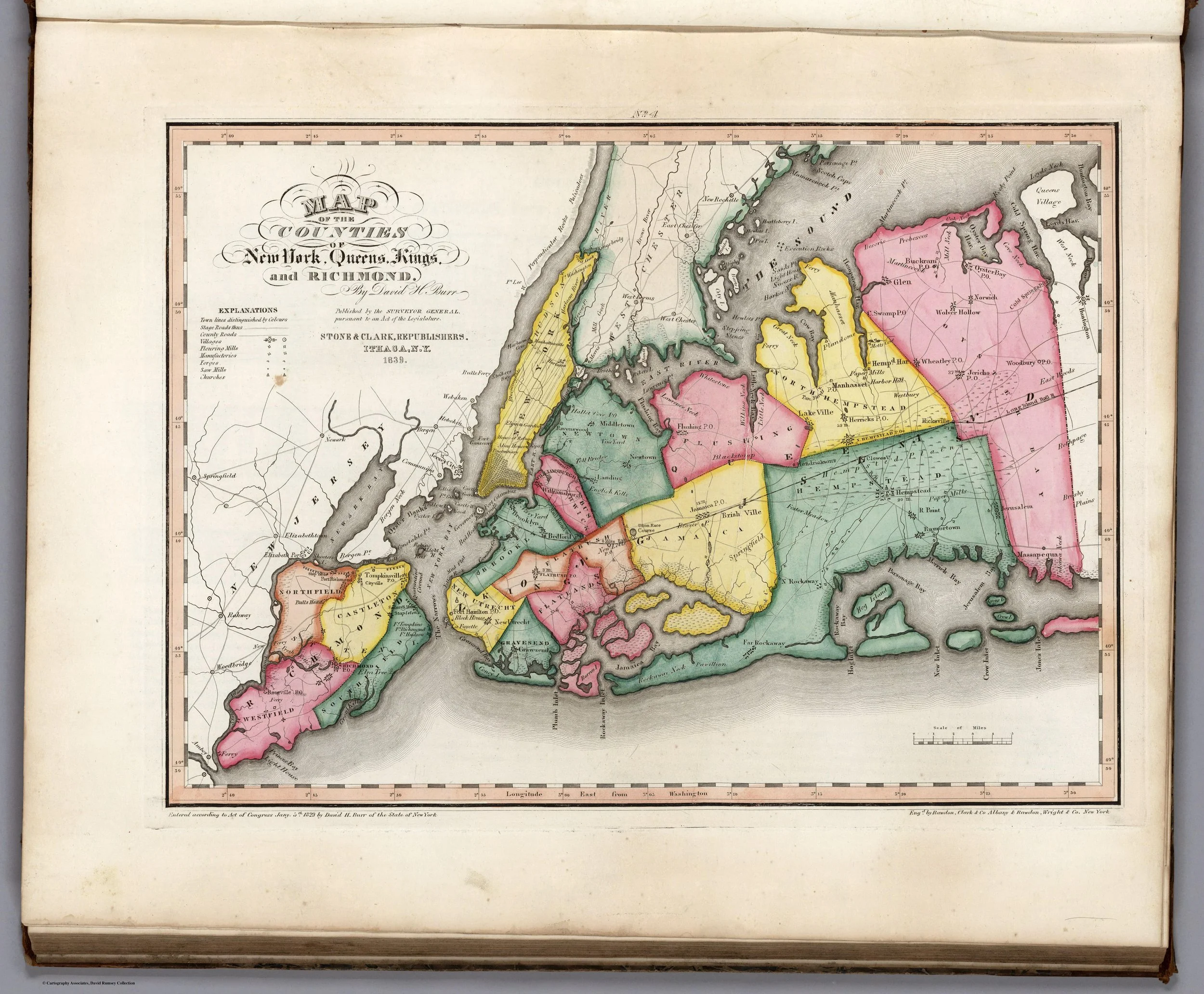
Counties of New York, Queens, Kings & Richmond, by D.H. Burr, c. 1839. David Rumsey Map Collection.
Queens is a borough of neighborhoods with distinct histories, identities, and patterns of development. Some communities have colonial roots, while others emerged through industrialization, transportation growth, planned development, and urban expansion. Understanding Queens means understanding these places individually as well as collectively.
This page gathers neighborhood history articles in one place and highlights the local settings in which institutions such as Masonic lodges developed.
Explore the Neighborhood Histories of Queens
Flushing
Flushing is one of the oldest and most historically significant communities in Queens. Its history provides essential context for the study of local institutions, civic continuity, and long-term neighborhood development.
Suggested link: Flushing-queens-history
Long Island City
Long Island City was created in 1870 from several distinct western Queens communities. Its history is central to understanding urban growth, industrialization, and institutional development in the borough.
Suggested link: How-long-island-city-was-created-1870
Hunter’s Point
Hunter’s Point is one of the historic communities that shaped the rise of Long Island City and western Queens more broadly. Its development reflects waterfront industry, transportation, and changing local identity.
Suggested link: History-of-hunters-point
Dutch Kills
Dutch Kills occupies an important place in the history of western Queens. Its transformation helps explain the industrial and urban history of the area and its integration into Long Island City.
Suggested link: History-of-dutch-kills-queens
Ravenswood
Ravenswood offers another perspective on the layered local history of western Queens. Its story belongs to the broader development of the East River communities that later became part of Long Island City.
Suggested link: History-of-ravenswood-queens
Blissville
Blissville is one of the historic communities whose identity helps illustrate the complexity of Queens before later consolidation and redevelopment. Its history is especially valuable in understanding neighborhood survival and local memory.
Suggested link: History-of-blissville-queens
Newtown
Newtown is one of the foundational historic towns of Queens. Its early settlement history provides important background for understanding Elmhurst, Maspeth, and the broader interior development of the borough.
Suggested link: History-of-newtown-queens
Astoria
Astoria grew from waterfront landings, estates, industry, and later urban development into one of the best-known communities in western Queens. Its history helps explain major changes along the East River shore.
Suggested Link: History-of-astoria-queens
Steinway
Steinway shows how industry could shape an entire community in Queens. Its development connects labor, housing, manufacturing, and neighborhood formation in a particularly clear way.
Suggested Link: History-of-steinway-queens
Hell Gate and Hallett’s Point
Hell Gate and Hallett’s Point illuminate the maritime and geographic setting that shaped the Astoria waterfront. Their history helps explain navigation, industry, and the strategic importance of the East River shore.
Suggested Link: History-of-hell-gate-halletts-point
Far Rockaway
Far Rockaway reflects a different side of Queens history, shaped by coastal geography, resort development, transportation, and changing patterns of settlement.
Suggested Link: History-of-Far-rockaway
The Rockaway Peninsula
The Rockaway Peninsula has a distinct history shaped by coastline, settlement, resorts, transportation, and shifting neighborhood identities. This series gathers articles that explore the peninsula’s local development and its place in the broader history of Queens.
Suggested Link: Before-far-rockaway
Jamaica Bay
Jamaica Bay is one of the most important geographic and historical settings in Queens. Its marshes, islands, shore communities, and surrounding neighborhoods help explain patterns of settlement, transportation, environment, and regional change across the borough. This series gathers articles that explore Jamaica Bay as both a natural landscape and a historic setting in the development of Queens.
Suggested Link: Jamaica-bay-history-series
Rikers Island
Rikers Island belongs to the wider history of eastern and waterfront Queens before its later identification with the jail complex. Its earlier story helps place the island within the geography and development of the borough.
Suggested Link: History-of-Rikers-island-before-the-jail
Why Neighborhood History Matters
Queens history is not a single story. The borough developed through many local histories unfolding at different speeds and under different conditions. Some places were shaped by old town government and early settlement. Others grew through railroads, industry, immigration, or planned residential development.
This local variation is one reason neighborhood history matters so much. It helps explain why institutions, buildings, and community identities took different forms in different parts of Queens.
Neighborhood History and Freemasonry
The neighborhood histories on this site also provide important context for understanding Freemasonry in Queens. Lodges formed in particular places, drew members from surrounding communities, and became part of local civic life.
For example:
- Flushing provides context for Service Lodge No. 1009
- Newtown and Elmhurst provide context for Mizpah Lodge No. 738
- Long Island City and western Queens provide context for Island City Lodge No. 586
- Jackson Heights provides context for Geba Lodge No. 954
Related Historical Topics
To explore how these neighborhoods connect to the borough’s Masonic history, continue to:
- Queens History and Freemasonry
- Freemasonry in Queens
- History of Masonic Lodges in Queens
- Masonic Buildings in Queens
Queens neighborhood history is essential for understanding the borough as a whole. By studying places such as Flushing, Long Island City, Hunter’s Point, Dutch Kills, Ravenswood, and Blissville, readers can better understand how local identity, urban development, and institutional life took shape across Queens.
End Notes
5 "Map of the Counties of New York, Queens, Kings, and Richmond," by David H. Burr, in An Atlas of the State of New York ... under the superintendence of Simeon DeWitt (Ithaca, N.Y.: Stone & Clark, republished 1840; map dated 1839). From the David Rumsey Map Collection, David Rumsey Map Center, Stanford University Libraries. Accessed via: David Rumsey/ Map of The Borrough of Queens
Relater Links
- [The history of Astoria, Queens][1]
- [The history of Steinway, Queens][2]
- [The history of Newtown, Queens][3]
- [The history of Flushing, Queens][4]
- [The history of Far Rockaway][5]
- [The history of Hunters Point][6]
- [The history of Dutch Kills, Queens][7]
- [The history of Ravenswood, Queens][8]
- [The history of Blissville, Queens][9]
- [The history of Maspeth and English Kills][10]
- [The history of Middletown, Queens][11]
- [History of Jamaica, Queens][12]
[12]: Series: Jamaica Bay: Nature, Industry, and the Lost Edge of New York [3]: https://www.bretemurphy.com/queens-history-blog/newtown-queens-history [5]: https://www.bretemurphy.com/queens-history-blog/far-rockaway-history [2]: https://www.bretemurphy.com/queens-history-blog/history-of-steinway-queens [10]: https://www.bretemurphy.com/queens-history-blog/history-of-maspeth-english-kills-queens [9]: https://www.bretemurphy.com/queens-history-blog/history-of-blissville-queens [11]: https://www.bretemurphy.com/queens-history-blog/history-of-middletown-german-settlement-queens [8]: https://www.bretemurphy.com/queens-history-blog/history-of-ravenswood-queens [7]: https://www.bretemurphy.com/queens-history-blog/history-of-dutch-kills-queens [6]: https://www.bretemurphy.com/queens-history-blog/history-of-hunters-point [1]: https://www.bretemurphy.com/queens-history-blog/history-of-astoria-queens [4]: https://www.bretemurphy.com/queens-history-blog/flushing-queens-history