Some Men Want Light. Some Just Want a Title.
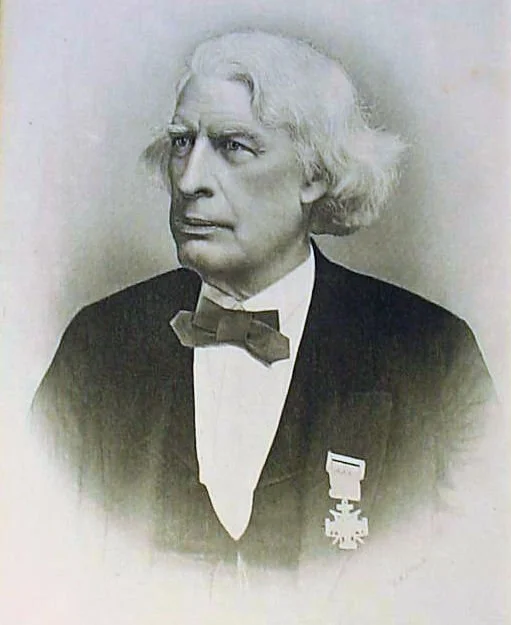
Albert Gallatin Mackey.
Mackey’s three classes of Masons, the inward meaning of the degrees, and the enduring temptation to mistake office for attainment
Not every man enters Masonry for the same reason. Some seek light. Some seek fraternity. Some seek dignity. And some, without quite meaning to at first, begin to confuse movement through an institution with movement of the soul.
Not every man in lodge is there for the same reason.
That ought to be obvious, but institutions with old rituals and inherited dignity have a way of concealing obvious things beneath ceremonial sameness. Men stand in the same room, wear the same apron, repeat the same forms, submit to the same sequence of degrees, and address one another by the same fraternal titles. From a distance, this creates the impression of deep inward unity. It suggests that all are engaged in one and the same labor, and that all understand, at least broadly, the nature of that labor.
But the uniformity of forms can hide a profound diversity of intention.
One man joins because he is hungry for wisdom. Another because he wants companionship. Another because he admires tradition. Another because he hopes the lodge will widen his social world. Another because he has inherited a favorable impression of the fraternity and wishes to belong to something respectable. Another because, though he does not yet know how to name it, he senses that there may be in Masonry some discipline capable of ordering and deepening his inner life.
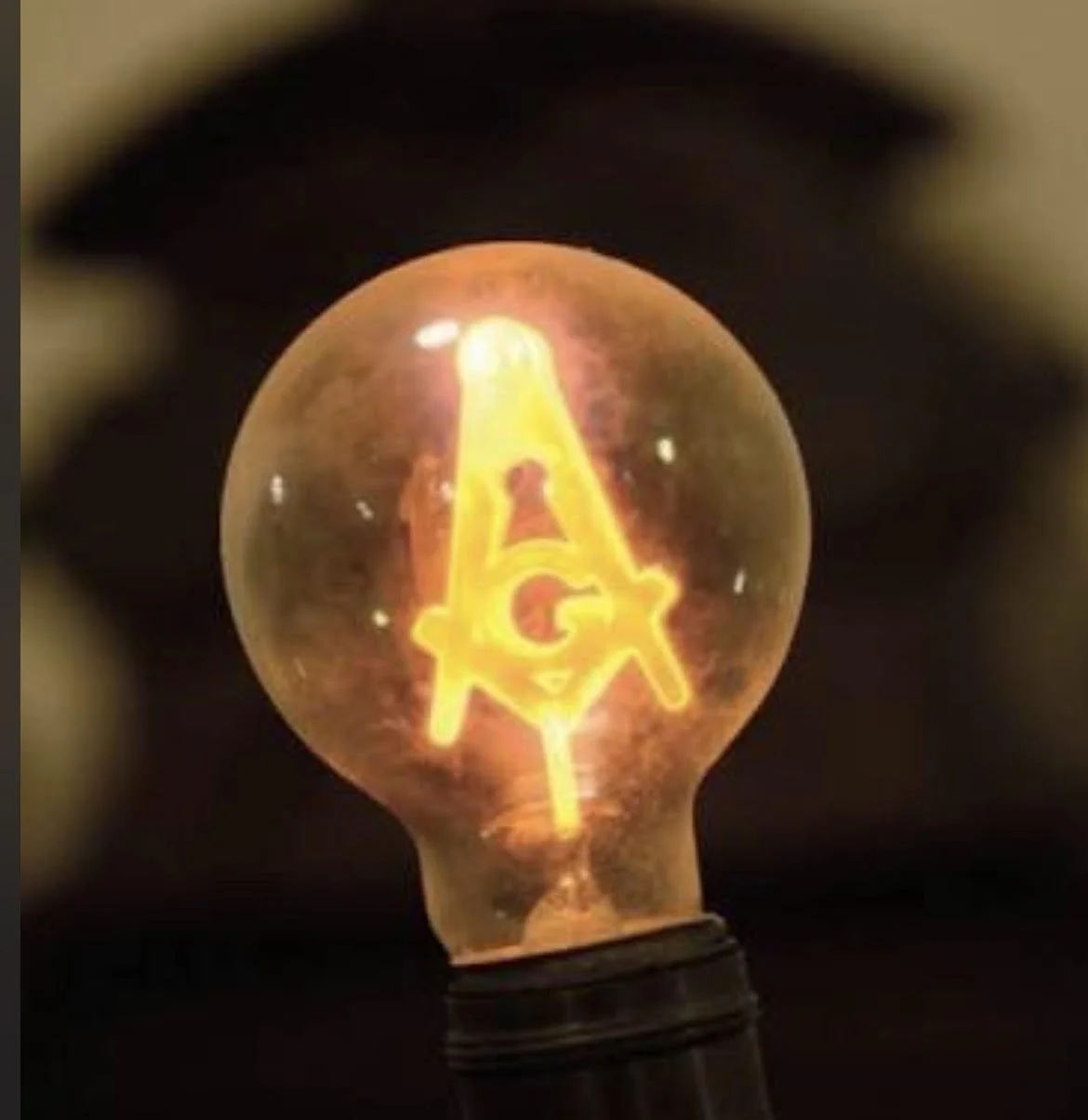
Light bulb with Masonic imagery. Courtesy of Northshore Magazine.
And then there is the man who joins for none of these reasons in any serious sense, but merely because the institution appears to confer a kind of standing. He may not say so. He may not even fully know it himself. But from the beginning he is attracted less by truth than by placement, less by discipline than by association, less by transformation than by recognition.
All these men can occupy the same lodge room.
All can move through the same ceremonies.
All can become, in the outward sense, Masons.
Yet inwardly they may be separated by a great distance.
This is not unique to Freemasonry. Every old institution that carries symbolic, moral, or spiritual claims eventually attracts both the sincere and the opportunistic, the contemplative and the merely ambitious, those willing to be formed and those mainly interested in appearing to belong to something that confers form. Still, the problem is especially visible in Masonry because Masonry itself is so deeply concerned with the relation between the outer and the inner, the visible and the invisible, the emblem and the reality it signifies.
A fraternity whose entire language is symbolic can be kept alive outwardly by men who no longer feel any real compulsion to ask what the symbols mean.
And that is where the danger begins.
Albert G. Mackey, in his essay “Reading Masons and Masons Who Do Not Read,” offered a distinction that remains remarkably perceptive. He wrote that “the great body of Masons may be divided into three classes.”1] It is not one of his most ornate remarks, but it may be one of his most enduring. With characteristic brevity, he identified something that nearly every thoughtful Mason eventually discovers for himself: that the fraternity contains men who stand in radically different relationships to the thing they claim to share.
Mackey’s three classes are not simply types of temperament. Nor are they reducible to levels of intelligence, years of service, or visible usefulness to a lodge. They describe different inward attitudes toward Masonry itself. One man uses it. One man studies it. One man presumes upon it.
Once the distinction is seen, much else becomes clearer.
The politics of lodge life become clearer. The uneven quality of Masonic conversation becomes clearer. The disparity between ceremonial exactness and spiritual seriousness becomes clearer. Even the perennial conflict between those who regard Masonry chiefly as a social institution and those who regard it as an initiatic discipline becomes easier to understand.
Mackey’s classification is valuable in itself. But it becomes still more illuminating when considered alongside the symbolic interpretations of the Craft degrees offered by Mackey himself, by W. L. Wilmshurst, by J. S. M. Ward, and by Albert Pike.[2] For these writers, the degrees are not merely honors successively bestowed, nor simply stages of membership in an organization. They concern dimensions of the human being. They map a work to be performed upon the self.
Seen in that light, Mackey’s three classes are not only sociological observations.
They are signs of where the work has stopped.
The deeper grammar of the degrees
The first three degrees of Masonry have often been treated by serious interpreters as more than ceremonial thresholds. Whatever differences exist between individual authors, there is a broad and persistent agreement among the more reflective Masonic writers that the degrees describe a process of development: not simply institutional progress, but human progress. Not promotion, but formation.
Mackey, in The Symbolism of Freemasonry, writes of the Fellow Craft as one who has entered upon the journey of life and undertaken the task of self-improvement, with the reward of labor being the cultivation of mind and character and the acquisition of truth.[3] This language is easy to glide over if one reads it too quickly, but it is worth pausing over. Such a description assumes that the degree is not exhausted by the ritual itself. The ritual presents, but does not complete, the work. It opens a field of labor that extends beyond the lodge room.
Wilmshurst presses this inward reading still further. In The Meaning of Masonry, he insists that the entire ceremonial system of Masonry concerns the interior structure of the human soul and the rebuilding of man from within.[4] Ward, who is often more sober and less mystical in tone, likewise treats the degrees as ordered stages in the training of human nature.[5] Pike, for all his diffuseness and his appetite for vast comparative speculation, again and again returns to the conviction that Masonic symbolism is intended to elevate, refine, and test the moral being of man.[6]
The common point beneath their differences is not difficult to state:
The degrees are about what a man is, what in him must be disciplined, and what in him may yet be awakened.
If one were to summarize their symbolic drift in simple terms, it would look something like this:
The Entered Apprentice concerns the outer and unformed man: the man nearest to sensation, habit, materiality, impulse, and immediate impressions.
The Fellow Craft concerns the awakened and ordered mind: the cultivation of reason, the capacity for study, discernment, proportion, and intelligent labor.
The Master Mason concerns the moral and governing center: fidelity, conscience, endurance, truthfulness, and the ability to remain upright when life becomes costly.
This sequence is not merely decorative. It suggests that Masonry addresses man from the outside inward, beginning with what is most obvious and gradually pressing toward what is most essential.
The first degree asks, in effect: what sort of material is this man?
The second asks: can his mind be awakened and trained?
The third asks: is there in him any real moral center capable of standing trial?
These are not small questions.
They are not ceremonial niceties.
They are existential diagnostics.
To borrow, analogically, from the language of alchemy, one might say that the first degree concerns salt, the fixed and bodily aspect of man: his habits, densities, appetites, routines, resistances, and the substantial fact of his condition.[7] The second concerns mercury, the principle of movement, mediation, inquiry, comparison, and understanding. The third concerns sulfur, the inward fire, the animating force, the principle by which one discovers whether a man possesses conviction, fidelity, and a center that does not collapse under pressure.
This triadic language is not necessary in order to understand the degrees, but it helps make clear that what is at issue is not mere rank. It is the transformation of matter into character, of receptivity into understanding, and of understanding into inward governance.
At its highest, Masonry is not trying to make a man prominent.
It is trying to make him whole.
That ideal, of course, is easier to describe than to realize. And because it is difficult, many men stop somewhere along the way while convincing themselves they have arrived.
That is precisely what Mackey’s three classes help us see.
The first class: the self-interested Mason
Mackey’s first class consists of those who join the fraternity mainly for what may be gained by joining it.[1] The gain can take many forms. Sometimes it is commercial. Sometimes social. Sometimes political in a local sense. Sometimes merely psychological: the pleasure of belonging to something old, reputed, and respectable. Sometimes it is the comfort of association with men who may be useful. Sometimes it is the borrowed gravity that institutional membership can lend to an otherwise unexamined life.
Such a man is not necessarily malicious.
He may be friendly, dutiful, even generous in ordinary ways. He may attend regularly. He may serve on committees. He may speak warmly about the brotherhood. But the center of gravity remains external. Masonry is valued less as a discipline than as an asset.
He belongs to it the way a man might belong to a club, a network, or a respected local body: not with hostility, not with indifference exactly, but with a primarily instrumental attitude.
The fraternity serves as means before it serves as mirror.
In symbolic terms, this man remains very near the outer threshold of Masonry. He has encountered the first degree but not in its deepest demand. The Entered Apprentice, rightly understood, is the beginning of work upon the rough and unformed man. It concerns the condition of human material before it is ordered. Yet the self-interested Mason often remains content with precisely that level of life: utility, appetite, recognition, place, and visible advantage.
He wants Masonry to be something he can possess.
He does not yet suspect that it is something that must first possess him.
This is why such men can be perfectly at ease in a lodge that has lost most of its inward seriousness. So long as the social bonds remain, the institution continues to function, the public respectability endures, and the visible structure holds, they feel little deprivation. One does not miss light one never meant to seek.
It must be said, however, that this class is not beyond hope. Indeed, many men likely begin here in mixed motives. Human motives are seldom pure at the start. A man may enter through vanity and remain for truth. He may join from curiosity, convenience, or social attraction and only later discover that the institution is asking more of him than he imagined. The first class becomes spiritually dangerous only when self-interest hardens into settled sufficiency, when the man becomes impermeable to deeper claims.
The outer man is not a scandal.
Remaining only the outer man is.
The second class: the reading Mason
Mackey’s second class is the reading Mason, the man who enters the fraternity with what he calls “a favorable opinion conceived of the Institution, and a desire of knowledge.”[1] This man is moved by a suspicion, or perhaps an intuition, that Masonry means more than it says at first glance. He perceives that ritual language is not exhausted by memorization, that symbols are not merely inherited decorations, and that what has been transmitted is not simply a collection of formalities but a structured invitation to reflection.
He reads because he knows he does not yet understand.
He studies because admission has awakened appetite rather than satisfied it.
He returns to the ritual not merely to perform it, but to listen for what it may be trying to say.
This is already a considerable step. In an age that flatters speed, utility, and superficial competence, the willingness to linger over symbols is no small virtue. The reading Mason resists one of the defining temptations of modern institutional life: the temptation to confuse procedural familiarity with comprehension.
He knows that knowing how to do a thing is not the same as knowing what the thing means.
Here the Fellow Craft symbolism becomes especially relevant. Mackey’s account of the degree emphasizes the intellectual and moral labor of self-improvement.[3] Ward repeatedly points to the role of education, proportion, and disciplined mental growth.[5] Wilmshurst sees in this middle stage the awakening of higher faculties and the beginning of deliberate inner construction.[4]
The reading Mason corresponds, then, not to the pride of intellect, but to its proper use.
His mind has begun to move.
The world is no longer merely encountered; it is examined.
The sign is no longer merely handled; it is interpreted.
He suspects that symbols are instruments of inward work. He begins to realize that ritual can diagnose him as much as instruct him. He becomes aware that there may be aspects of his own being that the degrees are meant to disclose, challenge, refine, or reorder.
And if he is honest, his reading will gradually make him less complacent, not more. For the serious study of Masonry, like the serious study of any symbolic or spiritual tradition, does not merely furnish explanations. It introduces demands. It destabilizes naive satisfactions. It replaces easy confidence with more searching questions.
What, exactly, am I doing here?
What in me remains crude?
What in me has only the appearance of order?
What have I mistaken for attainment simply because I have received a form?
What kind of man do these symbols presuppose, and what kind of man am I actually becoming?
These questions mark the true beginning of Masonic study.
Reading, in this sense, is not an ornament of the Craft.
It is one of the first signs that the Craft has begun to work.
The third class: the uninformed but ambitious Mason
The third class is where Mackey’s analysis grows most severe, and for good reason. This is the uninformed but ambitious Mason: the brother who does not read, does not study, does not deeply inquire, and yet is eager for office, title, distinction, and advancement.
He may be competent in the administrative life of a lodge. He may be punctual, sociable, and useful. He may know the mechanics of procedure. He may move efficiently through committees, elections, installations, and formal responsibilities. He may even be admired as a “good lodge man.”
But his inward relation to Masonry is disordered.
He mistakes reception for realization.
He assumes that because he has passed through the forms, he has absorbed the substance. Because he has inherited the language, he supposes he possesses the meaning. Because he has occupied offices, he imagines he has acquired stature. Because he has been seen, he assumes he has become.
This confusion is one of the most persistent and damaging illusions in every symbolic institution.
The uninformed but ambitious brother desires the signs of attainment more than attainment itself. He wants precedence before purification, recognition before inward discipline, station before formation. He seeks the honors associated with mature responsibility without having submitted himself to the process by which such responsibility becomes morally credible.
In terms of the degrees, he reaches for the symbolic authority of the Master Mason while bypassing the actual labor implied by the Fellow Craft and without having deeply confronted the unruly material of the Entered Apprentice. He wants the summit without the ascent.
This is why he so often identifies Masonry with office.
If meaning is never pursued, the visible structure of advancement becomes the only intelligible version of progress. If one does not read, contemplate, or submit to symbolic interpretation, then promotion within the institution naturally appears to be the whole of the work. One degree follows another, one office follows another, one title follows another, and the man begins to think that this sequence is spiritual in itself.
But office is not attainment.
Office is responsibility.
And if responsibility is divorced from inward substance, it begins to degrade both the office and the institution that confers it.
Pike’s warnings become relevant here. However sprawling his prose, he returns incessantly to the conviction that Masonry concerns moral truth, fidelity, justice, self-mastery, and a seriousness of soul that cannot be reduced to reputation.[6] The Master Mason is not, in Pike’s vision, merely a man who has reached a visible station. He is a man who has undergone trial, confronted loss, and been called into fidelity beyond convenience. The degree is moral before it is honorary.
The ambitious but uninstructed Mason sees only the honor.
He wants the chair, not the burden.
The emblem, not the inward fire.
The precedence, not the purification.
This produces a peculiarly hollow type of leadership: energetic but shallow, active but unformed, visible but inwardly untested. Such a man can preserve procedure while diminishing meaning. He can keep a lodge running while slowly draining it of intellectual and spiritual seriousness. Because he mistakes appearance for reality, he tends to favor whatever keeps appearances in good order. Meetings continue. ceremonies happen. offices are filled. photographs are taken. applause is distributed. Yet something central grows thin.
The forms remain.
The force departs.
And because the loss is inward before it is outward, it may go unnoticed for a long time.
This is the danger of the third class. The self-interested Mason uses Masonry. The reading Mason seeks to understand it. The uninformed but ambitious Mason inadvertently hollows it out while imagining himself its guardian.
He does not attack the temple.
He occupies it.
The hollowness that can mimic health
One of the most unsettling facts about institutions is that they can look healthy long after the animating principle has begun to weaken. Masonry is no exception. A lodge may be orderly, solvent, active, ceremonially competent, and publicly respectable, and yet inwardly unsure of its own purpose. The calendar may be full, the meal well attended, the minutes properly read, the officers earnest, the traditions scrupulously observed. None of this is worthless. Indeed, much of it is necessary.
But necessity is not sufficiency.
A lodge can preserve itself administratively while forgetting what it exists to preserve. It can become increasingly efficient at sustaining an inherited framework whose inner claims are no longer felt with much urgency.
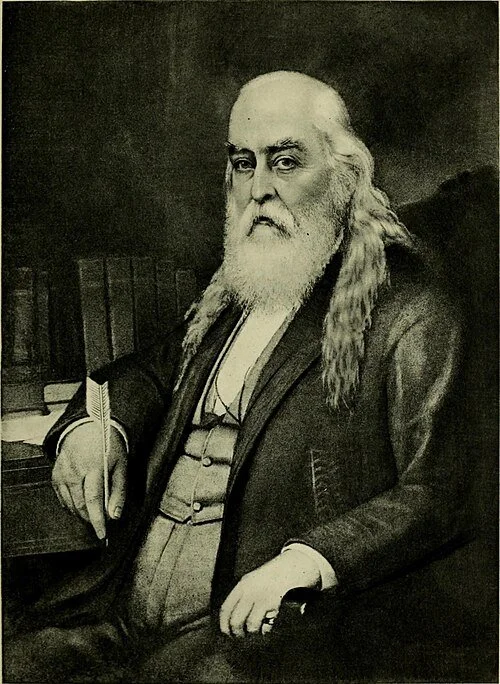
Albert Pike and Albert G. Mackey, The History of Freemasonry (1906).
This is one of the central themes that emerges when Mackey’s practical taxonomy is read alongside Pike’s moral vision and Wilmshurst’s inward one. Mackey tells us the kinds of men who populate the institution. Pike tells us the kind of man the institution exists to form. Wilmshurst tells us that the real scene of action is inward. Ward reminds us that structure and instruction matter because the faculties of man do not refine themselves by accident.
Taken together, they present a serious warning:
An initiatic institution may continue to transmit forms even while many of its members no longer live initiatically.
That is the difference between continuity and vitality.
The one can exist without the other.
There is still some consolation here. The forms, even when half-understood, may survive long enough to be rediscovered by better men. Ritual can outlast interpretation. Symbols can wait. A tradition may be carried by hands that do not fully comprehend it, just as a set of books may survive on a shelf in a house where no one reads. This is not ideal, but it is not nothing. Preservation, even imperfect preservation, leaves open the possibility of renewal.
But renewal will not come from busyness alone.
It will come from men who want to understand what has been given to them.
Why reading is not optional in any serious sense
This is why reading matters so much. Not because every Mason must become a scholar in the academic sense, and not because books themselves are a substitute for lived virtue. One can read a great deal and remain vain, sterile, and spiritually untouched. But reading is one of the first ordinary disciplines by which a man acknowledges that he has not yet exhausted the meaning of what he has received.
To read seriously in Masonry is an act of humility.
It is to admit that initiation is not completion.
That ceremony is not comprehension.
That memory is not understanding.
That office is not depth.
That tradition is not self-interpreting.
The man who reads is, at minimum, refusing one of the most corrosive assumptions in lodge life: the assumption that familiarity is knowledge.
Mackey’s concern in “Reading Masons and Masons Who Do Not Read” is not merely that some brethren fail to consume Masonic literature. It is that they do not feel the absence of understanding as an absence.[1] They have no inward unease about remaining at the surface. They do not suspect there is anything beneath the ritual that requires pursuit. That is why the issue is larger than literacy. It is really about appetite.
Does the brother hunger to know what he has received?
If not, the problem is not simply educational. It is spiritual.
End Notes
Author’s note:
I write as an individual Freemason, historian, and researcher. This article reflects my personal research and interpretation and does not represent an official statement of Advance Service Mizpah Lodge No. 586, the Grand Lodge of New York, or any other Masonic organization.
Images:
Portrait of Albert Pike from the 1906 History of Freemasonry - Public domain. From The History of Freemasonry (1906), via Wikimedia Commons.
Decorative light bulb with Masonic imagery, published by Northshore Magazine, “Brotherly Love,” nshoremag.com/community-news/brotherly-love/. Used by permission or under applicable license.
Portrait of Albert Gallatin Mackey - Public domain. From The History of Freemasonry (1906), via Wikimedia Commons.
James Anderson, The Constitutions of the Free-Masons (1723): no textual apron regulation.
James Anderson, The New Book of Constitutions (1738): incorporates 1731 Grand Lodge apron regulations.
A. C. F. Jackson, English Masonic Aprons: strongest source on development, shape, and regulation of English aprons.
Charles Clyde Hunt, Masonic Symbolism, chap. 22: best summary of divergent American practices and symbolic explanations.
William Harvey, The Mason’s Apron (1921): reflective and morally serious, though not strictly documentary throughout.
Albert G. Mackey, Encyclopaedia of Freemasonry: useful general reference for historical and symbolic context.
Frank C. Higgins, Ancient Freemasonry and The Masonic Apron: imaginative symbolic readings, but historically speculative.
Norman Frederick de Clifford, Egypt the Cradle of Ancient Masonry, chap. 15: vivid esoteric treatment of the square-triangle symbolism.
David Stevenson, The Origins of Freemasonry: reliable modern scholarship on early Freemasonry’s institutional emergence.
- CHICAGO-STYLE BIBLIOGRAPHY
Public domain. From The History of Freemasonry (1906), via Wikimedia Commons.
Anderson, James. The Constitutions of the Free-Masons. London, 1723.
Anderson, James. The New Book of Constitutions of the Ancient and Honourable Fraternity of Free and Accepted Masons. London, 1738.
de Clifford, Norman Frederick. Egypt the Cradle of Ancient Masonry. Reprint ed. Kila, MT: Kessinger Publishing, n.d.
Harvey, William. The Mason’s Apron. Dundee: T. M. Sparks, 1921.
Higgins, Frank C. Ancient Freemasonry: An Introduction to Masonic Archeology. Reprint ed. Kila, MT: Kessinger Publishing, n.d.
Higgins, Frank C. The Masonic Apron: Its Traditions, History and Secret Significances. New York, n.d.
Hunt, Charles Clyde. Masonic Symbolism. Reprint ed. Chicago: National Masonic Research Society, n.d.
Jackson, A. C. F. English Masonic Aprons. London: Lewis Masonic, 1980.
Mackey, Albert G. An Encyclopaedia of Freemasonry and Its Kindred Sciences. Revised edition. Chicago: Masonic History Co., 1921.
Prescott, Andrew, and Susan Sommers, eds. Freemasonry and the Enlightenment. Dublin: Four Courts Press, 2011.
Stevenson, David. The Origins of Freemasonry: Scotland’s Century, 1590–1710. Cambridge: Cambridge University Press, 1988.
Thomas, John Lloyd. Address on the presentation of the apron to William Sherer. Quoted in Frank C. Higgins, The Masonic Apron: Its Traditions, History and Secret Significances.