The Lodge, the Thoughtform, and the Work
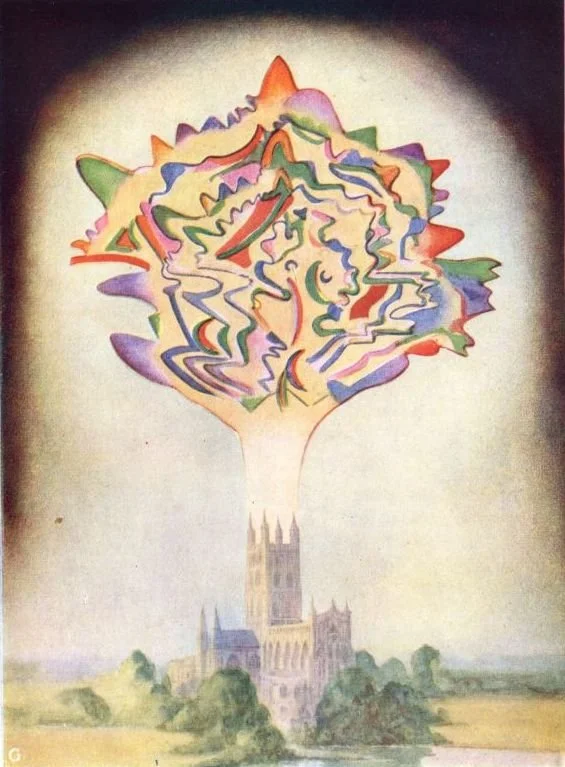
A three-part essay series on egregores, thoughtforms, collective identity, and the individual Mason’s responsibility for the moral and spiritual atmosphere of his Lodge.
There are ideas that people talk about carelessly, and then there are ideas that deserve to be handled with clean hands.
One of those ideas is the egregore.
In occult, religious, psychological, and social language, the egregore points to something many people have felt but few have examined carefully: the way a group can generate a presence, an atmosphere, a living pattern of thought and feeling that begins to shape the people who participate in it.
In modern life, we see versions of this everywhere — in politics, branding, religion, fandoms, institutions, and organizations. In Freemasonry, the question becomes especially important, because a Lodge is not merely an administrative body. It is a ritual body, a symbolic body, and a moral body. That means whatever it repeatedly thinks, tolerates, teaches, avoids, or aspires toward does not simply disappear into the wallpaper. It accumulates.
This series explores the idea of the egregore in a serious but accessible way, moving from the larger concept into the specific responsibilities of Lodge life. The central argument is simple:
A Lodge’s egregore is not a magical janitor that arrives fully formed and fixes problems on its own. It is something shaped, nourished, weakened, or corrupted by the actual conduct of the brethren.
If that is true, then caring for the Lodge’s inner life is not optional. It is part of the work.
Series Overview
These three essays build on one another:
Part I defines the egregore and traces the idea across occultism, psychology, sociology, politics, religion, and branding.
Part II applies the concept directly to Lodge life and challenges the lazy assumption that the Lodge mind will somehow correct itself without effort.
Part III turns practical, asking what responsibility, ritual, and moral seriousness look like if we truly mean to care for the spirit of the Lodge.
What an Egregore Really Is
Before the term can be used intelligently in a Lodge setting, it has to be understood clearly. This essay explores the egregore as an occult idea, a social reality, and a useful way of describing the strange force that shared symbols, beliefs, and repeated attention can create.
The Lodge Mind
A Lodge does not inherit a fully formed invisible intelligence that automatically protects its interests. It inherits a possibility. This essay looks at how the collective atmosphere of a Lodge is actually built — and how passivity, avoidance, and tolerated disorder feed the very thing many brethren imagine will save them.
Stop Blaming the Egregore
If a Lodge wants a healthier inner life, it cannot wait for unseen forces to do the work its members avoid. This final essay turns practical, arguing that ritual, responsibility, correction, and self-work are the real means by which a Lodge strengthens its soul.
In Closing
Whether you approach this subject as an occultist, a Mason, a student of religion, or simply someone interested in how groups shape human beings, I hope these essays offer something useful: a clearer vocabulary, a more disciplined framework, and perhaps a firmer sense of what our shared work really asks of us.
Because in the end, the question is not whether a Lodge has an egregore.
The question is what kind of thing the brethren are teaching it to become.