
Heracles Within: The Labors of the Soul
A six-part series reading the labors of Heracles as an inner moral drama, through Dio Chrysostom, Xenophon and Plotinus, with a careful look at Masonic ideas of self-improvement.

The Two Caves and the Work of Light
What do Plato’s Cave and Porphyry’s Cave of the Nymphs have to do with Freemasonry? This essay explores Masonic Light, self-knowledge, symbolism, and the daily work of learning to see clearly.

Ulysses on Tuesday Afternoon
The voyage of the soul is rarely dramatic. More often, it is a Tuesday afternoon and a decision about what will be allowed to govern the next hour.

The Two Gates of the Soul
The gates of the soul are not on a compass. They open every time we decide whether appetite or judgment will lead

Why the Prisoner Must Return
The sun is not a private possession. If it does not change how a man behaves in the cave, he has only taken a scenic walk.

The Middle Chamber of the Mind (Work of Light)
The liberal arts, Plato's ascent, and why education is more than information.

The Sun Is Not a Brighter Shadow
The first light a man sees after darkness may still be only a fire behind him. Plato’s Cave asks whether we seek truth—or simply a more flattering version of the shadows.

The Work of Light Series
Five short essays on Plato's Cave, education beyond information, the duty to return and serve, and the daily choice between appetite and judgment. A companion to The Two Caves and the Work of Light.
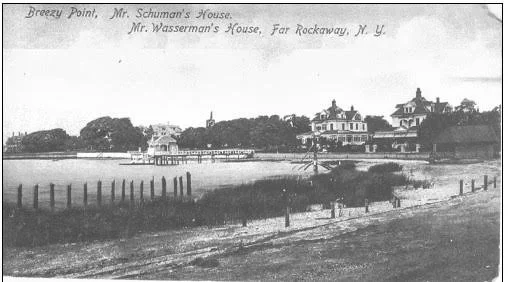
When Far Rockaway Became a Village
Far Rockaway’s incorporation as a village marked a turning point in its development from resort edge to organized community with institutions, streets, and local identity.

Bowery Bay and the Poor Bowery: Queens Before the Airport
Before LaGuardia Airport, Bowery Bay was a landscape of colonial farms, mills, orchards, shoreline estates, and the Dutch poor farm known as the Poor Bowery.

Why the Lodge Room Is Laid Out Like a Map of the Mind
Why is a Masonic lodge room arranged with fixed stations, symbolic directions, and a meaningful center? This essay explains how lodge-room layout teaches moral order, inner discipline, and symbolic orientation.

The Ferry and the Forgotten Places
Some transportation histories leave landmarks. Others leave only traces. This article recovers forgotten ferry routes and vanished connections that once shaped how Queens neighborhoods related to one another.

Hunter’s Point to Rockaway
From Hunter’s Point to the Rockaways, ferry service helps reveal where Queens is being redeveloped, revalued, and reconnected. The waterfront is no longer just an edge—it is increasingly treated as a front door.

The Return of the Ferry
The ferry is back in Queens, but not in the same city it once served. This article looks at what modern ferry service reveals about growth, class, commuting, and waterfront redevelopment.

When Bridges Killed Ferries
Ferries once structured daily life along the Queens waterfront. Then bridges, tunnels, and rail transit arrived, changing land values, movement patterns, and the shape of the borough itself.

The Water Was the First Street
Long before bridges and subways reorganized Queens, ferries and shore landings connected its early communities to trade, work, and city life. This article explores how water functioned as the borough’s first transportation network.

Queens in Motion
A six-part Queens history series exploring how ferries, bridges, railroads, subways, and waterfront development shaped the borough from early settlement to the present.

The Rockaways and the Politics of Partial Connection
The Rockaways are often described as isolated, but their history is better understood as a pattern of repeated and incomplete reconnection. Ferries, railroads, bridges, subways, and storm recovery each changed how the peninsula related to the rest of New York.

Rough and Perfect Ashlar: The Masonic Work of Self-Improvement
What do the rough and perfect ashlars mean in Freemasonry? This essay explains how stone, labor, discipline, and form become a powerful symbol of moral growth and self-improvement.

The Two Pillars: Strength, Established, and the Architecture of Meaning
What do the two pillars in Freemasonry symbolize? This essay explains how the pillars represent threshold, balance, support, and entry into ordered moral space.