Why the Prisoner Must Return
Plato, service, and the test of whether enlightenment has become useful
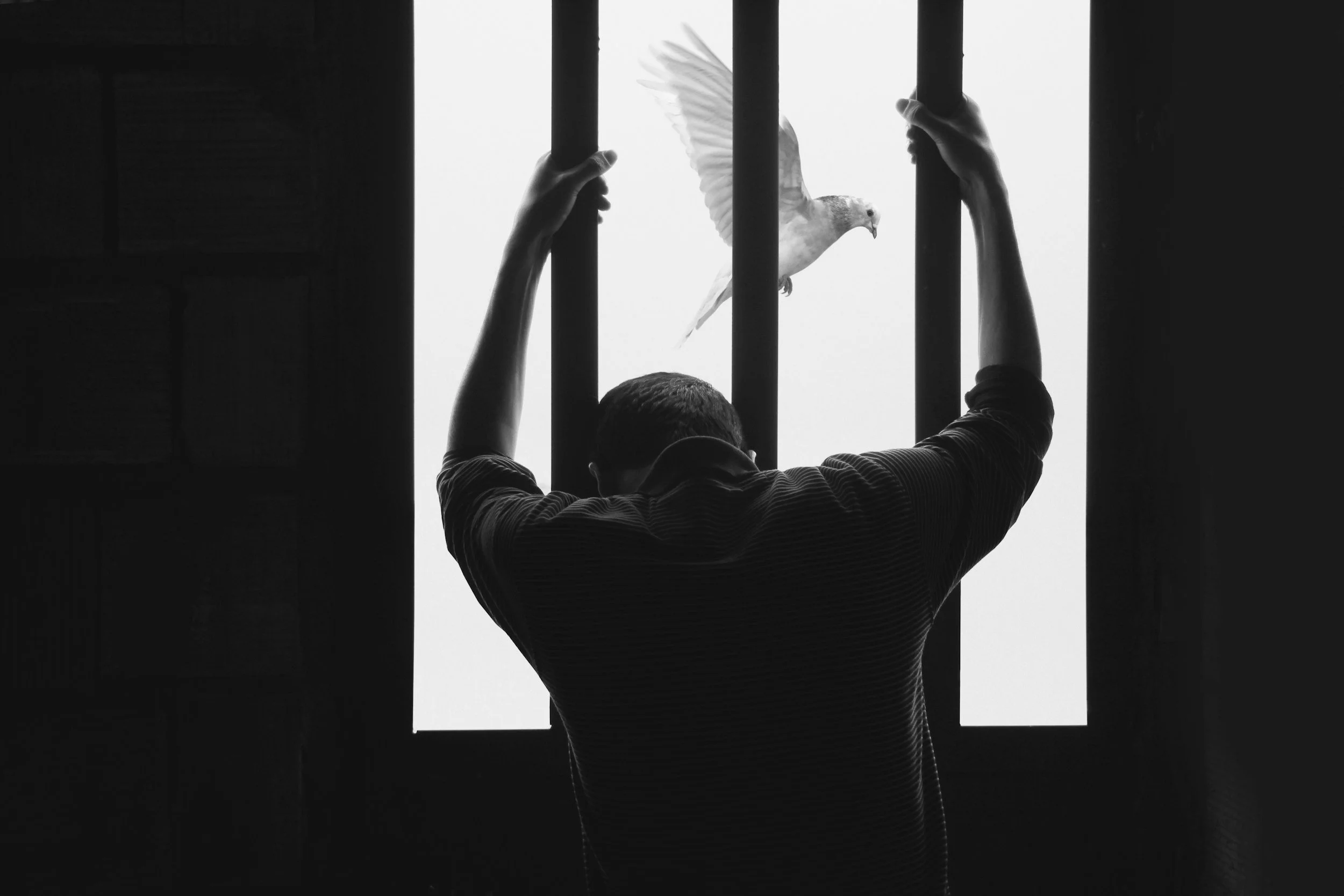
The liberated prisoner in Plato’s Cave does not remain in the sunlight. He returns to the cave. The hardest test of Light is not what a person sees alone, but what he becomes useful for among others.
The usual version of Plato’s Cave ends too early.
A prisoner escapes. He sees the world outside. His eyes adjust. He comes to understand that the shadows on the wall were not reality. He sees the sun—the image of the Good—and at last understands the source of light and intelligibility.
Wonderful.
Then Plato does something inconvenient.
He sends the prisoner back.
The philosopher must return to the cave. He must go down again into the dim world of habits, partial opinions, rivalries, fears, ambitions, and people who are quite satisfied with the shadows they already possess.
This is not a reward. It is an obligation.
The point is crucial for anyone who speaks of Light. Light that remains private is incomplete. Knowledge that does not become service has not yet reached its moral conclusion.
The temptation of private enlightenment
There is a version of spiritual and philosophical life that is mostly interior decoration.
A person reads difficult books, learns symbolic language, acquires an impressive set of intellectual tools, develops refined opinions, and becomes highly sensitive to the deficiencies of everyone else. He is now enlightened.
Or so he believes.
The problem is that private enlightenment can become a luxurious form of self-regard. A person begins to treat insight as a possession. He has climbed above the crowd. He sees more than others. He is no longer troubled by ordinary concerns such as patience, charity, reliability, or helping someone move a table.
Plato rejects this posture.
The person who has seen more clearly must return. He must learn to apply understanding amid the difficulty of common life. The ascent is not meant to create a superior spectator. It is meant to form a more responsible citizen.
This is a demanding standard. It means that the test of wisdom is not how beautifully one speaks of truth, but whether one becomes more just when truth requires something difficult.
The return is hard
Plato does not romanticize the prisoner’s return.
Having adjusted to sunlight, the liberated person now sees poorly in the darkness of the cave. He may appear foolish to the prisoners who never left. They may laugh at him. They may conclude that leaving the cave has damaged his eyes. They may resist any attempt to free them.
This is an old story.
The person who begins to question a group’s assumptions often looks disloyal. The man who refuses gossip may be accused of thinking himself better than everyone else. The member who asks for evidence, patience, fairness, or proportion may be treated as an obstacle to “getting things done.”
In a lodge, a workplace, a family, or a community, it is easier to repeat familiar patterns than to introduce a more demanding standard.
The returner must therefore learn a second kind of humility. He cannot simply descend from the sunlight and begin announcing that everyone else is imprisoned. This is a good way to remain alone in the cave.
He must become useful.
He must learn to speak in ways that clarify rather than humiliate. He must model judgment rather than merely criticize error. He must accept that not every person is ready to see what he sees. And he must remember that he still has shadows of his own.
Service is the proof
The Masonic language of charity often suffers from being made too narrow. Charity is not merely writing a check, though checks have their uses and bills rarely accept metaphors.
Charity includes patience, generosity, instruction, mercy, practical assistance, fair judgment, and the willingness to carry some burden that one could technically leave for someone else.
A man who has received Light should become more capable of these things.
He should be less ruled by the need to win every argument.
He should become more attentive to the brother who has been overlooked.
He should make room for the inexperienced without patronizing them.
He should be able to distinguish honest disagreement from disloyalty.
He should see that a lodge’s health is measured not by the splendor of its titles but by the quality of its care.
This is not sentimental. It is structural.
A fraternity survives when members become capable of serving something larger than their immediate preference. A lodge becomes a school of character when it teaches men to subordinate vanity to duty, status to service, and personal ambition to the common good.
The prisoner returns because the sun has made him responsible.
The serviceable man
Plotinus uses Heracles as an example of active virtue. Heracles is worthy of divine status, Plotinus says, because of his “noble serviceableness”—his useful service to others. Yet Heracles remains a figure of action rather than the highest contemplative life.[7][8]
This is a useful distinction.
Contemplation matters. Reflection matters. Study matters. But the life of action remains morally serious. A person who helps make the world more ordered, more just, less cruel, less fearful, and more habitable has done real philosophical work.
The man who repairs what has been neglected, reconciles what has been needlessly divided, keeps faith with his obligations, mentors someone younger, visits someone forgotten, or prevents an injustice from becoming normal is not “merely practical.”
He is carrying light into the cave.
The ordinary cave
The cave is not somewhere else.
It is the meeting where people talk past one another because nobody has listened carefully.
It is the family argument sustained by old roles and old resentments.
It is the workplace where everyone knows something is wrong but nobody wishes to say it plainly.
It is the public conversation in which outrage has become a substitute for judgment.
It is the lodge in which titles receive more attention than teachings.
It is the human heart when it would rather be admired than corrected.
This is why Plato’s return remains so difficult. The cave is not made of stone. It is made of habits.
The prisoner must return because the world still needs people who can tell the difference between a shadow and a thing.
Not perfectly. Not arrogantly. But faithfully.
The sun is not a private possession.
If it does not change how a man behaves in the cave, he has only taken a scenic walk.
Endnotes and further reading
Plato, Republic VII, 519c–521b, on the obligation of those who have attained understanding to return and share the work of civic life.[1]
Plato’s Cave is explicitly concerned with education and the soul’s ascent toward intelligible reality.[2]
Plotinus, Ennead I.1, on Heracles’ active virtue and “noble serviceableness.”[7][8]
Epictetus, Discourses 1.6, on Heracles’ hardships as the material through which virtue is exercised in service to others.[9][10]
For a related article, see “Heracles Within: The Soul as Wilderness.”