The Two Gates of the Soul
Porphyry, descent and return, and the daily choice between appetite and judgment
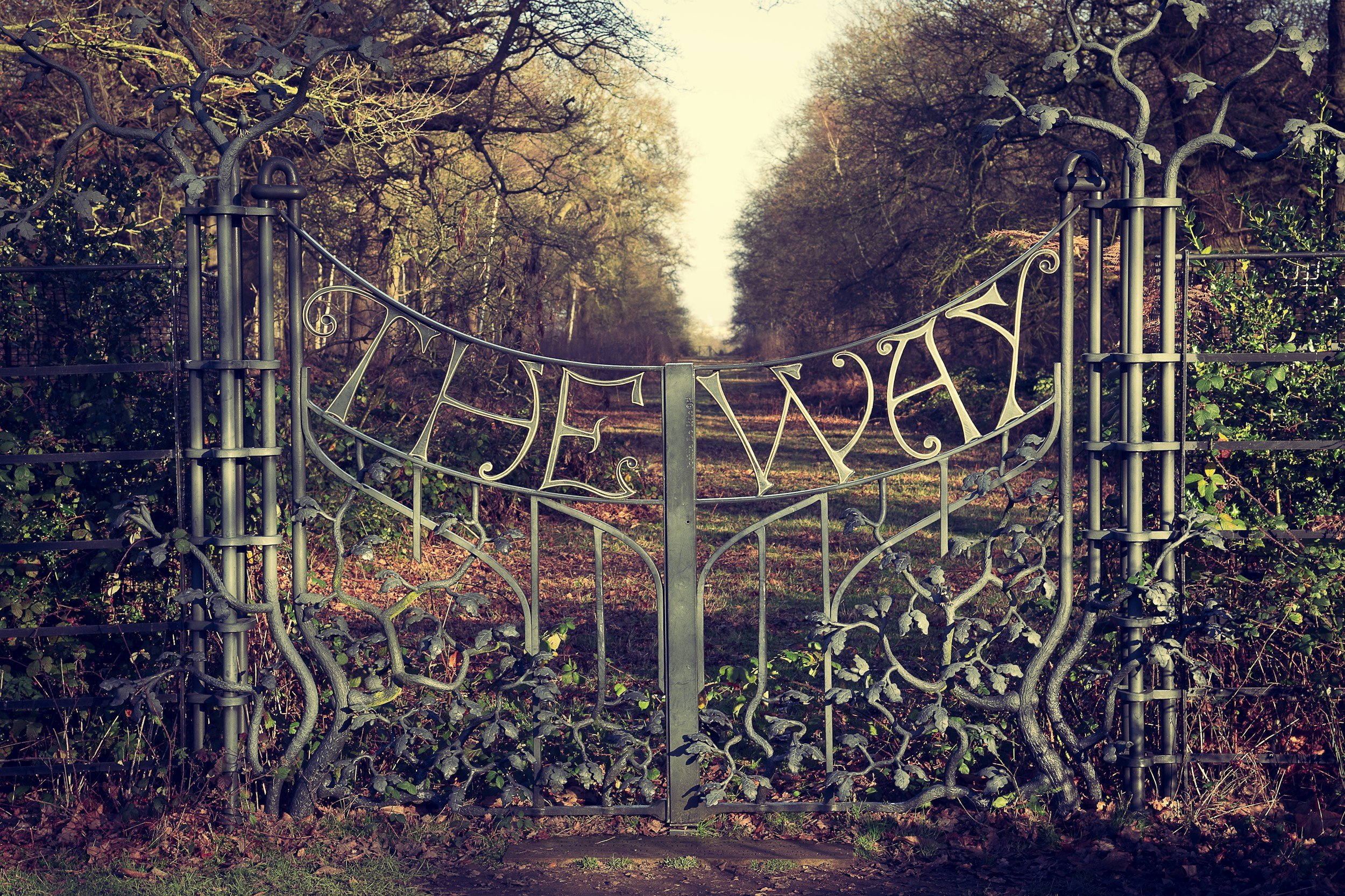
Porphyry’s cave has two gates: one for descent into mortal life and another for ascent toward the divine. The ancient cosmology is remote. The experience is not.
The cave of the Nymphs has two gates.
One is associated with descent. The other is associated with return.
Porphyry, the third-century Neoplatonist, finds these gates in Homer’s description of a cave near Ithaca. The cave has a northern entrance through which humans descend, and a southern entrance associated with ascent toward the divine. The explanation involves ancient astronomy, sacred geography, the zodiac, the sun, the moon, and the soul’s movement through the world of generation.[11]
At first this may sound like an elaborate ancient answer to a question nobody asked.
But Porphyry is not really interested in directions. He is interested in the two movements within a human life.
We descend into a world of body, appetite, circumstance, sensation, memory, pain, pleasure, fear, family, language, accident, history, and unfinished business. We arrive before we understand the terrain. Then we spend years learning which voices within us deserve to be obeyed.
The gates of the soul are not on a compass.
They open every time we decide whether appetite or judgment will lead.
Descent is not failure
It is important not to misunderstand Porphyry.
To descend into embodied life is not a moral failure. We are born into bodies. We have needs. We experience hunger, fatigue, desire, grief, illness, delight, attachment, and loss. We belong to families and communities. We inherit histories we did not choose. We live in time.
None of this is a scandal.
The problem begins when we treat these conditions as the whole of what we are.
A person who says, “I am only my appetite,” descends.
A person who says, “I am only my injury,” descends.
A person who says, “I am only my title, my reputation, my income, my grievance, my political tribe, my past success, or my present disappointment,” descends.
He has mistaken something real for something final.
Porphyry’s cave is valuable because it does not ask us to deny the visible world. It asks us to see it rightly. The world is beautiful, difficult, changing, and full of signs. It is a place of formation. But it is not the final measure of the soul.
Honey is sweet. The body is real. Success can be satisfying. Praise can be pleasant. None of these tells us what we are for.
The lower self is not the whole self
The ancient Platonists often speak of the soul as having higher and lower powers.
The lower life is involved with sensation, appetite, emotion, imagination, memory, and bodily function. The higher life is capable of reason, intellectual understanding, moral judgment, and relation to what is stable and divine.
This does not mean that the lower self is wicked. It means that it should not govern alone.
A good appetite keeps a person alive. An ungoverned appetite can make him a servant of every passing desire.
A good sense of pride can encourage responsibility. Unruled pride can make him impossible to correct.
A healthy fear can preserve him from danger. Unexamined fear can make him cowardly, cruel, defensive, or easily manipulated.
The work of self-mastery is not to destroy these powers. It is to give them their proper office.
This is why the ancient moral vocabulary is often architectural. The soul must be ordered. Its parts must be placed in right relation. Reason must govern not as a tyrant but as a wise builder governs a structure: by understanding the nature and proper function of each part.
The daily descent
The descent into confusion is rarely dramatic.
It happens in small acts of surrender.
A person knows he should apologize but begins composing an explanation instead.
He knows he should verify a claim but shares it because it supports his side.
He knows he should finish an obligation but opens another distraction.
He knows he is angry because he has been wounded, but he convinces himself that he is angry because he cares about principle.
He knows he is being flattered, but the compliment is too useful to inspect.
These are small descents. They do not make headlines. They do, however, shape character.
The person who repeatedly hands judgment over to appetite eventually finds that appetite has moved into the chair at the head of the table.
The person who repeatedly refuses to examine his motives becomes a stranger in his own house.
This is why self-work cannot remain theoretical. The gates open in the middle of ordinary decisions.
Ascent as recovery of proportion
Porphyry’s upward gate does not mean abandoning ordinary life for a mountaintop, a cave, or an especially ambitious reading list.
The ascent is a recovery of proportion.
It occurs when a person learns that:
Pleasure is good, but not the highest good.
Pain is difficult, but not always the greatest evil.
Reputation is useful, but not identical with worth.
Success is desirable, but not proof of virtue.
Failure is painful, but not proof of worthlessness.
Desire has energy, but needs education.
Knowledge has power, but needs humility.
Symbols have meaning, but demand practice.
This is the upward gate.
It is not a location. It is an order of the soul.
A person who has entered it may still be tired, worried, tempted, disappointed, ambitious, and occasionally cross with the printer. He has not become less human. He has become less easily ruled by the lower parts of his humanity.
That is no small achievement.
The Masonic gate
The Masonic reader may find a natural philosophical parallel here.
The degrees do not offer an escape from life. They present a symbolic method for living in it more consciously. The tools, lights, pillars, paths, and architectural forms are useful only if they teach proportion.
The square asks whether action is just.
The level asks whether one remembers the equal dignity of others.
The plumb asks whether one stands upright in private as well as public.
The compasses ask what must be circumscribed, restrained, and placed within due bounds.
None of these symbols opens a magical door. They become gates only when they change the direction of a choice.
A man may wear symbols and remain spiritually asleep. He may also take one small symbol seriously enough to make it the beginning of an ascent.
The gates of the soul are never locked.
They are simply used.
Endnotes and further reading
Porphyry, On the Cave of the Nymphs, on the northern and southern gates of Homer’s cave, descent into generation, and ascent toward the divine.[11]
Porphyry’s treatise interprets Homer’s description of the cave in Odyssey 13.102–112 as an image of cosmos, embodiment, and the soul’s return.[11][12]
Robert Lamberton, trans., Porphyry: On the Cave of the Nymphs (Station Hill Press, 1983).[13][14]
K. Nilüfer Akçay, Porphyry’s On the Cave of the Nymphs in Its Intellectual Context (Brill, 2019).[15][16]
For Porphyry’s broader ladder of virtue, see Sentences 32.[3][4]
For a related article, see “The Two Caves and the Work of Light.”