Why Humiliation Can Teach What Pride Cannot
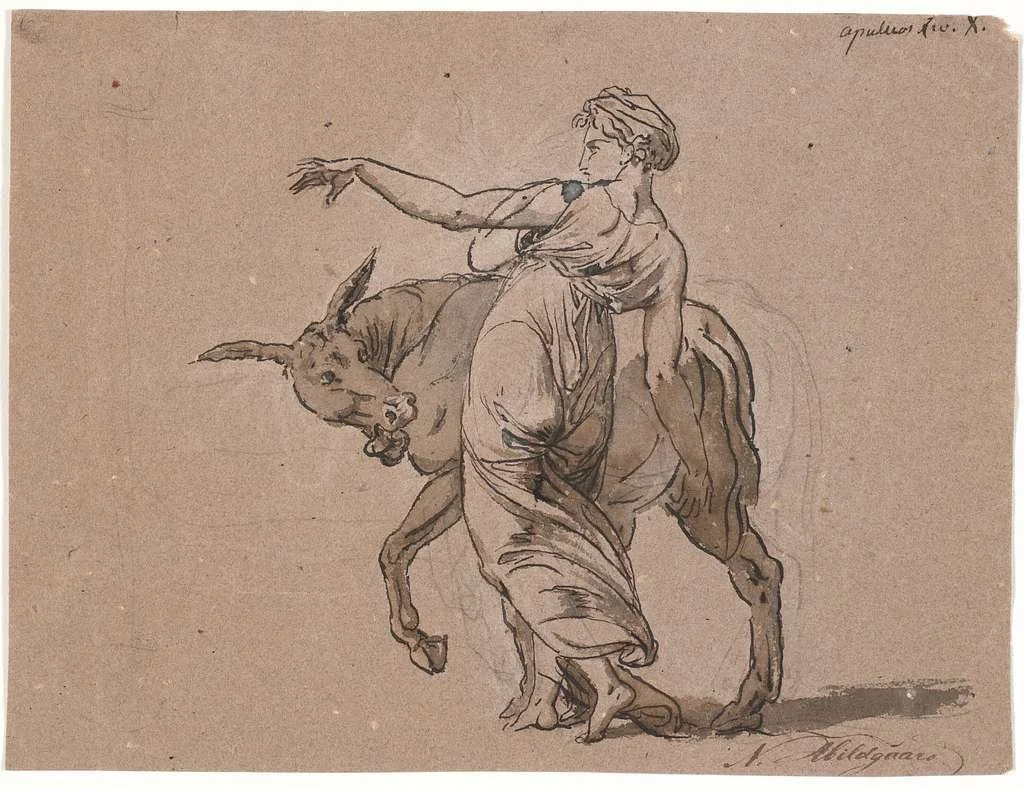
Losing the image of oneself and beginning to see
Lucius loses speech, status, bodily control, dignity, and the ability to explain himself. Humiliation does not automatically make him wise, but it strips away illusions that pride had made comfortable.
Humiliation is not automatically good.
This should be said before anyone gets ideas.
Public embarrassment can wound. Powerlessness can destroy. Degradation can be imposed cruelly. People can be humiliated in ways that leave scars rather than wisdom. No serious moral philosophy should treat suffering as inherently ennobling or assume that every person who has been mistreated has somehow received a spiritual gift.
Lucius’ ass-life is often brutal.
He is beaten, overloaded, threatened, abused, and traded as property. He experiences the physical vulnerability of a creature whose body belongs to other people’s purposes. The novel does not ask us to enjoy his suffering.
But it does ask us to notice what humiliation reveals.
Pride had made Lucius feel exceptional.
Humiliation teaches him how little control he had.
The pride of the curious man
Lucius begins the novel wanting to be more than ordinary.
He is fascinated by the hidden, the magical, the scandalous, and the marvelous. He believes that special knowledge will elevate him above common life.
This is a refined form of pride.
It does not always look like arrogance. It can look like sophistication, adventurousness, spiritual hunger, intellectual seriousness, or a refusal to accept the dullness of ordinary existence.
But beneath it lies a familiar desire:
I want to be exceptional.
Lucius wants to move above the ordinary human condition. Instead, he is pushed beneath it.
He becomes dependent on people he would once have considered beneath his notice. He loses the power of speech. He cannot explain his motives, correct misunderstandings, defend his dignity, or display his intelligence. He becomes visible only as a body with uses.
The experience is terrible.
It is also clarifying.
What pride cannot see
Pride makes certain things difficult to notice.
It makes a person less aware of the labor of others.
Less aware of bodily vulnerability.
Less aware of how much social dignity depends upon circumstance.
Less aware of those whose speech is ignored.
Less aware of the pain of being misunderstood.
Less aware of the difference between being admired and being worthy.
Lucius learns all of these lessons unwillingly.
He learns what it means to be dependent upon mercy. He learns that intelligence without power can be nearly invisible. He learns that people can be cruel when they believe a creature cannot answer back. He learns how quickly dignity can be stripped from the person who has no social standing to protect it.
This is not a cheerful education.
But it is education.
Humility is not self-contempt
The answer to pride is not self-hatred.
A person who despises himself is still often thinking about himself a great deal.
Humility is more accurate.
It asks:
What do I owe others?
What have I taken for granted?
What am I unable to see because my status protects me?
What do I assume will always be available?
What have I mistaken for personal merit that was actually luck, help, health, wealth, education, family support, or social permission?
What would remain of my identity if the titles, possessions, reputation, and public image disappeared?
These are difficult questions.
They are also liberating.
A person who knows he is not self-made becomes more grateful.
A person who knows he is vulnerable becomes less cruel.
A person who knows that dignity can be lost externally becomes more protective of dignity in others.
A person who knows that he has been wrong becomes more capable of correction.
This is humility.
It is not shrinking the self.
It is seeing the self in proportion.
The lodge and the leveling of vanity
The level is one of the most useful Masonic symbols for this article.
It does not pretend that all people have identical circumstances, gifts, opportunities, burdens, or roles. They plainly do not.
It reminds us that distinctions of status do not erase human dignity.
Lucius’ experience makes this point painfully. Once his human rank disappears, he learns that others are willing to treat him as expendable. He learns what it is to be used rather than recognized.
A Mason should not need to become an ass to understand this.
The level asks whether one can meet another person without allowing wealth, office, education, appearance, occupation, age, or reputation to determine the measure of respect owed.
Pride asks what the world owes the self.
Humility begins when the self asks what it has failed to see.
Endnotes and further reading
Apuleius, Metamorphoses Books 3–10, for Lucius’ degradation, vulnerability, and the many forms of exploitation he suffers as an ass.
Seneca, On Anger and Letters to Lucilius, on status, vulnerability, and the moral use of adversity.
Plutarch, “How to Tell a Flatterer from a Friend,” on self-love and self-deception.[10][11]
Related reading: “The Enemy Who Lives in the Mirror.”