The Man Who Wanted to Be a Bird and Became an Ass
Curiosity, ambition, and the transformation nobody orders
Lucius wants the freedom of flight, the thrill of secret knowledge, and the prestige of becoming something more than ordinary. He gets a donkey’s body. The error is comic. The diagnosis is not.
Lucius wants to become a bird.
Not for scientific inquiry.
Not because he wishes to understand the natural world.
Not because he has spent years in disciplined study and reached a careful conclusion about the metaphysical possibilities of feathers.
He wants to become a bird because it looks extraordinary.
He has arrived in Thessaly, a land famous for magic. He hears stories. He watches the household of Milo, a wealthy man whose wife, Pamphile, is rumored to practice witchcraft. Lucius becomes fascinated. He wants access. He wants an experience beyond ordinary human limits. He wants the hidden knowledge that other people possess but he does not.
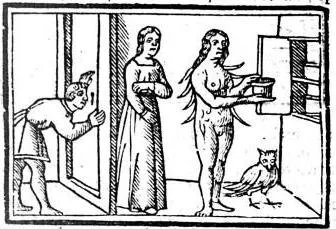
Then he sees Pamphile transform into an owl.
At this point, ordinary prudence might suggest taking notes.
Lucius asks Photis, the servant and his lover, to help him do the same.
Photis gives him the wrong ointment.
He becomes an ass.
The desire to become more than human
Lucius’ mistake is not simply that he uses the wrong jar.
The wrong jar is only the instrument of a deeper error.
He wants transformation without formation.
He wants power without discipline.
He wants hidden knowledge without the patience required to understand it.
He wants the visible sign of freedom—a bird’s wings—without asking what freedom is for.
This is one of the oldest temptations in human life.
A person sees a power, a title, a body of knowledge, an office, a technique, a tradition, a social role, or a reputation and imagines that possessing it will make him more fully himself.
He does not ask what the power will require of him.
He does not ask whether his character can bear it.
He does not ask whether he is seeking wisdom or merely escape from the ordinary burdens of being human.
Lucius wants to rise above human limitation. He gets a lesson in human limitation delivered through ears.
The bird and the ass
The contrast is almost too perfect.
The bird rises. It sees from above. It moves lightly. It suggests freedom, perspective, elevation, and escape from the earth.
The ass bears weight. It is driven, beaten, loaded, sold, mocked, overworked, and treated as useful only so long as it can carry another person’s burden.
Lucius wants transcendence.
He gets servitude.
This is not merely a joke about bad magic.
It is a moral image.
A person who seeks power for the wrong reasons may become less free, not more. The hunger to be exceptional can make him dependent on admiration. The desire to know hidden things can make him vulnerable to manipulation. The wish to escape ordinary duties can make him incapable of meeting them. The pursuit of a grand identity can leave him unable to perform the small responsibilities that make a life honorable.
Lucius does not become an ass because magic fails.
He becomes an ass because he wants transformation without the discipline required to survive it.
The modern bird fantasy
The bird fantasy has not disappeared.
We still want to become elevated versions of ourselves with minimal inconvenience.
We want the secret method, the hidden knowledge, the perfect routine, the title, the promotion, the degree, the revelation, the spiritual experience, the productivity system, the physical transformation, or the social recognition that will finally remove us from the difficult business of being ordinary.
The problem is not ambition.
Ambition can be noble.
The problem is the wish to become “more” without becoming better.
A person may receive the higher office and remain ruled by the same vanity.
He may learn the hidden teaching and remain unable to govern anger.
He may gain public attention and become more dependent upon applause.
He may become “free” from one obligation only to discover that he is now captive to another.
The bird fantasy is often the desire to avoid the slow labor of character.
Apuleius has a ruthless answer.
Very well. You may become something else.
Be careful what you ask to become.
The Masonic lesson
The Masonic comparison is not that Lucius represents the uninitiated or that a lodge exists to make men less donkey-like. That would be both unkind and silly.
The better comparison concerns the difference between advancement and formation.
A degree can mark progress. It cannot replace preparation.
A title can recognize service. It cannot create the character required for service.
A symbol can awaken aspiration. It cannot perform the work that aspiration demands.
The desire for Light is noble when it includes willingness to be corrected by Light.
It becomes dangerous when it means, “I want the appearance of elevation without the labor of becoming capable of it.”
Lucius wants to fly.
He must first learn how to stand.
Endnotes and further reading
Apuleius, Metamorphoses Book 3, especially Lucius’ fascination with Pamphile’s magic and his transformation into an ass.
Apuleius identifies himself as a Platonist in his apologetic and philosophical self-presentation; his novel’s relation to Platonism remains a major scholarly question.[2][3]
On the philosophical and literary complexity of Apuleius’ Metamorphoses, see modern scholarship on the novel’s satiric and Platonic dimensions.[4]
Related reading: “Curiosity Is Not Yet Wisdom.”