Hercules Had Two Addresses: Plotinus and the Divided Soul
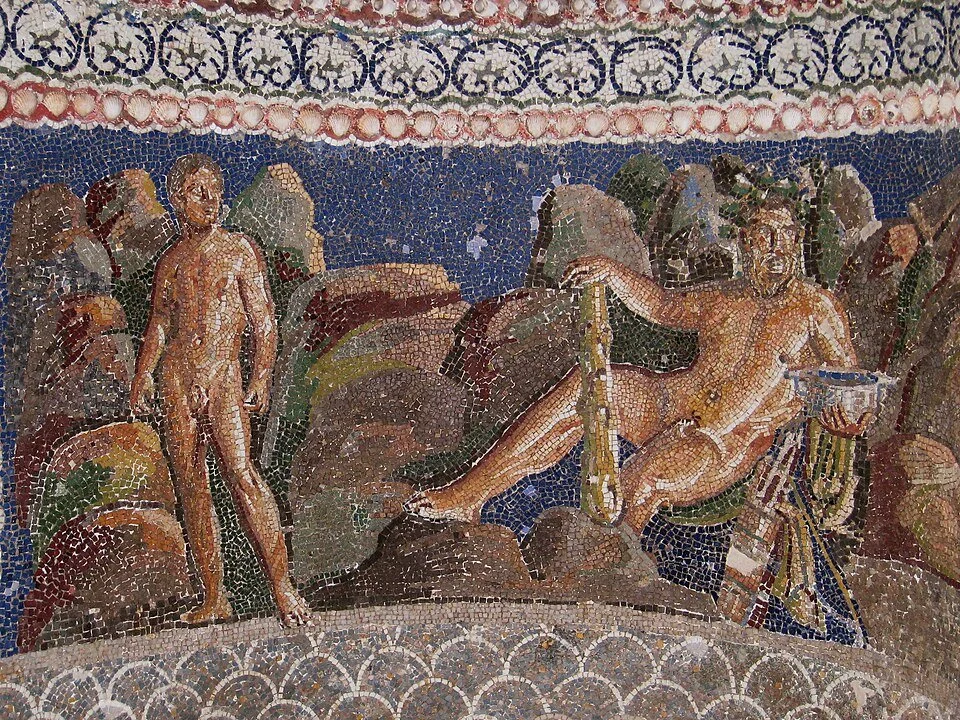
Why does Homer place Heracles both among the gods and as a shade in Hades? Plotinus turned the paradox into one of Neoplatonism’s most striking images of human double nature.
Homer presents a puzzle. Odysseus sees the shade of Heracles in Hades, yet tells us that Heracles himself is among the immortal gods.
This seems unfair to Heracles, who had already completed enough difficult assignments without being required to occupy two metaphysical addresses at once.
Plotinus, the third-century founder of what we now call Neoplatonism, thought the puzzle was instructive. The two Heracles figures—the shade below and the god above—could express the twofold condition of the human soul. Something in us is involved with bodily life, memory, passion, sensation, and the long administrative tangle of being mortal. Something in us remains higher, turned toward Intellect and the divine.
We are, in short, not as simple as we look in a passport photograph.
The shade and the self
In Ennead I.1, Plotinus comments on the Homeric image of Heracles’ shade in Hades and Heracles himself among the gods. He connects the myth with the soul’s divided or layered condition. Later discussion of his teaching identifies the Heraclean shade with the lower, sense-related aspect of soul, while Heracles “himself” represents the higher identity.[15][16]
This should not be imagined as two souls stuffed into one person like badly packed luggage. Plotinus is distinguishing powers or orientations.
The lower aspect is tied to embodied life: sensation, memory, desire, fear, the experience of pleasure and pain, and the complicated business of acting in time. The higher aspect is capable of relation to Intellect—the realm of stable intelligible reality, truth, and divine order.
The ordinary mistake is to suppose that the lower life is the whole of us. It is not. It is real, pressing, noisy, and often hungry, but it is not the final measure of the self.
Heracles and active virtue
Plotinus does not make Heracles his supreme model of the contemplative philosopher. That distinction is important.
Heracles is a hero of active virtue. He labors, serves, protects, suffers, and acts for the benefit of others. Plotinus says that because of his noble service, he was judged worthy to be called a god. Yet Heracles’ excellence remains bound to action rather than to the undistracted contemplation of the highest intelligible realities.[15][17]
This is not a criticism in the ordinary sense. It is a placement.
Heracles represents the person who has learned to act nobly in the world. The philosopher, in Plotinus’ highest sense, seeks also to know the source from which noble action takes its measure. One deals with the wilderness; the other seeks the stars by which it may be navigated.
The two are not enemies. They are levels of a life.
The twin nature of the human being
Plotinus’ interpretation has remarkable staying power because it describes a familiar experience.
Part of us wants the good. Another part wants a second helping. Part of us recognizes that anger distorts judgment. Another part prepares a devastating speech in the shower. Part of us longs for truth, beauty, and a life of purpose. Another part spends an afternoon arguing with a printer.
This is not evidence that human beings are hypocrites by accident. It is part of our composite condition. The task is not to pretend the lower self does not exist. The task is to stop allowing it to define the whole person.
For Plotinus, the ascent of the soul is therefore a recovery of attention. One turns away from the claim that bodily pleasure, pain, reputation, and anxiety are ultimate. One turns toward what is more stable, rational, and real.
This is why the old Neoplatonic project can still speak to a reader interested in self-awareness. It does not ask, “How do I express every impulse?” It asks, “Which impulse deserves to speak for me?”
The Middle Chamber and the higher self
Here again, the Masonic parallel can be useful if it remains modest. The Middle Chamber, read philosophically, can be understood as an image of the mind’s ascent from mere motion toward understanding. The intellectual wages sought there are not only facts or titles. They are an enlarged capacity to discern order.
Plotinus would approve of the journey but add a warning: no staircase is useful if one brings the whole basement along as sovereign. The ascent requires a shift in what one takes oneself to be.
Heracles at once below and above is a powerful emblem for this tension. The human being is involved in the world without being reducible to it. The question of self-mastery is therefore also a question of self-recognition.
Endnotes
Plotinus, Ennead I.1, “On What Is the Living Being and What Is Man?” Plotinus comments on the Homeric distinction between Heracles’ shade in Hades and Heracles among the gods.[15]
Gerard O’Daly, trans. and comm., Plotinus: Ennead I.1 (Las Vegas: Parmenides Publishing, 2019), is a major modern treatment of the passage.[18][19]
On the lower Heraclean shade as a figure for the sense-related or lower soul, see the modern commentary summary of Plotinus’ treatment.[16]
For Plotinus’ theory of the higher and lower soul, see his Enneads IV.8, “On the Descent of the Soul into Bodies,” and scholarly discussion of the doctrine that a higher power of soul remains oriented toward the intelligible.[20][21]