The Lodge Mind
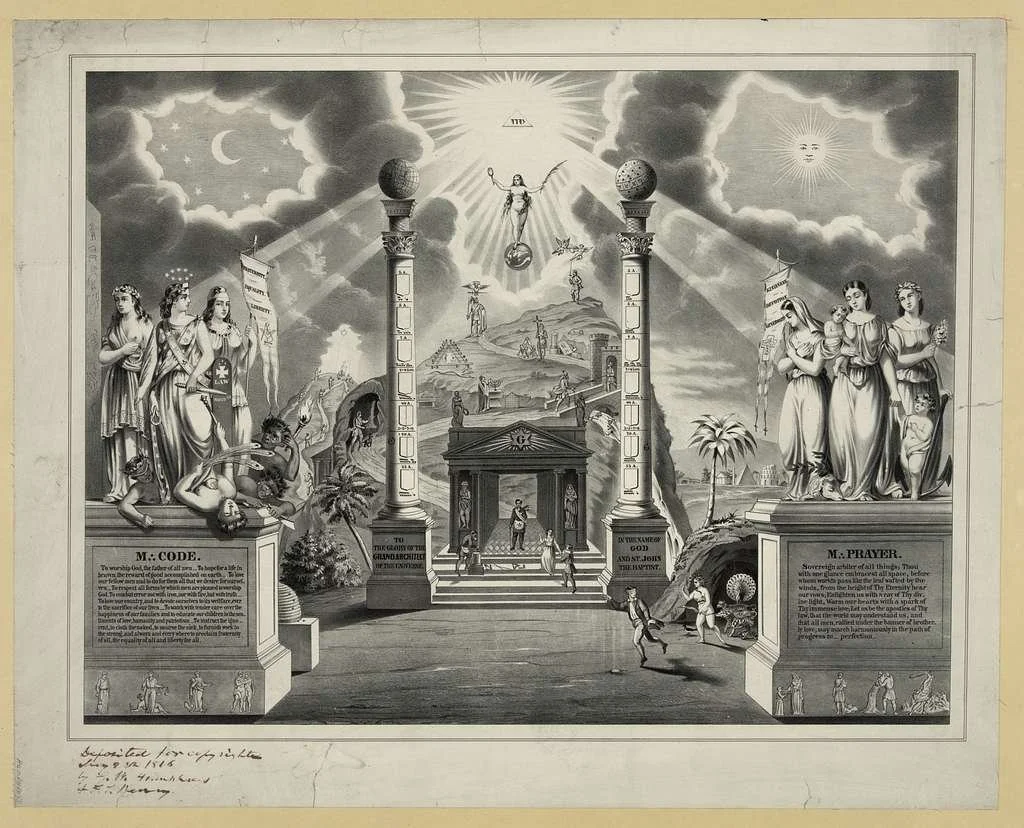
Why a Masonic egregore does not arrive finished, and why that should sober everyone up.
A lodge does not inherit a fully formed spiritual intelligence that automatically protects its interests. It inherits a possibility. What grows there depends on the men who feed it.
It is a charming idea, really.
A lodge is chartered, the officers are installed, the furniture is arranged, the lights are properly placed, and from that day forward an invisible beneficent presence hovers over the proceedings like a conscientious butler from another plane of existence. This presence, we are told, wants only the good of the lodge, quietly nudges things into order, and when an unpleasant member becomes too troublesome, eventually arranges to squeeze him out.
That view has one great advantage. It excuses everybody.
The brethren need not confront, correct, teach, labor, improve the ritual, raise standards, or attend to the moral quality of their meetings. The egregore will handle it. Which is convenient, because a supernatural mechanism that always agrees with one’s preference for avoiding conflict is the very model of a useful doctrine.
It is also, in my view, exactly backwards.
If an egregore means anything in a lodge setting, it does not mean an automatic guardian given complete at the founding, like a teapot in a wedding registry. It means the slowly accumulated psychic, symbolic, and moral result of repeated collective action. It is not a premade solution. It is a living consequence.
And consequences, as everyone eventually discovers, are not sentimental.
A lodge has a mind because its members lend it one
Every organized body develops a character beyond the sum of its individual members. This is true of armies, schools, churches, corporations, and families. It is especially true of ritual bodies.
A lodge’s collective life is built from recurring forms:
- the words it repeats
- the quality with which it repeats them
- the emotional tone of its gatherings
- its standards of attention or neglect
- what it praises
- what it excuses
- what it refuses to address
- what it fears
- what it loves
Because a lodge works with symbol, form, repetition, memory, and moral aspiration, it creates a stronger field than an ordinary dinner club. One need not insist on any extravagant metaphysics to see that repeated symbolic action forms people and binds them into a common atmosphere.
But a formed atmosphere is not necessarily a healthy one.
There is nothing in the abstract concept of an egregore that guarantees virtue. A lodge egregore is not automatically wise any more than a crowd is automatically wise. It is impressionable. It is nourished by what nourishes the lodge. It absorbs what is actually there, not what the brethren flatter themselves is there.
The old mistake: confusing ritual dignity with moral immunity
Fraternal people are especially vulnerable to a particular kind of confusion.
A room may feel solemn. The officers may know their stations. The opening may be done correctly. The candidate may be impressed. The building may have old portraits and dark wood and enough inherited dignity to make everyone stand a little straighter.
All of that can be good.
It can also conceal rot.
The presence of ritual form does not mean the inner life of the body is sound. In fact, ritual can become a very elegant method of concealing decay if men rely on symbolism they no longer labor to embody.
If members become passive, evasive, or self-congratulatory, then the lodge may continue to look alive long after its inner vitality has thinned out. The egregore, in such a case, is not absent. It is simply sick.
What actually feeds a lodge egregore
If we are going to use this language at all, then let us at least use it with some seriousness.
A lodge egregore is fed by:
- disciplined attention
- seriousness of purpose
- moral courage
- consistency of ritual
- reverence without theatrics
- the private work of members on themselves
- acts of fraternity that cost something
- truthfulness in governance
- beauty, order, and care in physical surroundings
It is equally fed by:
- vanity
- rank-consciousness
- bad ritual tolerated indefinitely
- petty grievances
- laziness disguised as harmony
- avoidance of unpleasant facts
- character problems never addressed
- meetings run as administrative drudgery
- casual contempt for the symbolic life of the lodge
To say “the lodge’s egregore will drive him out” when a toxic member is left uncorrected is not merely mistaken. It is a confession. What one is really saying is this: we ourselves will not act, and our refusal to act is now being consecrated as wisdom.
That refusal does not leave the egregore untouched. It feeds it.
Avoidance is not mercy, and passivity is not peace
This is the point that deserves a little contemplation.
Many men confuse niceness with charity and noninterference with harmony. But any institution dedicated to moral work must sometimes tolerate discomfort or it will forfeit its purpose. Correction, rightly offered, is not cruelty. Silence, when correction is needed, is not kindness. It is often cowardice in ceremonial clothing.
The trouble with passivity is not merely that it allows bad conduct to spread. The trouble is that it alters the lodge’s inner climate. A body that repeatedly refuses to govern itself becomes habituated to helplessness. Men begin to feel that standards are decorative. Ritual becomes disconnected from life. Cynicism enters quietly.
Then the most earnest men stop bringing their full selves into the room.
That is how a lodge declines: not usually by scandal, but by accumulated surrender.
The Golem problem
There is a useful parallel in the old warning tales about created beings. The Golem is often read as a story about magical ambition, but it is equally a story about maintenance. What is made must be tended. What is animated must be governed. Power without stewardship becomes danger.
Whether one reads the tale literally or symbolically does not matter much here. The principle remains sound.
A lodge creates something through repetition, concentration, memory, and common intention. If it neglects the thing it has made, that creation does not remain pure by nostalgia. It becomes whatever the actual moral-intellectual diet of the body supplies.
If the brethren feed a culture of excuses, the excuse becomes sacred. If they feed a culture of reverence joined to effort, that too becomes established.
There is no neutrality in maintenance.
How a lodge can strengthen its own better nature
If one wanted to strengthen what is noble in the lodge mind, the procedure would not be especially mysterious. It would involve plain, disciplined acts repeated over time.
For example:
- arriving on time
- conducting ritual carefully
- reducing needless chatter and administrative sprawl
- teaching members what symbols imply in life, not only in ceremony
- making prayer and recollection real rather than perfunctory
- addressing disorder when it first appears
- making instruction part of every meeting
- expecting members to labor inwardly, not merely attend outwardly
- remembering that the lodge apron stains first in conduct, not cloth
One might also intentionally frame meetings so that brethren are reminded, before important work, that the lodge is not merely a room but a moral field shaped by their thoughts and deportment. That reminder alone, if sincere and repeated, would change much.
Because once a man understands that his indifference is not private—that it actually enters the common life—he loses the luxury of pretending that disengagement is neutral.
A lodge egregore is not a substitute for governance
This point must remain central.
No lodge should use “the egregore” as an excuse for failing to perform ordinary human duties. If someone behaves badly, address it. If ritual is poor, improve it. If meetings are lifeless, enliven them. If members are apathetic, ask why. If officers are unprepared, train them. If the symbolic life of the lodge is thinning, recover it deliberately.
The invisible will not save an institution from the consequences of the visible.
Indeed, if occult theory is right at all, the visible is exactly how the invisible is fed.
In Closing
To speak of a lodge egregore responsibly is to speak of responsibility itself.
Not of a spirit that saves men from the need to act, but of a subtle body built by the quality of their actions. Not of magical outsourcing, but of magical accountability. Not of passive confidence that “things will work out,” but of clear understanding that what is repeatedly tolerated becomes part of the soul of the lodge.
The question, then, is not whether the lodge has an egregore.
Of course it does, in some sense.
The question is: what kind of thing are the brethren teaching it to be?
Endnotes
- [1] Mouni Sadhu, The Tarot: A Contemporary Course of the Quintessence of Hermetic Occultism (London: George Allen & Unwin, 1962), discusses egregores as collective entities with psychic vitality.
- [2] Mark Stavish, Egregores: The Occult Entities That Watch Over Human Destiny (Rochester, VT: Inner Traditions, 2018), especially chapters on organizational egregores and their maintenance.
- [3] Annie Besant and C. W. Leadbeater, Thought-Forms (1905), on how repeated thoughts and emotions become durable patterns.
- [4] Alexandra David-Néel, Magic and Mystery in Tibet, for the distinction between intentionally generated forms and the danger of poorly governed psychic creations.