The Flushing Remonstrance: How Queens Helped Write the First Chapter of American Religious Freedom
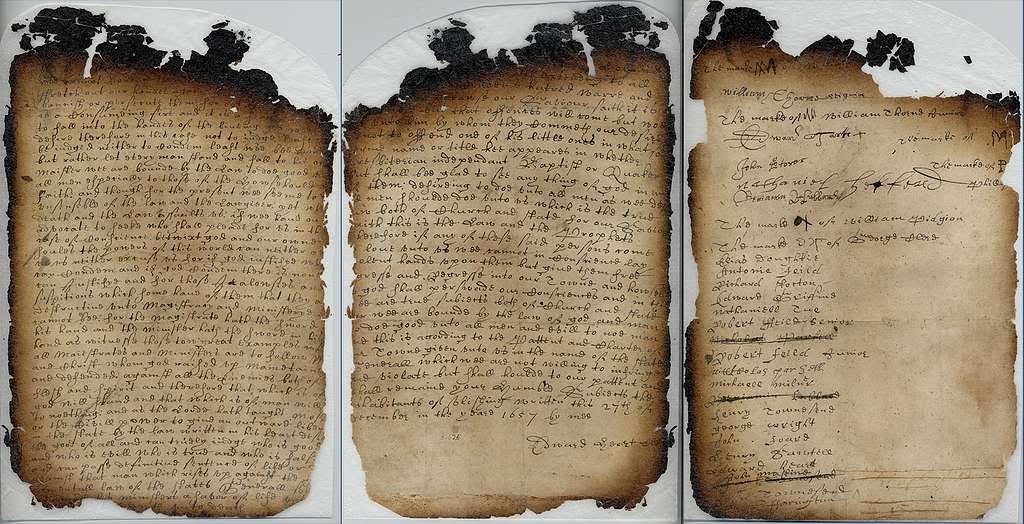
The Flushing Remonstrance Document, 1657.
Few local documents in American history have acquired greater significance than the Flushing Remonstrance.
Drafted in December 1657 in the small town of Flushing, Queens, it began as a protest against the persecution of Quakers by the Dutch colonial government of New Netherland. But over time it came to represent something much larger: one of the clearest early defenses, on American soil, of the principle that the state should not punish people for matters of conscience.
That claim now feels familiar. In the seventeenth century, it was anything but.
The men who signed the Remonstrance were not national founders, constitutional theorists, or famous revolutionaries. They were residents of a young colonial settlement on the edge of empire. Yet in objecting to religious persecution—not primarily for themselves, but for others—they helped articulate an idea that would echo far beyond their own town and century.
The result was one of the most extraordinary acts of moral and civic courage in early New York history.
Flushing in a divided colonial world
To understand the power of the Remonstrance, it helps to understand the place that produced it.
Flushing was founded in 1645 as Vlissingen under Dutch rule, but from the start it was not a straightforward Dutch town. Many of its settlers were English-speaking, and the settlement reflected the mixed and sometimes unstable character of New Netherland itself: Dutch in sovereignty, diverse in population, commercially ambitious, and frequently uneasy in its local politics.
This mixture gave Flushing a distinctive cast. It was a place where questions of authority could not easily be separated from questions of culture, language, religion, and local custom. It existed within an imperial system, but it also contained residents who expected a degree of latitude in how they lived.
That expectation would soon be tested.
Peter Stuyvesant and the limits of tolerance
The Dutch Republic enjoyed, and still enjoys, a reputation for relative tolerance compared with many of its European contemporaries. But tolerance in the seventeenth century was rarely simple, and it was almost never universal. Even where dissent was unofficially endured, it could still be formally restricted, closely watched, or selectively punished.
In New Netherland, those limits became especially visible under Director-General Peter Stuyvesant.
Stuyvesant was not inclined to welcome religious dissent. Among the groups he regarded with particular suspicion were the Quakers, whose growing presence in the Atlantic world alarmed authorities in colony after colony. To many magistrates, Quakers were not simply unconventional believers. They were disorderly, disruptive, and potentially subversive. Their refusal to defer to established hierarchies made them seem threatening both socially and politically.
Stuyvesant acted accordingly. Quakers and those who received them faced fines, harassment, arrest, and official sanction. What was at issue was not merely private belief, but the right of civil power to regulate religious life and punish those who departed from the approved norm.
That pattern was common enough in the seventeenth century. Religious uniformity was widely assumed to be essential to public order. What happened in Flushing was unusual because local residents refused to accept that assumption quietly.
The petition that became a landmark
In December 1657, Stuyvesant’s government issued or enforced restrictions forbidding the inhabitants of Flushing from harboring or entertaining Quakers. In response, local residents produced a written protest addressed to the governor and council.
That protest is what history remembers as the Flushing Remonstrance.
Its importance lies not merely in its defiance, but in the argument it made. The signers did not deny the power of government in every sphere. Nor did they offer a modern theory of individual rights in the later American sense. Their language was older, more communal, and more deeply religious. They grounded their appeal in Christian principle, moral duty, and the claims of conscience.
Most famously, they invoked “the law of love, peace and liberty,” and declared that they could not in conscience “lay violent hands” upon those whose offense was religious difference. They also appealed to the Golden Rule: “doing unto all men as we desire all men should do unto us.”
That language is one of the reasons the Remonstrance endures.
It does not sound like a constitutional brief. It sounds like something at once more local and more universal: neighbors refusing to become agents of persecution.
Why the Remonstrance was so extraordinary
The most striking feature of the document is that it was not principally a demand for liberty on behalf of the signers themselves. Most were not Quakers. They were defending the right of others to live and worship without harassment.
That is what gives the Remonstrance such unusual moral force.
It is one thing for a persecuted minority to protest its own treatment. It is another for those outside that minority to risk official punishment by insisting that persecution itself is wrong. The men of Flushing were not announcing agreement with Quaker doctrine. They were drawing a line against coercion.
In doing so, they advanced a principle that was rare for its time and remains impressive in any time: that peaceable difference in religion should not be treated as a civil offense.
This did not amount to a modern doctrine of pluralism in the full sense. The signers were men of their own century, not ours. But their argument unmistakably challenged the idea that the magistrate had the right to police conscience by force. That challenge, even in embryo, was historically significant.
The cost of dissent
The Remonstrance did not persuade Stuyvesant immediately.
He responded with anger. Local officeholders were punished or displaced. Signers and sympathizers faced pressure and, in some cases, arrest. Flushing’s brief act of resistance was met with the familiar instruments of political authority: discipline, intimidation, and the reassertion of control.
That response is part of what gives the episode its weight.
The document was not a piece of abstract moral theater. It carried risks. The men who endorsed it were not merely airing an opinion. They were confronting a governing system that had the power to make dissent materially painful.
And yet the protest survived—not only as a text, but as a precedent.
It established that in this small Long Island town, at this early date, there were residents willing to state publicly that government had no rightful place in punishing peaceful worship. The fact that they lost in the short term does not diminish the importance of what they said. If anything, it sharpens it.
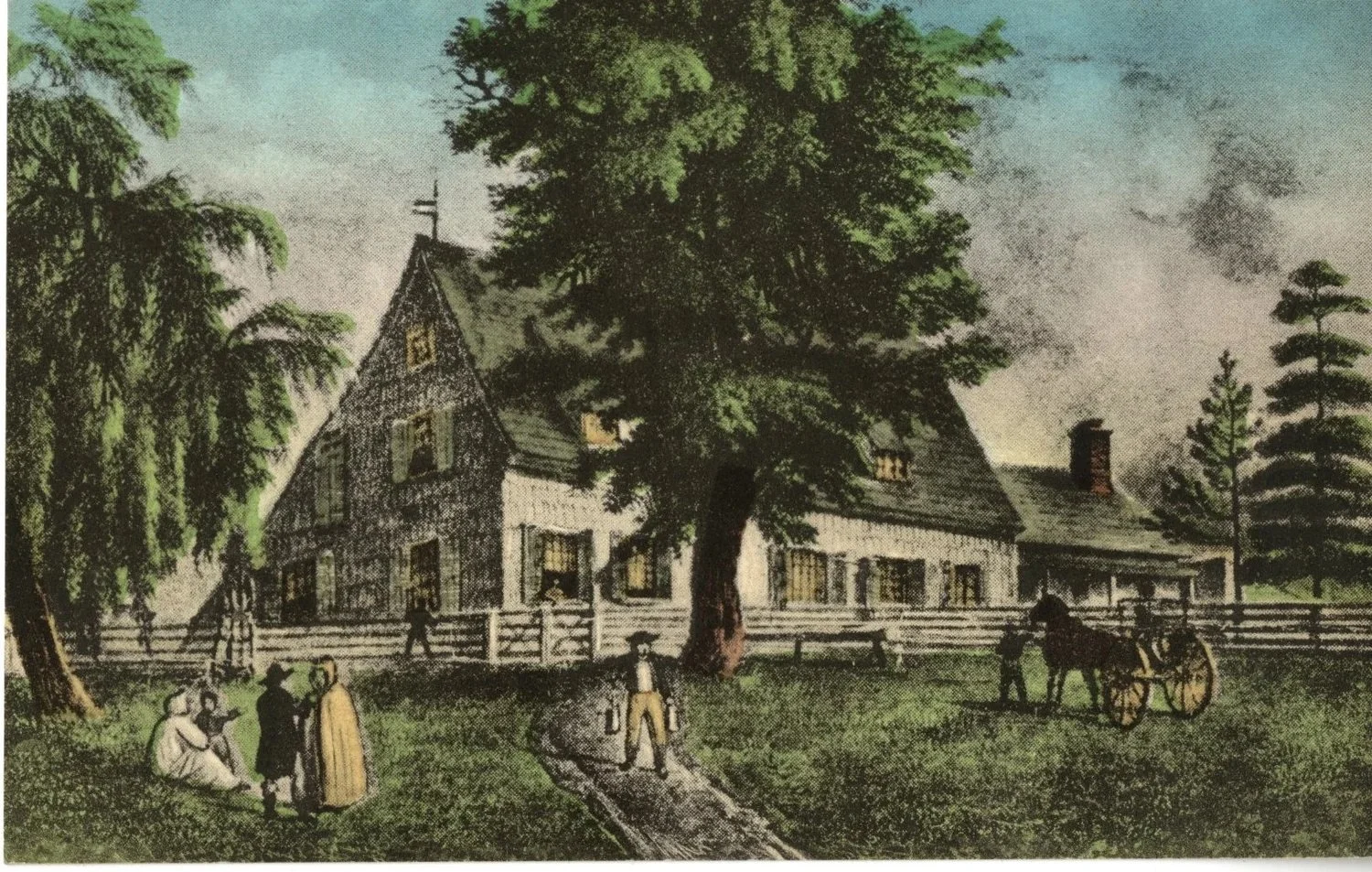
John Bowne House, Flushing, c. 1825. Public domain.
John Bowne and the continuation of the struggle
The principles embodied in the Remonstrance did not disappear after the petition was suppressed. They reappeared in the life of John Bowne, perhaps the most famous early resident of Flushing.
Bowne allowed Quaker meetings to be held in his house and was arrested, imprisoned, and banished for doing so. But rather than submit quietly, he appealed to the authorities in the Netherlands. His case reached the Dutch West India Company, which ruled in a way that effectively checked Stuyvesant’s religious repression.
Bowne’s victory did not create full religious liberty in any modern sense. But it did matter greatly. It demonstrated that the governor’s campaign against dissent had limits, and it strengthened the practical position of those who argued that conscience should not be subject to arbitrary colonial punishment.
Taken together, the Remonstrance and Bowne’s resistance made Flushing one of the most important early sites in the history of religious freedom in North America.
A religious argument for freedom of conscience
One of the most important things to understand about the Flushing Remonstrance is what it was not.
It was not a secular declaration centuries ahead of its time. It was not written from indifference to religion. It did not rest on the claim that doctrine was private because doctrine did not matter.
Quite the opposite.
The Remonstrance emerged from a worldview in which religion mattered profoundly. Its force came from the belief that conscience was accountable first to God, and that coercion in spiritual matters therefore violated both Christian duty and proper civil order. In that sense, it was a religious defense of religious freedom.
That distinction matters because it places the document in its true historical setting. The signers were not escaping the moral language of their age. They were using it to resist oppression. And that makes the Remonstrance not less significant, but more.
It reminds us that liberty of conscience in America was not born only from Enlightenment abstraction or later constitutional design. It was also shaped by believers who concluded that the state overreached when it presumed to command the soul.
Why it still matters
The larger American story of freedom is often told through more famous places and more dramatic events: Philadelphia assemblies, revolutionary pamphlets, constitutional conventions, landmark court decisions. But history is also formed in smaller settings, in local confrontations whose significance becomes fully visible only later.
Flushing was one of those settings.
The Flushing Remonstrance deserves to be remembered not merely as an old petition, but as an episode of genuine courage: a moment when ordinary residents, under pressure from above, refused to become participants in persecution. They did not claim that all beliefs were the same. They did not abandon conviction in order to defend tolerance. They simply insisted that civil power had crossed a line it should not cross.
That is why the document remains so compelling.
It preserves one of the earliest surviving statements, in what would become the United States, that peaceable people should not be punished for worshipping differently. It shows that the struggle for liberty of conscience was already being waged long before the founding era gave that struggle its more familiar political vocabulary.
And it confirms that Queens, often treated as peripheral in the story of early America, was in fact the setting for one of its most consequential moral arguments.
The Flushing Remonstrance is not just a relic.
It is a witness.
And what it witnessed was the moment a small town declared that conscience was not the government’s to command.
Sources and Notes
Images:
The Flushing Remonstrance document, 1657, scan of a public-domain original by the New York State Archives, public domain, Wikimedia Commons, file “Flushing Remonstrance.jpg.”
Jacques Gérard Milbert, View of Flushing (Long Island): Mr. Bowne’s House, 1825, lithograph by Charles Étienne Pierre Motte, New York Public Library, I. N. Phelps Stokes Collection of American Historical Prints, CC0 1.0/Public Domain, via NYPL Digital Collections and PICRYL.
Literary:
New York State Archives, “The Flushing Remonstrance, 1657,”
https://www.archives.nysed.gov/education/flushing-remonstrance
National Park Service, “The Flushing Remonstrance,”
https://www.nps.gov/articles/flushing-remonstrance.htm
Bowne House Historical Society,
New York History Blog, material on the Flushing Remonstrance and early religious liberty in New Netherland,
https://www.newyorkhistoryblog.org
Historical Society of the New York Courts, “The Flushing Remonstrance, 1657,”
https://history.nycourts.gov/about_period/flushing-remonstrance
W. W. Munsell & Co., History of Queens County, New York (New York, 1882), for background on early Flushing and colonial Queens.
Editor’s Note
This article is part of the Flushing local history series for the Queens History section of bretemurphy.com.