Advance Lodge No.635

Official Seal of Advance Lodge No.635, Astoria, New York
The Lodge Named for an Arctic Brig
Advance Lodge No. 635, Astoria’s Civic Builders, and the Long Voyage to a Permanent Home
Named for the ice-bound vessel of a nineteenth-century Arctic expedition, Advance Lodge No. 635 grew from improvised rooms in old Astoria into one of Queens’ most active Masonic institutions—and ultimately the home of Advance Service Mizpah Lodge No. 586.
On a November afternoon in 1915, several hundred Masons marched through Astoria in formation.^1 The Mecca Temple Band played “Onward, Christian Soldiers.”^2 Knights Templar marched in uniform.^3 Grand Lodge officers wore the purple and gold of their offices.^4 Local residents gathered along the route as the procession moved from the lodge’s old rooms toward Grand Avenue, where a new Masonic temple was rising.^5
The crowd was celebrating a building, but it was also celebrating survival.^6
For nearly half a century, Advance Lodge No. 635 had met in borrowed rooms, endured financial depressions, supported members and families in distress, and watched Astoria transform from a village connected to Manhattan by steamboat into a growing urban neighborhood.^7 Its members had raised funds, built institutions, served the public, and carried their Masonic work through periods of both prosperity and hardship.^8
The new temple promised a permanent home.^9 But the lodge’s deeper identity had been established long before the cornerstone was laid.^10
It was there in its name: Advance.^11
A Lodge for a Village After War
Advance Lodge was formed in Astoria in the years immediately after the Civil War.^12 In 1866, the village remained semi-rural.^13 Its strongest connections to the wider city came by water, through steamboat routes linking Astoria with Manhattan.^14 Travel was slower, local institutions were fewer, and a Mason who belonged to a distant lodge might find regular attendance difficult.^15
A group of local Masons decided that Astoria needed a lodge of its own.^16
Twenty-two petitioners gathered in Odd Fellows Hall to discuss the possibility.^17 They came from a variety of backgrounds and prior lodges.^18 Their occupations included florists, ship carpenters, painters, printers, merchants, blacksmiths, a hotel keeper, a tailor, a bookkeeper, a coppersmith, a marine-insurance man, and others whose work reflected the commercial and working life of nineteenth-century Queens.^19
The petitioners asked Grand Master Robert D. Holmes for a dispensation.^20 It was granted on January 22, 1867.^21 John R. Clark, a Scottish-born florist who had been raised in Beacon Lodge No. 283, was named Master.^22 John E. Oloff became Senior Warden; Edwin A. Cadwell, Junior Warden; James D. Torrey, Treasurer; and Caleb G. Francis, Secretary.^23
The lodge received its charter as Advance Lodge No. 635 on July 3, 1867.^24 Its recommendation had been supported by Architect Lodge No. 519 and Island City Lodge No. 586, establishing a connection between Astoria and Hunter’s Point that would eventually become part of a common lineage.^25
Why “Advance”?
The lodge’s name came from the brig Advance, a 120-ton vessel used by Dr. Elisha Kent Kane during the Grinnell Arctic expeditions.^26 The expeditions sought news of Sir John Franklin’s lost 1845 voyage, which had disappeared in the Arctic with the ships Erebus and Terror.^27
The Advance left New York with Kane’s expedition in 1853.^28 The vessel and her small crew endured two brutal Arctic winters at Van Rensselaer Harbor in northwest Greenland.^29 Kane and his men made long sledge journeys across sea ice, carried out geographic observations, and faced dwindling supplies, illness, exhaustion, and severe cold.^30 In 1855, with the brig trapped in ice and provisions running low, the party abandoned the Advance and began an eighty-three-day journey toward rescue.^31
The story had special force in postwar Astoria.^32 It was a story of endurance, hardship, duty, and perseverance under conditions that seemed impossible.^33 The lodge’s early historian credited Right Worshipful Robert McCoskry Graham, 33°, with selecting the name and designing the lodge seal.^34 The seal showed the brig Advance approaching the entrance to Lancaster Sound, based on an engraving in Kane’s published narrative.^35
Graham was more than a symbolic figure.^36 In civil life, he served as a trustee of Astoria, Supervisor of Queens County, and a member of Governor Hoffman’s staff.^37 He was active in multiple branches of Masonry but remained deeply committed to the Blue Lodge.^38 His financial and personal support helped establish Advance Lodge during its early years.^39
The choice of Advance was therefore not simply nautical nostalgia.^40 It was a declaration of character.^41 The lodge would be expected to move forward through hardship.^42
The Old Rooms at Fulton Avenue
Advance Lodge began in temporary quarters.^43 Meetings were held in Carouthers Hall on Main Street, and later the lodge joined with Astoria Lodge of the Independent Order of Odd Fellows to purchase furniture and paraphernalia from Marsh Lodge No. 188 of Williamsburg.^44 The two organizations shared costs and used Mechanics Hall on Fulton Avenue.^45
Eventually, Advance Lodge moved to Masonic Hall at 165 Fulton Avenue, where it met for about forty years.^46
The rooms became the setting for generations of Masonic life: degree work, officer installations, instruction, social events, funerals, celebrations, and quiet evenings of fellowship.^47 But they were not always comfortable.^48 Records mention problems with heating, ventilation, sanitation, and landlord relations.^49 At one point, a fire escape constructed without the lodge’s consultation created concerns about privacy and access to the lodge room.^50
The building itself was above a tavern.^51 This was not unusual for the era; many fraternal bodies met in upper floors above commercial establishments.^52 Yet it created a contrast between the formal labor conducted upstairs and the noisy public life below.^53
The old hall was imperfect, but it became beloved.^54
Years later, after the lodge moved to its new temple, someone reportedly referred to the former quarters as “the old dump.”^55 An elderly Past Master rose in protest. “I first saw the Light of Masonry in that old building,” he said. “Please do not call it a dump.”^56
The comment captured an important truth of lodge history.^57 Buildings become meaningful not because they are elegant, but because people associate them with the formative moments of their lives.^58
Advance Lodge grew as Astoria grew.^76
Its members were active in local government, education, public safety, business, law, religion, civic improvement, and community organizations.^77 Henry Clay Johnson, for example, served as Astoria postmaster, Queens political leader, state legislator, and advocate for the bridge project that made the Queensboro Bridge possible.^78 He was also a Past Master of Advance Lodge.^79
Other members were connected with real estate, schools, volunteer fire companies, health organizations, banks, commercial enterprises, churches, and public works.^80 The lodge was not separate from Astoria’s civic culture.^81 It was one of the places where that culture gathered.^82
Advance Lodge also participated in public ceremonial life.^83 It joined Mizpah Lodge in laying the cornerstone for the Robert J. Marks Post, G.A.R., monument at Mount Olivet Cemetery in 1889.^84 In 1890, it helped lay the cornerstone of the Union Church at Ditmars Avenue and Albert Street, with William Steinway serving as chairman of ceremonies.^85
It held family reunions, ladies’ nights, entertainments, public installations, lectures, dinners, and charitable events.^86 It received Grand Lodge officers and visiting Masons from across Long Island and New York.^87 Its rooms were a place of ritual, but they were also a community institution.^88
Charity Through Hard Years
Like many nineteenth-century voluntary organizations, Advance Lodge experienced the effects of national economic downturns.^89
The Panic of 1873 and the prolonged depression that followed were especially difficult.^90 Membership declined.^91 Some brethren could not pay dues.^92 Others left town in search of work.^93 The lodge’s treasury was strained, and its records recount cases of illness, poverty, distress, burial expenses, and families in need.^94
Still, the lodge continued to offer help.^95
It paid for nursing care when Astoria had no hospital.^96 It assisted widows and children.^97 It extended relief to visiting Masons and sojourners who appeared at its door.^98 In some cases, assistance came directly from the pockets of members present at a meeting.^99
One incident from 1879 captures the spirit of the lodge.^100 A member had drowned in Lake Ontario.^101 His widow, living in Baltimore, was destitute.^102 The lodge had little money, yet members arranged for the recovery and burial of the body with Masonic honors.^103 Subscriptions from the brethren paid the funeral expenses and left enough to send assistance to the widow.^104
The historian of Advance Lodge later called such moments evidence of the “Spirit of Advance.”^105
That phrase deserves to be remembered.^106 It described a belief that advancement did not mean comfort or status alone.^107 It meant acting with responsibility when circumstances were difficult.^108
From Building Fund to Temple
By the turn of the twentieth century, Advance Lodge had revived and grown.^109 Its members were increasingly dissatisfied with the old rooms at 165 Fulton Avenue.^110 The need for a permanent home became a subject of serious discussion.^111
In 1909 and 1910, the lodge began to acquire a site on Grand Avenue near Van Alst Avenue.^112 The lot was purchased through the efforts of trustees and supporters, despite the fact that the lodge did not initially have all the money required.^113 Members raised funds, subscribed to bonds, and worked through a long campaign of planning, fundraising, and debate.^114
Several architects submitted plans.^115 The eventual design was associated with Arthur Wenige, a former Advance Lodge member and architect.^116 A “whirlwind campaign” urged each member to contribute toward the building fund.^117 The effort was practical, personal, and relentless: brethren visited one another, secured subscriptions, and built a financial base strong enough to begin construction.^118
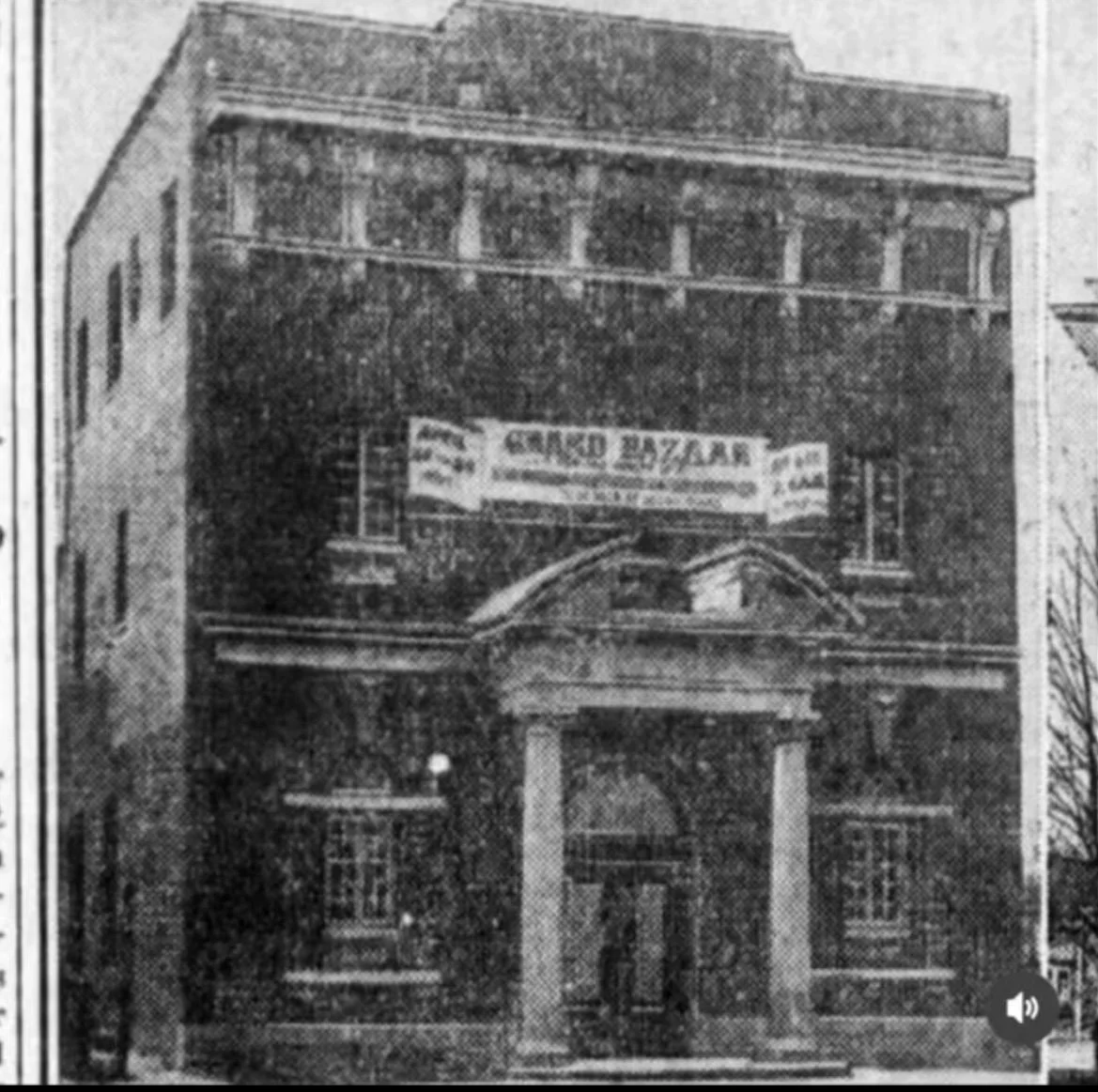
Advance Masonic Temple, Grand Opening in 1916
Ground was broken in September 1915.^119
On November 20, 1915, the lodge’s history became visible in the streets of Astoria.^120 About 800 Masons, joined by visiting bodies and Grand Lodge officers, marched from the old rooms to the new building site.^121 The procession was led by the Mecca Temple Band.^122 Knights Templar marched in uniform, and spectators followed as the band played “Onward, Christian Soldiers.”^123
Grand Master George Freifeld laid the cornerstone.^124 Henry Martin, the lodge historian, read an account of Advance Lodge’s first forty-eight years.^125 Henry C. Johnson delivered the oration.^126 The new building was described as a brick-and-stone structure intended exclusively for Masonic purposes.^127
The temple was ready for occupancy by May 1916.^128 Its dedication followed in November.^129 The work had cost thousands of dollars, and the members had supplied not only funds but furnishings, altar equipment, stained glass, memorial objects, stonework, chairs, draperies, and personal labor.^130
The building became a lasting expression of what a local lodge could accomplish when its members believed in a common project.^131
War, Service, and a Changing Astoria
The completion of the temple coincided with the First World War.^132
Advance Lodge’s new building was soon used for Red Cross and wartime-relief purposes.^133 The lodge supported Liberty Loan campaigns, relief funds, and service-related activities.^134 It remitted dues for members in military service, created a Roll of Honor, displayed a service flag, and used special dispensations to confer degrees on men preparing to leave for the armed forces.^135
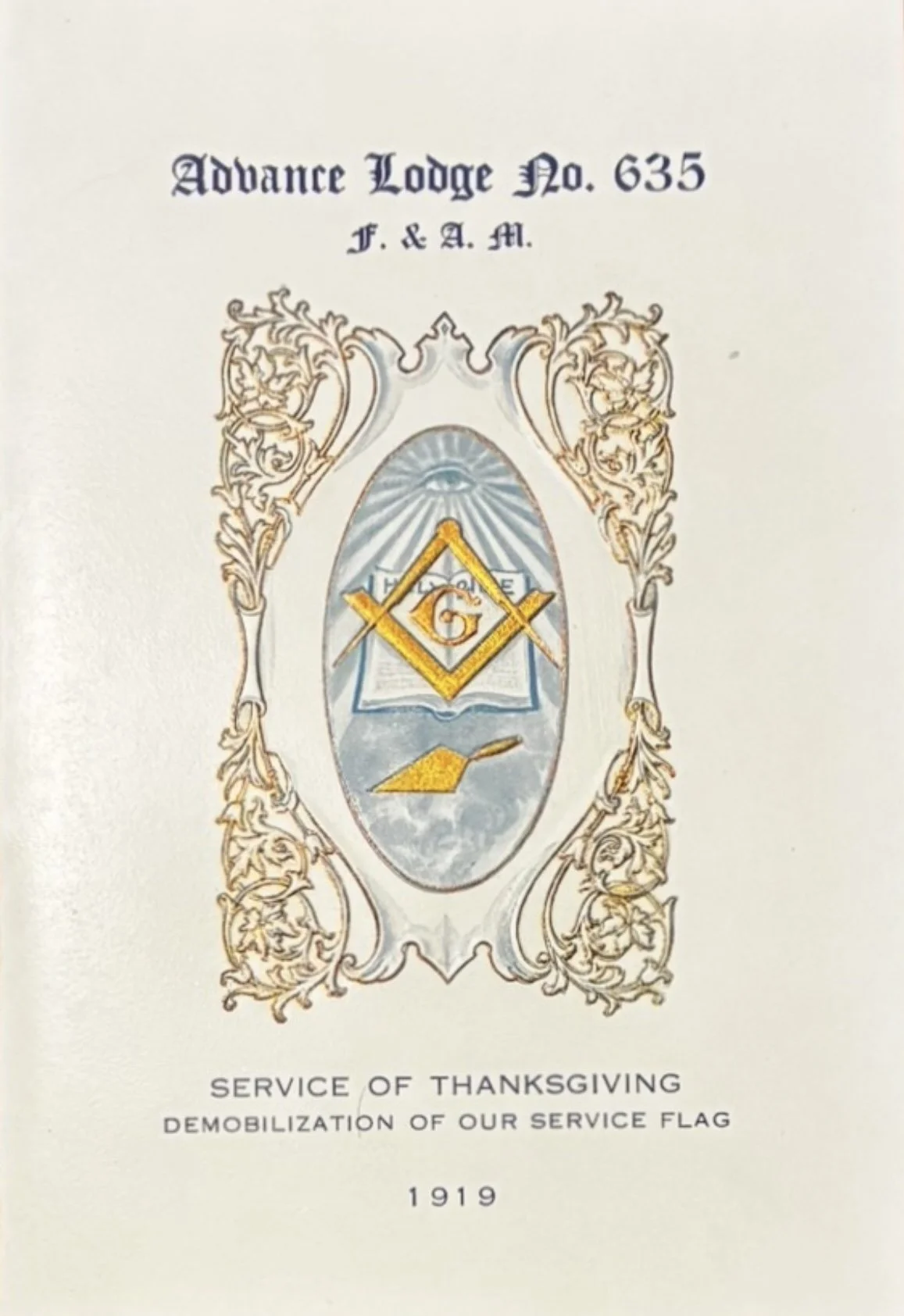
The lodge’s wartime records show the emotional intensity of the era: pride, anxiety, separation, grief, and relief.^136 It recorded the names of brethren who did not return.^137 It welcomed home those who did.^138 In 1919, it held a memorial service and formally “demobilized” its service flag.^139
After the war, Astoria changed at remarkable speed.^140 The village landscape gave way to apartments, transit routes, industrial growth, and new residents from across the city and the world.^141 Advance Lodge expanded with the neighborhood, taking in men from increasingly varied backgrounds and occupations.^142
The lodge also helped support the formation of new bodies, including Astoria Lodge No. 963 and King David Lodge No. 994.^143 In this way, its influence extended beyond its own membership.^144
The Name That Endured
In 1993, Advance Lodge No. 635 consolidated with Island City Mizpah Lodge No. 586 to form Advance Island City Mizpah Lodge No. 586.^145 In 2018, that body consolidated with Service City Geba Lodge No. 1009, creating Advance Service Mizpah Lodge No. 586.^146
The old number 635 no longer appears in the present lodge title, but Advance remains first in the name.^147
That is fitting.^148
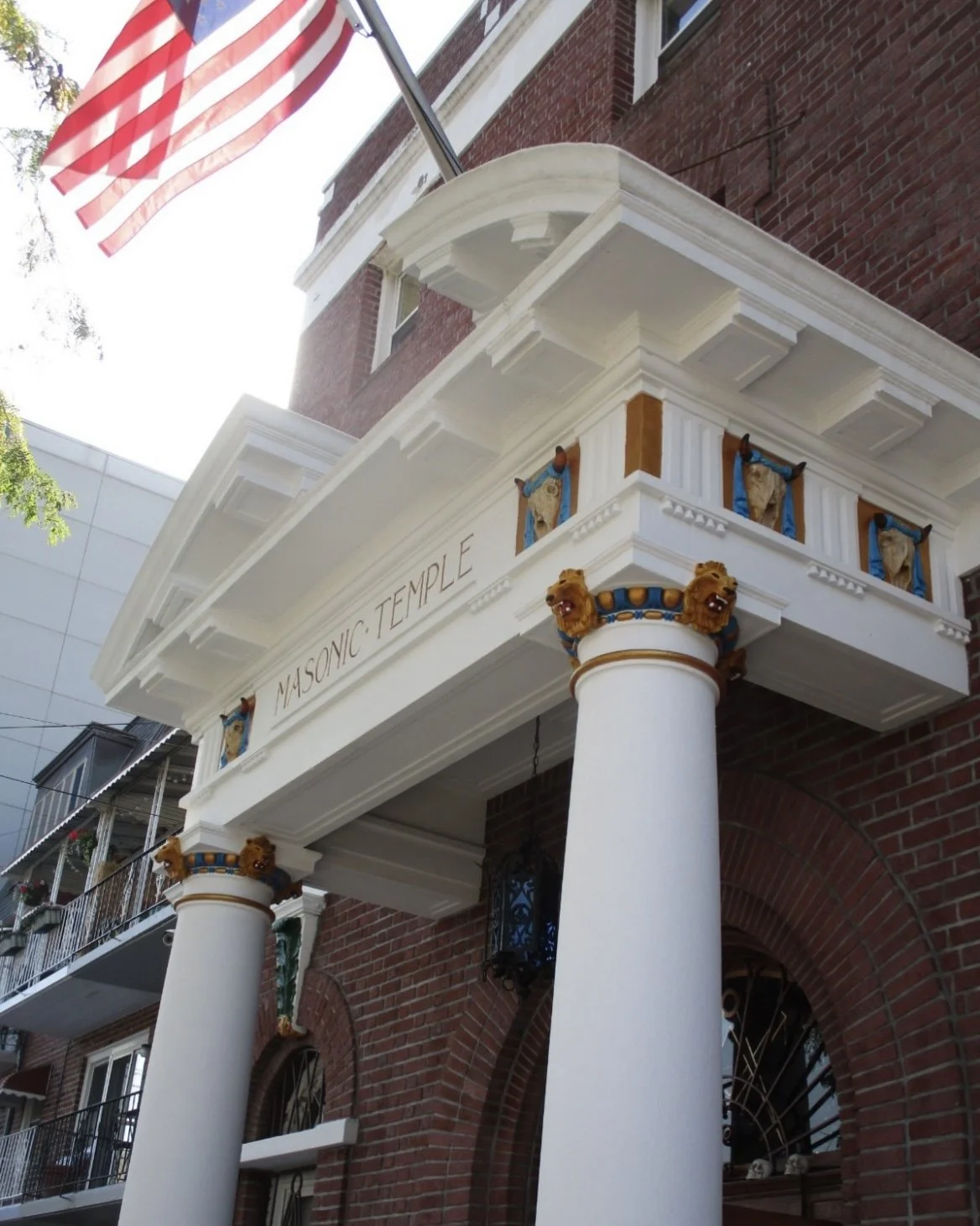
The lodge named for an Arctic brig still represents movement through difficulty.^149 Its historic temple at 21-14 30th Avenue remains the home of a combined Masonic inheritance: City Lodge’s Manhattan tradition, Island City’s Hunter’s Point resolve, Mizpah’s Elmhurst memory, Geba’s social breadth, Service’s charitable work, and Advance Lodge’s long civic connection to Astoria.^150
The brig Advance was abandoned in Arctic ice in 1855.^151 The lodge named for it was not.^152
It continued forward.^153
Advance Masonic temple, Astoria
End Notes
Author’s note:
I write as an individual Freemason, historian, and researcher. This article reflects my personal research and interpretation and does not represent an official statement of Advance Service Mizpah Lodge No. 586, the Grand Lodge of New York, or any other Masonic organization.
Images:
From authors own private collection.
Literary:
Sources to come, feel free to request on my contact page.
Related Links
- Queens History and Freemasonry
- Advance Service Mizpah Lodge 586
- Astoria Queens
- The history of Masonic lodges in Queens
- Voyage of the USS Advance