Calypso’s Island and the Most Dangerous Gift in the World
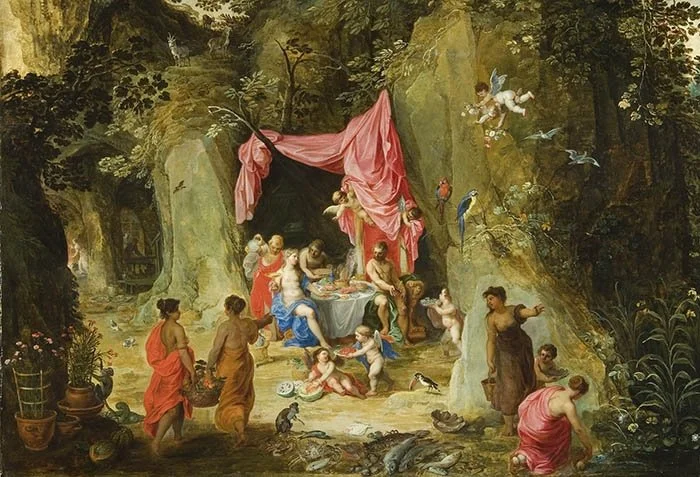
Calypso’s Island
Calypso offers Odysseus immortality, youth, comfort, and freedom from ordinary human trouble. He declines. The Platonic explanation is not that he dislikes a good deal; it is that a pleasant captivity is still captivity.
Calypso offers Odysseus immortality.
Not a coupon. Not a retirement package. Not a slightly improved commute. Immortality.
She offers eternal youth, beauty, comfort, and a place where no hostile suitor is eating his food, insulting his household, and treating his furniture as communal property. Yet Odysseus sits by the shore and weeps for Ithaca.
At first this seems irrational. Ithaca is not a luxury resort. It is rocky, finite, difficult, and full of obligations. Penelope is waiting, yes, but so are property disputes, family history, civic responsibilities, aging, mortality, and a dog who will recognize him immediately and make everyone else look bad.
Why choose it?
The difference between immortality and fulfillment
The Platonic answer begins with a distinction: not every thing that lasts is therefore good, and not every pleasant state fulfills the soul.
Calypso’s island is not merely a place of sensual temptation. It is a place of arrested journey. Odysseus is preserved, but he is not completed. He is spared death, but he is separated from his proper work: restoring order, exercising judgment, fulfilling relationship, and becoming himself through chosen action.
This is why Taylor’s allegorical framework is useful. If Ulysses is the rational soul, then Calypso’s island represents a form of seductive repose. It is a false home precisely because it gives comfort without return.
The soul may be entertained, flattered, protected, even made permanently young—and still be far from its true end.
Pleasure that asks nothing
The danger of Calypso is not that pleasure is wicked. The danger is that pleasure can become an entire philosophy.
A pleasant life can slowly persuade us that nothing else is required: no moral growth, no service, no difficult conversation, no obligation, no risk, no return to the unfinished work waiting at home.
This is a subtle captivity because it does not feel like chains. It feels like relief.
The Platonic tradition is suspicious of this condition because the soul is made for more than comfort. It is capable of truth, virtue, friendship, civic responsibility, and contemplation. To reduce it to perpetual pleasant sensation is to give a king a padded cell and call it a palace.
The courage to return
Odysseus’ longing for Ithaca is therefore not simple homesickness. It is a refusal to let the self be dissolved in a luxury that has no moral direction.
There is a modern equivalent. Many of us have an internal Calypso: the place where we can remain indefinitely comfortable, distracted, unchallenged, and unneeded. It may be a room, a screen, an old grievance, a pleasing identity, a habit of perpetual preparation, or a carefully protected refusal to begin.
The question is not whether comfort is bad. The question is whether comfort has become a substitute for purpose.
Odysseus leaves because he is called back to a life in which he must act, decide, suffer, love, govern, and answer for himself. That is harder than immortality. It is also more human.
A Masonic reflection
The Masonic pursuit of improvement has no use for comfort as a final goal. Fellowship matters. Rest matters. Joy matters. But none is the end of the work.
The lodge exists not merely to make a man feel at home among friends, though it should do that. It exists to remind him that fellowship and instruction carry obligations. He must bring a more disciplined, more useful, more charitable self back into the world beyond the lodge room.
Odysseus leaves Calypso because an agreeable island is not the same as a meaningful life. That is a lesson worth carrying home.
Endnotes
Homer, Odyssey Book 5, on Odysseus’ captivity with Calypso and the divine order for his release.
Thomas Taylor’s reading of Ulysses belongs to a Neoplatonic tradition of descent, wandering, and return; it should be cited as a later Platonist synthesis rather than as Porphyry’s direct interpretation of every episode.[1][2]
Porphyry’s On the Cave of the Nymphs provides the ancient Neoplatonic context for the soul’s involvement in generation and its eventual path of return.[3][4]
Plotinus’ ethical writings, especially Enneads I.1 and I.2, provide the distinction between active virtue, purification, and the higher orientation of soul.[16][18]