The Golden Fleece Is Not the Prize You Think It Is
Achievement, attainment, and the visible things that cannot make us worthy
A magical Fleece can be won, displayed, and used to prove that a quest succeeded. But it cannot make a man just, faithful, wise, or worthy. Jason’s story asks whether external achievement can ever substitute for inner formation.
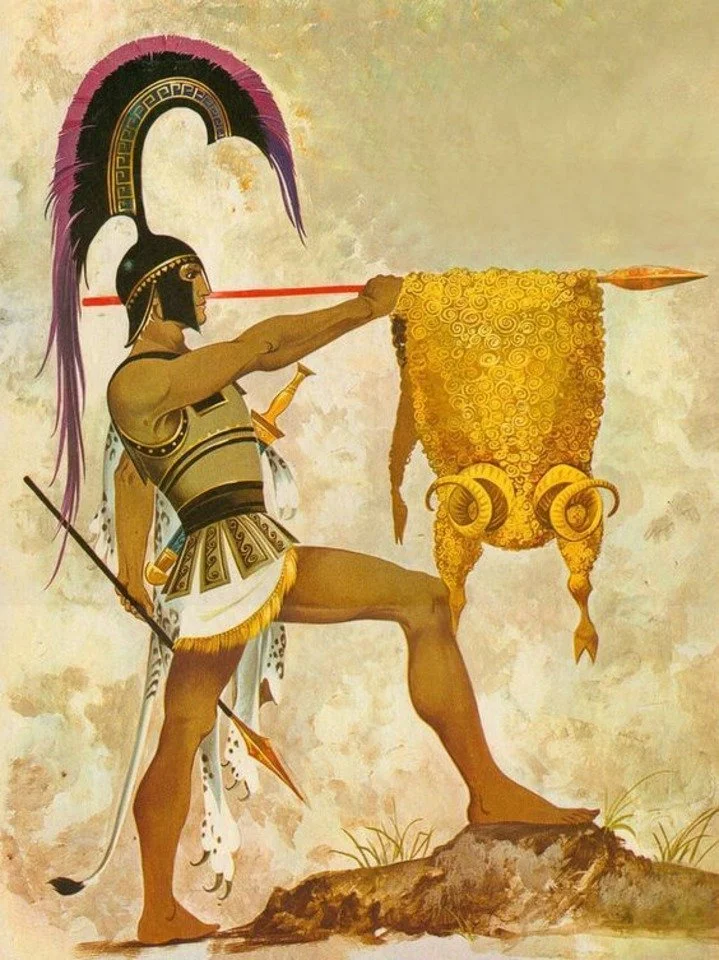
The Golden Fleece is an excellent object.
It glows. It has a dragon. It comes with an impossible expedition, international complications, ceremonial value, royal symbolism, divine associations, and enough mythic prestige to make any ordinary sheep feel inadequate.
But the Fleece has one limitation.
It cannot improve Jason’s character.
It can prove that he completed the quest. It can confer glory. It can restore a political claim. It can become the visible sign of daring, endurance, achievement, and return.
It cannot make him just.
It cannot make him faithful.
It cannot make him grateful.
It cannot make him wise.
The external object is obtained.
The inward work remains unfinished.
Achievement and attainment
This distinction is old and merciless.
A person may attain office without developing judgment.
He may receive honors without acquiring humility.
He may win wealth without learning generosity.
He may gain learning without gaining wisdom.
He may master a ritual without being mastered by its ethical meaning.
He may be elected, promoted, decorated, initiated, published, praised, or applauded—and remain almost exactly the person he was before receiving the outward sign.
The world is full of Fleeces.
Some are diplomas. Some are titles. Some are houses, careers, offices, medals, awards, degrees, professional roles, public platforms, social approval, or the small private triumph of being thought important by the right people.
None is inherently bad.
The problem begins when the prize is mistaken for proof of inward completion.
The Golden Fleece is magnificent and morally silent.
That is why it is such a powerful symbol.
The symbol that becomes a trophy
A symbol should point beyond itself.
The Fleece may signify kingship, legitimacy, divine favor, heroic success, renewal, or the restoration of a rightful order. Yet it becomes corrupt when Jason—or anyone else—treats it as evidence that he no longer needs to grow.
This is the danger of the trophy.
A trophy is an object whose story has been closed. It says: The work is over. The victory has been secured. The matter has been settled.
But a meaningful symbol should say the opposite.
It should ask: What now?
What responsibility comes with this achievement?
What virtue must sustain it?
Whom must I remember?
What obligation has increased with my recognition?
What part of myself remains unfinished?
The person who can ask these questions has not diminished the achievement. He has rescued it from vanity.
Jason’s incomplete victory
Jason’s story becomes tragic because he gains the visible prize while failing to secure the virtues that would make the victory whole.
He accepts Medea’s aid. He benefits from her intelligence, devotion, danger, and sacrifice. He reaches Iolcus with the Fleece. Yet the later tradition makes painfully clear that he does not become equal to the human obligations that success has placed upon him.
The Fleece does not protect him from moral failure.
Indeed, it may conceal that failure for a time.
This is a common pattern.
External success can make self-examination more difficult because applause creates insulation. A person receives recognition and begins to mistake recognition for vindication. He becomes less willing to listen. He becomes surrounded by people who enjoy his success or need something from it. Criticism looks like envy. Correction looks like disloyalty. Gratitude becomes unnecessary because the story has been rewritten: he achieved everything by himself.
The Fleece now hangs on the wall.
The dragon is still inside.
Offices, degrees, and the inward work
This is where the Masonic parallel has force.
Degrees, offices, jewels, titles, and honors can be valuable. They recognize service. They mark progress. They create responsibility. They preserve continuity. They allow a lodge to function. They may inspire a person to become worthy of the trust placed in him.
But they become spiritually dangerous when confused with inward attainment.
No office makes a person a leader automatically.
No degree makes a person wise automatically.
No jewel makes a person charitable automatically.
No title makes a person just automatically.
The outward sign has value only when it summons an inward response.
The Fleece belongs on a wall only if it has first been allowed to ask something of the person standing beneath it.
The question for the successful
Jason’s question is not:
Can you get the Fleece?
Many people can get the Fleece. The world is full of prizes.
The real question is:
What kind of person will you be once you have it?
Will you become more grateful or more entitled?
More responsible or more defensive?
More generous or more possessive?
More capable of service or more concerned with recognition?
More willing to learn or less willing to be corrected?
The answer is not written on the object.
It is written in the life of the person who possesses it.
That question is quieter than victory.
It has also ruined more complacency.
Endnotes and further reading
Apollonius Rhodius, Argonautica Books 3–4, for the acquisition of the Fleece and the return from Colchis.
Pindar, Pythian 4, on Jason’s quest in the context of lineage, kingship, and political legitimacy.
Euripides, Medea, for the later moral reckoning surrounding Jason’s success.
For the distinction between civic, purificatory, and contemplative virtue in the later Platonic tradition, see Porphyry, Sentences 32.[8][9]
Related reading: “Some Men Want Light. Some Just Want a Title” and “The Symbol Is Not the Thing.”