Pietas Is Not Obedience
The discipline of carrying what must not be abandoned
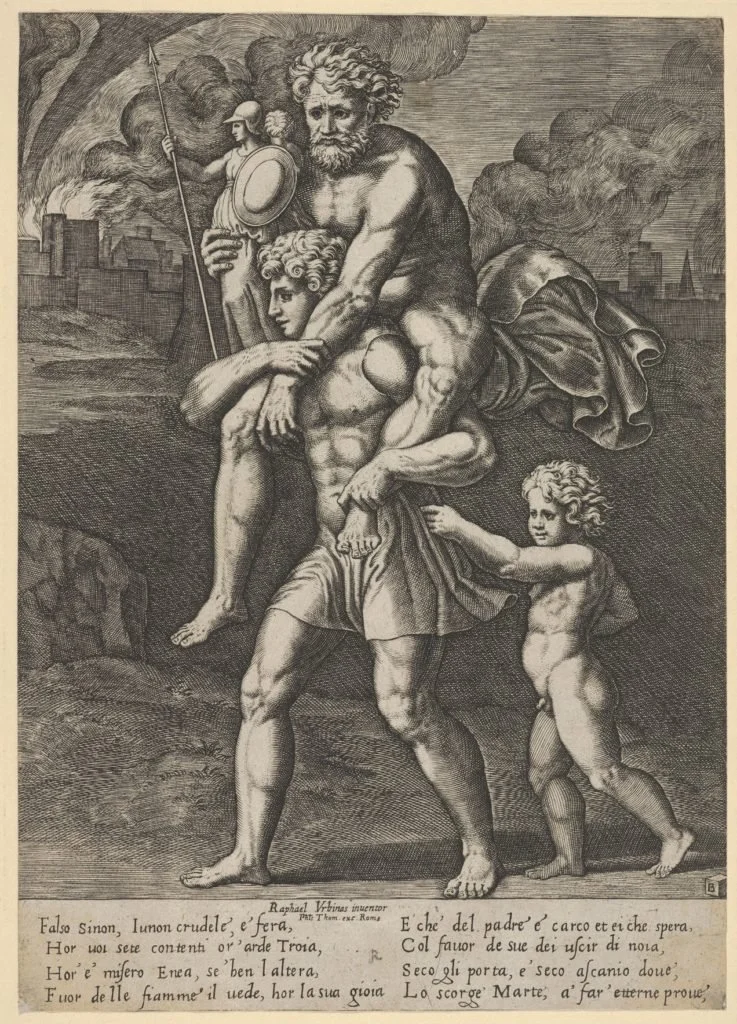
Aeneas is called pius not because he is passive, but because he bears gods, father, son, people, memory, and obligation together. Roman duty is not blind compliance. It is the difficult art of carrying what cannot simply be left behind.
Aeneas is repeatedly called pius.
The word is often translated “pious,” which is correct but insufficient. Modern English hears “pious” and often imagines a person who is solemn, obedient, mildly disapproving, and perhaps difficult to sit beside at dinner.
Roman pietas is larger.
It includes duty toward gods, family, ancestors, children, companions, community, promises, and the future. It is loyalty, but not mere sentiment. It is reverence, but not passivity. It is responsibility made habitual.
Aeneas is pius because he carries.
He carries Anchises from Troy.
He leads Ascanius.
He preserves the household gods.
He gathers refugees.
He bears grief.
He accepts a mission he did not invent.
He continues when private happiness would be easier.
This is not obedience in the narrow sense.
It is the difficult art of carrying what cannot be abandoned.
Duty and servility
Duty is often misunderstood.
Some reject it because they have seen duty used as a weapon. Families, institutions, religions, governments, and workplaces can demand sacrifice without justice. They can tell people to remain loyal to what is harming them. They can praise obedience when what they really want is silence.
This is why duty must be examined.
Aeneas’ pietas is not a command to obey every authority automatically. It is not a license for oppression. It is not an excuse to ignore harm.
Pietas asks: What has been placed in my care that I cannot abandon without betraying something essential?
The answer may be a child.
A parent.
A community.
A truth.
A promise.
A body of work.
A vulnerable person.
A civic institution.
A memory that would otherwise disappear.
Duty becomes servility when it ignores justice.
Duty becomes pietas when it is joined to judgment, courage, love, and responsibility.
Carrying the past without becoming its prisoner
Aeneas carries Troy.
But he cannot rebuild Troy exactly.
Troy is gone.
He must bring its memory, gods, people, losses, virtues, failures, and hopes into a future that will not be identical with the past.
This is the challenge of tradition.
The past matters.
But it cannot be preserved merely by repetition.
A lodge that tries to preserve every habit because it is old may become a museum.
A lodge that discards every inheritance because it is inconvenient may become rootless.
The work is discernment.
What must be carried forward?
What must be repaired?
What must be honestly acknowledged?
What must be left behind because it has become unjust, empty, or incapable of serving the living purpose of the tradition?
Pietas does not mean obeying every voice from the past.
It means carrying forward what the past has placed in our care without becoming its prisoner.
The discipline of the burden
Aeneas’ burden is not glamorous.
He is often tired. He is often uncertain. He is not a hero because he is always joyful about duty. He is a hero because he continues to bear it.
This is a more mature form of heroism than simple conquest.
A person may have to care for someone who cannot repay him.
Preserve records that no one else values.
Keep an institution alive through an uncelebrated period.
Tell a difficult historical truth.
Fulfill a promise after the feeling that made the promise has faded.
Remain present when grief makes absence attractive.
The burden may not make the person famous.
It may make him trustworthy.
That is a better thing.
Masonic pietas
The Masonic tradition asks its members to balance private life, fraternity, charity, duty, and self-improvement. It does not require a man to abandon family for lodge life, or civic obligation for private advancement. At its best, it encourages the integration of these duties.
The Mason carries responsibilities in several directions.
Toward the past: those who built, taught, served, and preserved the institution.
Toward the present: brethren, family, neighbors, community, and the work immediately at hand.
Toward the future: candidates, younger members, archives, buildings, lessons, and the moral example left behind.
This is pietas in a practical key.
Not obedience.
Not nostalgia.
Not martyrdom.
Responsible continuity.
Endnotes and further reading
Virgil, Aeneid I–VI, on Aeneas as pius and his duties toward gods, family, followers, and future settlement.
Virgil, Aeneid II, on Aeneas carrying Anchises, leading Ascanius, and preserving the household gods.
Cicero, On Duties, on moral obligation, public service, family, and civic responsibility.
Related reading: “Anchises and the Burden of the Future.”