The Work of Becoming Unavailable to the Crowd
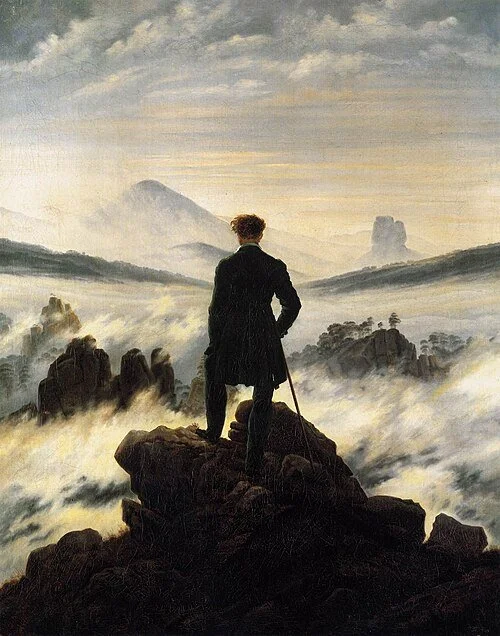
The goal of liberal education and Masonic formation is not eccentricity for its own sake. It is to become the sort of person who cannot be easily absorbed by fashion, fear, vanity, or managed opinion.
The crowd is not going away.
Neither are slogans, pressures, incentives, reputational threats, managed narratives, and all the subtle comforts that accompany conformity. No final technique will free a person from these things entirely. The question is not whether the pressures of the age will exist. The question is what kind of man one must become if he is not to be ruled by them.
That has been the burden of this series from the beginning.
The liberal arts were never chiefly about ornament. They were disciplines of freedom. Grammar trained attention to language. Logic trained fidelity to consequence. Rhetoric trained responsible speech and resistance to manipulation. The quadrivium trained reverence for order, measure, and reality beyond appetite. Leisure preserved the inward space in which contemplation could occur. Solitude guarded the self from dissolution in noise. And the warnings of Tocqueville, Kierkegaard, Arendt, and Bonhoeffer showed how easily modern persons become manageable when those disciplines decay.
All of this converges on one aim: to become less absorbable.
Not obstinate for the sake of display. Not contrarian as a substitute for thought. Not isolated in resentment or pride. But inwardly substantial enough that one cannot be cheaply carried along.
This ideal belongs naturally to Masonry.
At its best, Freemasonry does not merely gather men. It attempts to form them. Its symbols, obligations, and modes of instruction assume that character can be shaped and that a man bears responsibility for what kind of inner structure he is building. The work is not cosmetic. It concerns judgment, discipline, speech, proportion, reverence, and the capacity to live by principle under pressure.
That pressure may take many forms.
Sometimes it is political. Sometimes professional. Sometimes social. Sometimes digital, ambient, and nearly invisible.
A man learns what may be questioned, what must be repeated, what must be signaled, and what risks exclusion. If he has not built much inward firmness, he will adapt quickly and call it prudence. In many cases he will barely notice that he has surrendered anything at all.
That is how the crowd often wins. Not by dramatic coercion. By incremental accommodation.
The answer is not permanent rebellion.
Some people imagine independence as a theatrical refusal to belong anywhere. But mere oppositional energy is still reactive. It allows the surrounding world to set the terms of one’s identity. True independence is steadier. It can cooperate without capitulating, belong without dissolving, and disagree without requiring constant applause for doing so.
That kind of freedom requires formation.
A man must learn to read words carefully enough not to be governed by labels. He must learn to reason carefully enough not to confuse pressure with proof. He must learn to speak carefully enough not to become a manipulator himself. He must learn to love truth more than comfort and proportion more than intensity. He must learn to keep some interior room in which conscience can still speak.
None of this happens automatically. And none of it is ever finished.
There is no permanent graduation from the work of self-government. Vanity returns. Fear returns. Laziness returns. The desire to be approved returns. Even men who know better can become soft, imitative, and rhetorically dependent. That is why formation requires renewal and why institutions dedicated to it must resist becoming merely ceremonial.
A lodge should therefore ask more of its members than attendance.
It should ask whether its forms are producing men more capable of judgment. Whether its fellowship strengthens moral courage rather than social compliance. Whether its speech clarifies or merely flatters. Whether its labors cultivate substance or only the appearance of seriousness.
These are difficult questions. But they are loyal questions.
To ask them is not to attack fraternity. It is to want fraternity to be worthy of its own claims. Brotherhood is not measured only by warmth. It is measured also by whether men help one another become truer, steadier, and less available to falsehood.
The larger cultural need is similar.
Free societies cannot survive on procedures alone. They require persons who can govern themselves inwardly, bear disapproval without collapse, and judge things by more than popularity or utility. Where such persons disappear, the forms of liberty may remain for a time, but their substance weakens.
This is why the liberal arts still matter. This is why leisure still matters. This is why solitude still matters. This is why Masonic formation still matters.
Not because any of these make a man impressive. Because they may make him real.
And a real man — one with some discipline of mind, some honesty of speech, some reverence for truth, and some practiced independence from the crowd — is harder to deceive, harder to intimidate, and harder to use.
That is not the whole of virtue. But it is one of its necessary defenses.
Endnotes
[1] This concluding essay draws together themes present throughout the liberal arts tradition and in modern critiques of mass conformity, dependency, and thoughtlessness.
[2] On the moral and civic significance of inward freedom, compare Josef Pieper, Alexis de Tocqueville, Søren Kierkegaard, Hannah Arendt, and Dietrich Bonhoeffer.
Brief Bibliography
Josef Pieper, Leisure: the Basis of Culture
Alexis de Tocqueville, Democracy in America
Søren Kierkegaard, The Present Age
Hannah Arendt, The Life of the Mind
Dietrich Bonhoeffer, Letters and Papers from Prison