Logic Against the Lie
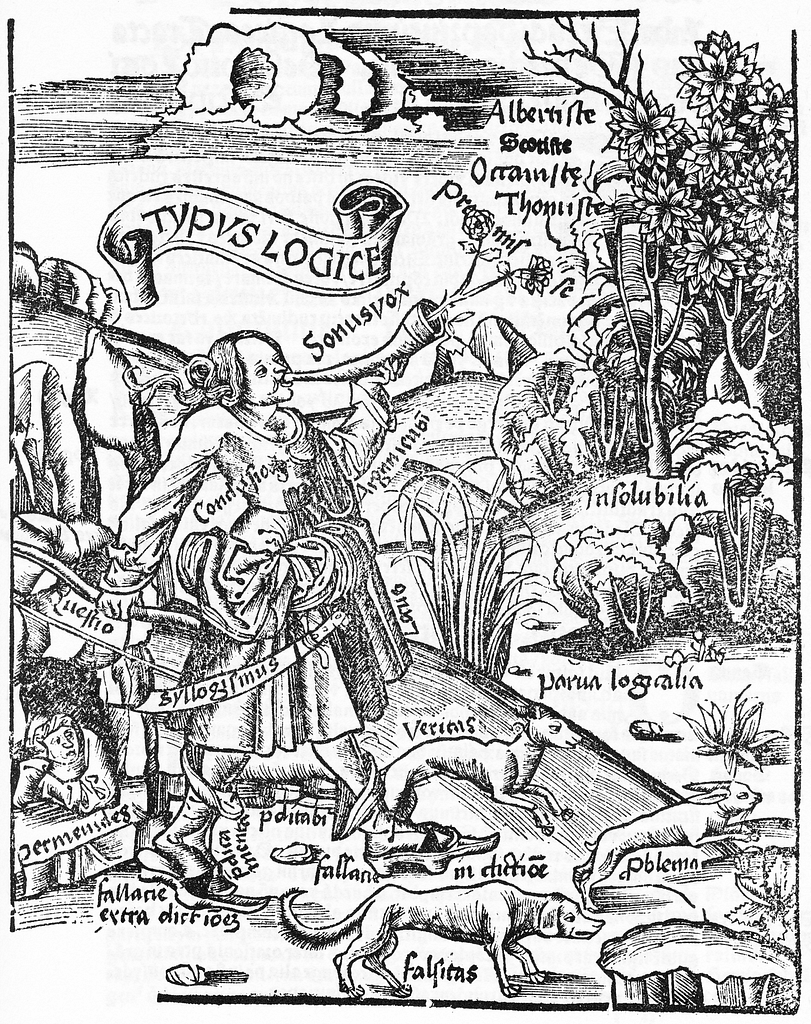
Logic does not make a man wise by itself. But it does make it harder for him to be ruled by contradiction, manipulation, and the comforting force of bad arguments.
A surprising number of people dislike logic for reasons that sound noble.
It is accused of being cold, overly technical, bloodless, abstract, or insufficiently human. Sometimes these complaints are sincere. More often they conceal another discomfort: logic requires a person to slow down, define terms, distinguish claims, and accept that not everything one feels strongly can be defended soundly.
That requirement is unwelcome when speed, outrage, and moral display are more rewarding than accuracy.
Logic matters because it asks a stubborn question:
Does this follow?
Not, does it feel right?
Not, does my side say it?
Not, does it produce the desired effect?
But, does the conclusion actually follow from the premises, and are the premises themselves sound?
This discipline is less glamorous than ideology and more useful than certainty.
The older liberal arts placed logic at the center of mental formation because the mind is naturally vulnerable to confusion.[1] We leap. We assume. We smuggle conclusions into premises. We let language slide. We are impressed by confidence, emotional intensity, and reputational weight. We grant coherence where none exists because we want the claim to be true.
Logic exposes this hunger.
That is one reason it can feel severe. It denies us the luxury of admiring our own conclusion merely because it is ours. It asks for order where the passions prefer momentum. It interrupts the very human wish to win without proving.
Freemasonry has good reason to welcome that interruption.
A serious lodge should not be a refuge for muddled moralism. It should be one of the places where a man learns to distinguish assertion from argument and earnestness from truth. Brotherhood does not exempt anyone from the obligation to think clearly. On the contrary, fraternity becomes more durable when men are less captive to impulse and less likely to confuse shared sentiment with sound judgment.
Without logic, communities drift into atmosphere.
With it, they at least have a chance at clarity.
This matters in public life because contradiction can become socially invisible. A person may affirm incompatible principles, use standards he would reject if applied evenly, or shift definitions midstream without noticing. If the surrounding tribe rewards the conclusion, the defects are often overlooked. Group approval covers a multitude of logical sins.
Logic withdraws that cover.
It forces a person to ask whether his reasoning would still seem persuasive if stripped of emotional pressure and tribal reinforcement. Would this argument satisfy me if my opponent used it? Have I defined my terms consistently? Am I proving anything, or merely declaring it? Is this a conclusion, or only a preference dressed in formal clothes?
These are not merely academic questions.
They are habits of intellectual conscience.
Of course, logic is not enough by itself. A person may reason validly from false premises. He may use sharp inference in the service of bad ends. He may become clever rather than wise. The point is not that logic saves the soul. It is that the soul becomes easier to mislead without it.
This is why logic belongs with the moral life, not outside it.
A man incapable of following an argument is vulnerable in ways he may never fully see. He is more likely to mistake pressure for proof, fluency for understanding, and verbal force for necessity. He becomes easier to govern by the manufactured certainties of the age. He may retain strong opinions, but he will possess them weakly, because he cannot say why they should survive scrutiny.
The Masonic concern with light is relevant here, provided it is taken seriously and not merely recited. Light is not a mood. It is not self-congratulation. It is disciplined clarity: the willingness to have one’s claims tested and one’s confusions corrected. In that sense, logical training is one modest form of learning to prefer light to heat.
That preference is not fashionable.
It is, however, civilizing.
Logic cannot guarantee agreement, and it should not. Honest minds can differ. But it can clear away fraud, expose haste, and reduce the power of contradictions that survive mainly because no one bothers to name them. In a culture of slogans, that is already a public service.
And in the formation of a Mason, it is more than that.
It is part of learning how not to lie to oneself.
Endnotes
[1] On logic as part of the trivium and as a discipline of mental order, see classical and medieval accounts of liberal education, especially Hugh of St. Victor and later pedagogical summaries of the trivium.
[2] For a modern popular account of reasoning and informal fallacy, standard introductions to logic may be used in supplemental reading.
Brief Bibliography
Hugh of St. Victor, Didascalicon
Dorothy L. Sayers, “The Lost Tools of Learning”
Peter Kreeft, Socratic Logic
Irving M. Copi, Introduction to Logic