Hermes, Moses, and the Danger of Easy Universalism
Shared human questions without the fantasy that every tradition says the same thing
Greek, Jewish, Christian, Egyptian, Persian, Indian, Chinese, and Nordic traditions all ask how a human being becomes wiser. That does not mean they secretly teach the same doctrine.
There is a tempting sentence in comparative religion:
“They are all saying the same thing.”
It is usually offered generously.
It is also usually wrong.
Greek philosophy, the Hebrew Bible, rabbinic Judaism, Christianity, Hermetic writings, Zoroastrian traditions, Indian philosophies, Chinese traditions, Nordic myths, and Kabbalah all ask serious questions about human life. They address suffering, desire, death, knowledge, justice, community, cosmic order, duty, purification, divine reality, and the formation of character.
But they do not give the same answers.
A comparison that ignores this does not create unity. It erases people.
The better question is not, “Are these systems secretly identical?”
It is:
What recurring human problems have led different cultures to create stories, laws, symbols, disciplines, and philosophies of growth?
Greek philosophy and the ordered soul
Greek philosophy often asks how the soul can be ordered.
Plato divides the soul into reason, spirit, and appetite. Aristotle asks how virtue becomes habit. Stoics ask how a person can live according to nature and distinguish what lies within his control from what does not. Neoplatonists ask how the soul can return toward its intelligible source through virtue, purification, and contemplation.
The emphasis is often on reason, virtue, education, contemplation, and moral order.
Jewish tradition and covenantal life
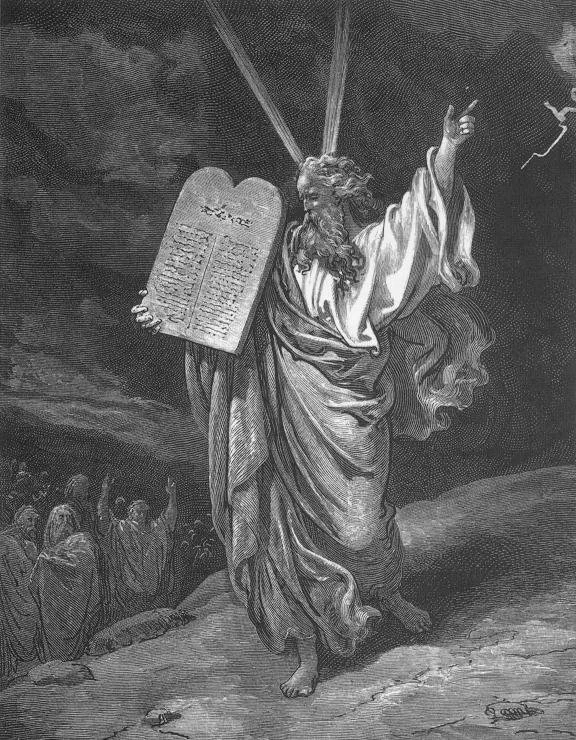
The Hebrew Bible is not a Greek philosophical mythic system.
Its central structures are covenant, creation, commandment, prophecy, justice, memory, exile, return, communal faithfulness, and the relationship between God and a people.
The question is not simply, “How does an individual soul ascend?”
It is also, “How shall a people live faithfully, justly, and responsibly under God?”
Rabbinic Judaism deepens this through study, interpretation, legal reasoning, communal practice, memory, ethical obligation, and debate. Torah is not merely information. It is a way of life.
Kabbalah, emerging much later in medieval Jewish contexts, adds mystical systems involving divine emanation, the sefirot, sacred language, prayer, ethical action, and, in later traditions, tikkun or repair. These should not be casually collapsed into Hermeticism, even though later Renaissance and early modern thinkers often placed Kabbalistic and Hermetic materials into conversation.
Persian, Indian, Chinese, and Nordic questions
Zoroastrian traditions ask about the struggle between truth and the Lie, the moral force of right thought, right word, and right deed, and the ultimate significance of ethical choice.
Indian traditions are extraordinarily diverse. Hindu, Buddhist, Jain, and other schools differ deeply, but many ask how ignorance, attachment, karma, desire, suffering, action, duty, meditation, knowledge, and liberation relate.
Chinese traditions also differ. Confucian traditions emphasize ritual propriety, family, social harmony, virtue, learning, and cultivated relation. Daoist traditions explore alignment with the Dao, naturalness, non-forcing, transformation, and the limits of rigid social control.
Norse traditions are not simply a northern version of Greek philosophy. They ask different questions through fate, honor, kinship, reciprocity, courage, doom, reputation, and the knowledge that even gods face limits.
Each tradition speaks from its own history.
Each should be allowed to do so.
The shared human question
Yet comparison remains possible.
| Tradition | A recurring question | A distinctive answer or emphasis |
|---|---|---|
| Greek philosophy | How is the soul ordered? | Reason, virtue, contemplation, paideia |
| Hermetic writings | How does the mind awaken to cosmic and divine reality? | Nous, rebirth, divine-human kinship |
| Hebrew Bible and rabbinic Judaism | How does a people live faithfully under God? | Covenant, law, justice, memory, communal responsibility |
| Kabbalah | How do divine reality, human action, prayer, and repair relate? | Sefirot, sacred interpretation, tikkun |
| Zoroastrian traditions | How does one choose truth over the Lie? | Ethical choice, right thought, word, and deed |
| Indian traditions | How is one liberated from ignorance and attachment? | Dharma, yoga, karma, liberation; diverse schools |
| Chinese traditions | How is harmony cultivated in self, family, and society? | Ritual, virtue, Dao, relation, self-cultivation |
| Nordic traditions | How should one meet fate, honor, loss, and obligation? | Courage, reciprocity, reputation, endurance |
Similarity does not prove that traditions are secretly identical.
It is evidence that human beings keep encountering the same difficult questions.
The Masonic use of comparison
For a Mason, this kind of comparison can be valuable if it produces humility.
The Mason may recognize that many cultures have used symbols, stories, tools, sacred texts, journeys, laws, music, and disciplines to form character.
That recognition should not make him claim everyone else as an unconscious Mason.
It should make him more careful.
More curious.
More respectful.
More aware that his own symbols belong to a larger human effort to make moral truth visible.
The aim is not to prove that all roads are the same.
It is to understand why human beings keep building roads.
Endnotes and further reading
For the breadth and complexity of Platonic myth and later Platonic interpretation, see the Stanford Encyclopedia of Philosophy overview.[7]
On Hermes Trismegistus as a late antique Greco-Egyptian figure rather than a primeval historical sage, see modern historical scholarship.[1]
On the complexity of Orphic, Platonic, and afterlife traditions, see scholarship on Plato, Homer, and late Platonism.[8]
This article’s comparisons are structural and thematic, not claims of direct borrowing or doctrinal identity.