When Advance Lodge couldn't find an architect, a former member's firm handed over the lodge room plans it had already drawn for Hillside.
Advance Lodge No. 635: Lodge History · The Lodges That Built Queens: Series Overview · Related: Masonic Buildings in Queens
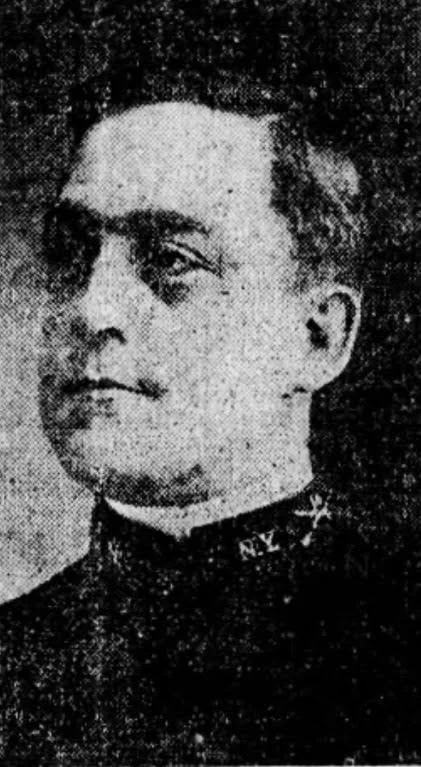
On December 15, 1903, a 26-year-old named Arthur E. Wenige was raised a Master Mason in Advance Lodge No. 635 in Astoria, the 294th man to take the degree there. It would have been easy to file him away as one more name in a growing roll. But Wenige was an engineer and architect, and a dozen years later, when Advance had trouble finding someone to draw its new lodge room, his firm came to the rescue. His connection to Advance went beyond membership into something rarer: he helped design the floor on which its Masonic work would be done.
A Young Mason in a Growing Borough
Queens in 1903 was a place being assembled in real time. Farmland was giving way to streets, trolley lines were reaching new neighborhoods, and the fraternal lodges that sprang up along them were becoming something close to community centers. Advance Lodge had been raising men in Astoria since the 1860s, and Wenige arrived as one of the younger additions.
The newspapers fill in the outlines of his working life. He was an assistant engineer in the city's Department of Water Supply, Gas and Electricity. He had served seven years in the Seventh Regiment. He lived on Columbia Avenue in Woodhaven, where he also taught a Bible class at St. Matthew's Protestant Episcopal Church. Off the clock, he was a partner in Wenige & Nelson, a firm with offices in Richmond Hill and Woodhaven.
Woodhaven is where his Masonic road turned. Hillside Lodge No. 894 was instituted there on May 29, 1911. Wenige later affiliated with it, and by the fall of 1913 he was its Senior Warden.
Columns on Willard Avenue
The new lodge met at first in Arcanum Hall in Richmond Hill, and its members wanted a home of their own. On Saturday afternoon, November 15, 1913, the Grand Master of New York, Charles Smith, arrived with his full staff to lay the cornerstone of the Hillside temple on Willard Avenue near Jamaica Avenue. The Brooklyn Daily Times described a building planned somewhat after the Temple of Diana, with wide columns across the front, a banquet hall in the basement, and a lodge room and entry room above. The architects were named in the same article: Wenige & Nelson.
The paper also listed the officers taking part in the ceremony. Arthur E. Wenige appears twice, as Senior Warden and again among the trustees on the finance committee. He had drawn the building, helped finance it, and was now marching in the procession to its foundation.
The work moved fast. By January 1914, the lodge was holding a fair for its building fund in the “handsome new temple on Willard avenue,” and the Times reported the place packed on opening night. Wenige was now Master, and Mrs. Arthur Wenige chaired the table for smokers' articles. The fair was opened by the Deputy Grand Master of the state, George Freifeld, who congratulated the lodge on its fine temple. By December 1914, degree work was being conferred there, followed by a banquet.
A Favor Between Brothers
Meanwhile, back in Astoria, Advance Lodge was planning a temple of its own and having a harder time of it. According to the lodge's own records, Advance struggled to find an architect.
The solution came from a former member. Wenige's firm, as a favor, prepared the prints at a reasonable rate. It did more than that. Wenige & Nelson gave Advance the exact blueprints for the lodge room they had just built for Hillside. Not a similar room, not a variation on one, but the same plans, down to the lines.
The cost to Advance was small and the benefit was large. A lodge room is not a free-form space. Its stations, chairs, and aisles have to fall where the ritual expects them, and Hillside's room had already been put to work. The same drawings were later supplied to the lodge at Bayside, in Queens, with the same result.
On November 20, 1915, Advance's cornerstone was laid on Grand Avenue east of Van Alst Avenue. The Grand Master presiding was George Freifeld, the same man who had opened Hillside's fair two years earlier and complimented its fine temple.
Of the three temples, Advance is the one still in daily use as a lodge. Advance Service Mizpah Lodge No. 586, Parthenon Lodge No. 1101, and Tadmor Lodge No. 923 all meet there. A Mason who climbs the stairs and enters that room today is, in a way, stepping into all three at once.
Chairs, Gavels, and Committees
Wenige's service to Hillside did not end when the drawings were done. At the close of 1914, as retiring Master, he reported to the members on a lodge barely three years old whose property was valued at close to $25,000 and whose roll had grown to about 150. The same election made him a trustee for three years. When Hillside installed its next officers in January 1916, he was a past master and served as deputy grand marshal for the evening.
His name shows up outside the lodge too. In 1912 he sat on the executive committee of the Nameoke Democratic Club and was named among the Queens organizers of the Empire State Democracy. The following year he became treasurer of the Woodhaven Independent Democracy, a club formed by reform-minded Democrats against machine politics. The Chat said he had always contributed his time and money liberally to public projects. In September 1916 he won the Democratic primary for alderman in the Seventieth District, defeating Bernard F. McCabe.
A Hard Season
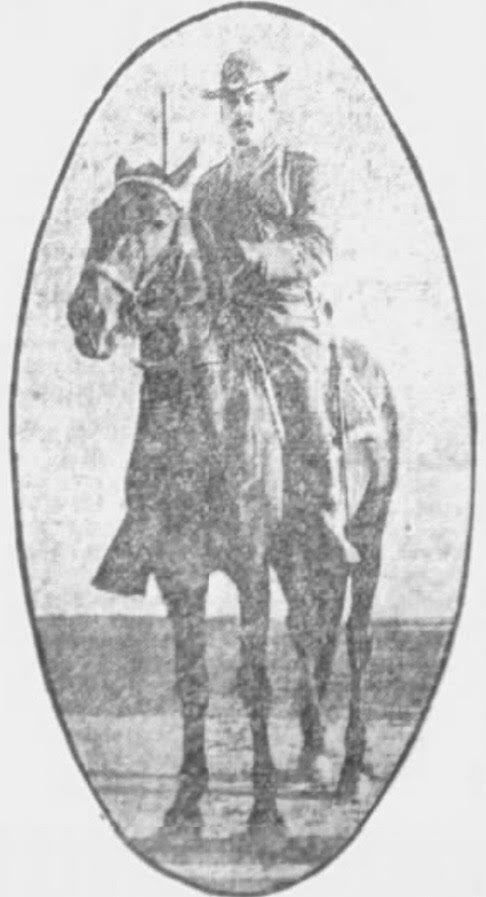
The record does not allow a tidy portrait. In March 1912, the Adjutant-General's office announced that Captain Arthur E. Wenige of the Fourteenth Infantry had resigned from the National Guard “for the good of the service,” after charges that he had allowed outsiders to impersonate absent men of his company at the annual inspection. The Brooklyn Eagle added a detail about a Yale degree that proved wrong, and corrected itself a month later after the university reported he had never been enrolled.
The story does not end there. In May 1917, the legislature passed an act authorizing the governor to reinstate him to his former rank and place him on the reserve list. The law was printed in the papers that summer. What happened in between, the clippings do not say.
The Room Still There
Most of what we know about Arthur E. Wenige comes from the paper trail: ballots, installations, committee lists, a law passed in Albany. But the clearest evidence of his hand is a room in Astoria, on Grand Avenue, that Masons still use. Advance Lodge needed an architect, and a Brother who had once sat in its chairs sent along the plans for a room that already worked. Hillside and Bayside have their own stories. Advance's lodge room remains, and with it the quiet favor that built it.
Endnotes
Lodge Records
- Advance Lodge No. 635 records, including the raising of Arthur E. Wenige as 294th member, December 15, 1903, and the lodge's account of its search for an architect and the supply of the Wenige & Nelson lodge room blueprints.
- Henry Martin, Historical Data of Advance Lodge No. 635 F&AM, November 20, 1915.
Newspapers
- Brooklyn Eagle, March 25, 1912, p. 1; April 23, 1912, p. 5; December 19, 1914, p. 4; September 20, 1916, p. 8; August 27, 1917, p. 13.
- The Brooklyn Daily Times, March 25, 1912, p. 6; November 14, 1913, p. 10; January 27, 1914, p. 8; January 7, 1916, p. 12; August 23, 1916, p. 12.
- The Chat, November 29, 1913, p. 53.
- Daily Long Island Democrat, August 5, 1912, p. 1.
- The Post-Star (Glens Falls), September 7, 1917, p. 10.
- Times Union, January 8, 1907, p. 12.
Public and Organizational Records
- Laws of New York, 1917, chapter 639.
- Adjutant-General's Office, General Orders No. 12, March 12, 1912.
Continue Reading
- Advance Lodge No. 635
- Advance Service Mizpah Lodge No. 586: A Living Inheritance of Six New York Lodges
- A Cornerstone, a Dinner, and a Borough in a Hurry
- Masonic Buildings in Queens: Temples, Lodge Rooms, and Lost Meeting Places
- Why the Lodge Room Is Laid Out Like a Map of the Mind
← The Lodges That Built Queens: Series Overview · Queens History Blog →
