Arthur E. Wenige and the Room That Became Three
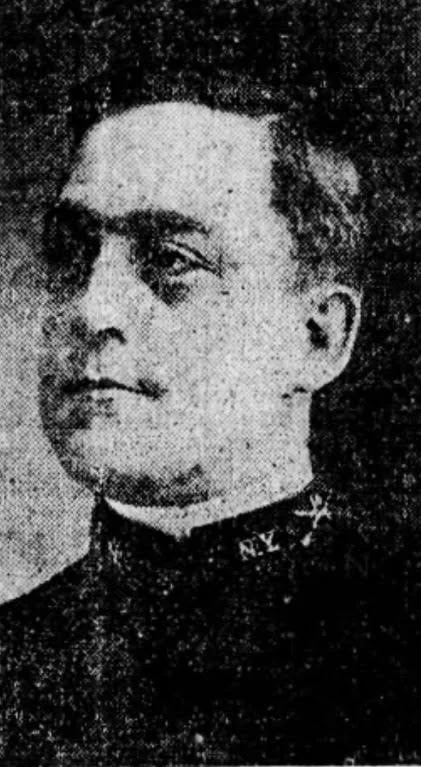
Portrait of Arthur Wenige.
One lodge room in Astoria became a repeated interior across Queens. At the center of that story stands Arthur E. Wenige.
Most Masons leave behind traces: a line in the minutes, a place on a roster, a memory in the lodge. Arthur E. Wenige left something more tangible. He left rooms.
Raised in Advance Lodge No. 635 in Astoria on December 15, 1903, at age twenty-six, Wenige later affiliated with Hillside Lodge in Woodhaven, became one of its leading officers and Master, and, as part of the architectural firm Wenige & Nelson, helped shape the physical world of Queens Masonry itself.[1]
What makes him especially worth remembering is this: the lodge-room plan associated with his work for the Advance Masonic Temple became the model for the rooms later used at Hillside and Bayside.[2] One Masonic interior, in other words, was carried across three lodges.
To stand in the Advance Temple lodge room, then, is to encounter something rare in local history. You are not just standing in one surviving chamber. You are standing inside the room that became three.
Raised in Advance
Wenige’s Masonic life begins with a plain but important fact: he was the 294th Brother raised in Advance Lodge No. 635 on December 15, 1903.[1] That detail places him in a fast-changing Queens, when Masonic lodges were active neighborhood institutions rather than inherited relics.
Advance gave Wenige his start in Masonry. It also seems to have given him the design language that would echo through the rest of his Masonic life.[2]
When the Architect Is Also the Brother
Some men met in lodge rooms. Wenige helped create them.
As a member of Wenige & Nelson, he was connected with the design history of three important Masonic buildings in Queens: the Advance Masonic Temple in Astoria, the Hillside Temple in Woodhaven, and the Bayside Temple in Bayside.[2] Newspapers in 1913 explicitly named Wenige & Nelson as the architects for the new Hillside Temple.[3]
The deeper significance lies inside the buildings. Lodge records and building tradition indicate that the lodge-room plans later used at Hillside and Bayside came from Wenige’s drawings for the Advance Masonic Temple.[2] That makes Advance more than the first building in the story. It makes it the master design.
Hillside: Officer, Architect, Master
Wenige’s strongest documented ties were with Hillside Lodge No. 894 in Woodhaven. By September 1913, when the Brooklyn Eagle reported plans for a new temple on Willard Avenue, he was serving as Senior Warden, and Wenige & Nelson were listed as the architects.[4] The same report placed him on the lodge’s finance committee.[4]
A month later, at the groundbreaking, The Chat identified him as secretary of the holding company behind the project.[5] Wenige was involved from every angle: as lodge officer, organizer, and architect.
At the cornerstone laying in November 1913, Brother A. E. Wenige, Senior Warden of Hillside Lodge, presented the working tools.[6] The Mason presenting them was also one of the men who had helped draw the building that would receive them.
By January 1914, Wenige had become Master of Hillside Lodge.[7] Newspapers described a crowded new temple lit in electric outline, with decorated booths, dinner in the basement, and dancing after supper.[7] Hillside was not a quiet relic. It was visible, ambitious, and growing.
As retiring Master in December 1914, Wenige reported that the lodge, only about three years old, had property valued near $25,000 and a membership of about 150.[8] By 1920 the temple had to be enlarged to seat 400 because Hillside had grown so quickly.[9]
Bayside and the Echo of Advance
Bayside Lodge No. 999 was organized in 1922, and by 1923 it was moving ahead with plans for a major temple at Bell and Lamartine avenues.[10] Contemporary coverage treated the cornerstone ceremony as a significant public event.[11]
What matters most here is the interior lineage. According to the records and traditions preserved across the lodges, the Bayside lodge room followed the same Wenige-derived plan stream that ran from Advance through Hillside.[2]
A lodge room is not just a hall. It is a symbolic working space. To repeat the room is to repeat more than carpentry. It is to repeat a way of entering and inhabiting Masonry.
A Public Man, With Complications
Wenige’s life was not confined to architecture or lodge office. He was active in Queens politics and civic reform. In 1912 he appears in coverage of the Empire State Democracy movement in Queens.[12] In 1913 he became treasurer of the Woodhaven Independent Democracy, a reform group opposed to machine control.[13] In 1916 he won the Democratic nomination for Alderman from Queens’ Seventieth District.[14]
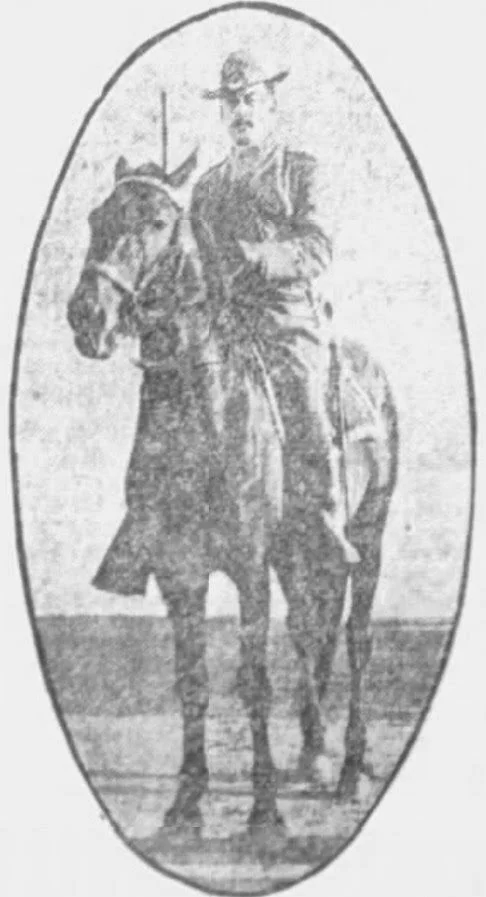
Arthur Wenige in military uniform on horseback
But his public record also includes a harder chapter. In March 1912, the Brooklyn Eagle and Brooklyn Daily Times reported that Captain Arthur E. Wenige of the Fourteenth Infantry resigned from the National Guard under charges, his resignation being accepted “for the good of the service.” The accusation was that he had permitted impersonation of absent men during inspection and muster.[15]
A month later, the Eagle corrected an earlier claim that he had attended Yale’s Sheffield Scientific School, stating that Yale had no record of him as a student.[16]
These episodes complicate the story, but they do not erase it. In 1917 New York enacted legislation authorizing the governor to reinstate Wenige, with his former rank, and place him on the reserve list.[17]
The Room That Remains
Arthur E. Wenige matters because he stood at a rare intersection of fraternity and form.
He was raised in Advance Lodge in 1903.[1] He later became a central figure in Hillside Lodge as officer, Master, trustee, and builder.[18] His firm, Wenige & Nelson, was publicly credited in connection with the Hillside Temple project.[3] And the lodge-room design associated with his work for Advance appears to have lived on in Hillside and Bayside.[2]
Many men are remembered for what they said in lodge. Wenige should be remembered for the space in which they said it. He helped shape the rooms in which Queens Masons met, worked, and remembered.
To stand in the Advance Temple lodge room, then, is to stand in one room and three at once.
Pull quote: “To stand in the Advance Temple lodge room is to stand in one room and three at once.”
What Wenige Built
Advance Lodge No. 635, Astoria Wenige was raised here on Dec. 15, 1903, as the lodge’s 294th Master Mason.[1] The Advance lodge room became the key point of reference for the story that followed.[2]
Hillside Temple, Woodhaven
In 1913, Wenige & Nelson were publicly named as architects for Hillside Lodge’s new temple on Willard Avenue.[3] Wenige was also a Hillside officer, committee member, holding-company secretary, and later Master.[47]
Bayside Temple, Bayside
Bayside Lodge No. 999 organized in 1922 and launched its temple project in 1923.[10] Its lodge room appears to have followed the same Wenige-derived plan lineage linking it back to Advance and Hillside.[2]
Why It Matters
The key point is not just that Wenige worked on Masonic buildings. It is that one lodge-room design seems to have traveled through all three.
Endnotes
Personal note:
My membership in Advance Service Mizpah Lodge No. 586 informs my interest in Masonic history and symbolism. The research and opinions expressed here are mine alone and are not official lodge or Grand Lodge communications.
Image:
Portrait of Arthur Wenige - Image courtesy of the Brooklyn Eagle.
Arthur Wenige in military uniform on horseback - Image courtesy of the Brooklyn Eagle.
Literary:
- 1 Advance Lodge No. 635 lodge record, showing Arthur E. Wenige as the 294th Brother raised to Master Mason on Dec. 15, 1903, age 26.
- 2 Lodge records and building tradition across Advance Lodge No. 635, Hillside Lodge No. 894, and Bayside Lodge No. 999, as summarized in user research, indicating that the lodge-room plan used at Hillside and Bayside derived from Wenige’s drawings for the Advance Masonic Temple. For formal publication, this point should ideally be tied to specific minute books, building committee reports, or surviving plan sets.
- 3 The Brooklyn Daily Times, “Hillside Lodge to Lay Cornerstone,” Nov. 14, 1913, p. 10.
- 4 Brooklyn Eagle, “Hillside Lodge Temple,” Sept. 28, 1913, p. 5.
- 5 The Chat, “Broke Masonic Records for Temple Building,” Oct. 4, 1913, p. 55.
- 6 Brooklyn Eagle, “Start New Temple for Hillside Lodge,” Nov. 16, 1913, p. 67; see also The Chat, “Start New Temple for Hillside Lodge,” Nov. 22, 1913, p. 51.
- 7 The Brooklyn Daily Times, “Hillside Lodge Fair Opens at New Hall With Each Booth a Bower of Beauty,” Jan. 27, 1914, p. 8.
- 8 Brooklyn Eagle, “Dr. Voltz New Master,” Dec. 19, 1914, p. 4.
- 9 Brooklyn Eagle, “Enlarge Hillside Temple,” Aug. 30, 1920, p. 16.
- 10 Times Union, “Bayside Lodge, Masons, to Lay Corner Stone,” May 29, 1923, p. 2; The Brooklyn Daily Times, “Bayside Masons to Start New $65,000 Building,” May 25, 1923, p. 3.
- 11 Brooklyn Eagle, “Corner Stone of $100,000 Bayside Temple Laid,” May 31, 1923, p. 26; The Brooklyn Citizen, “Lay Cornerstone for $100,000 Masonic Temple at Bayside,” May 31, 1923, p. 5.
- 12 Daily Long Island Democrat, “Empire State Democracy Is Formed in Queens,” Aug. 5, 1912, p. 1.
- 13 The Chat, “Revolt Against Tammany,” Nov. 29, 1913, p. 53.
- 14 Brooklyn Eagle, “Caldwell Defeats Patten by 2 to 1 in Queens Contest,” Sept. 20, 1916, p. 8; see also The Brooklyn Daily Times, Aug. 23, 1916, p. 12.
- 15 Brooklyn Eagle, “Capt. Arthur E. Wenige Resigns Under Charges,” Mar. 25, 1912, p. 1; The Brooklyn Daily Times, “Wenige Out of 14th Regiment,” Mar. 25, 1912, p. 6.
- 16 Brooklyn Eagle, “Not a ‘Sheff’ Man. Arthur E. Wenige Was Never a Student There,” Apr. 23, 1912, p. 5.
- 17 Brooklyn Eagle, “Laws of New York, Chapter 639,” Aug. 27, 1917, p. 13; see also The Post-Star, “Laws of New York—By Authority,” Sept. 7, 1917, p. 10.
- 18 Brooklyn Eagle, “Hillside Lodge Elects,” Jan. 2, 1916, p. 71.
- 19 The Brooklyn Daily Times, “Officers Installed,” Jan. 7, 1916, p. 12.