Why Psyche Was Told Not to Look
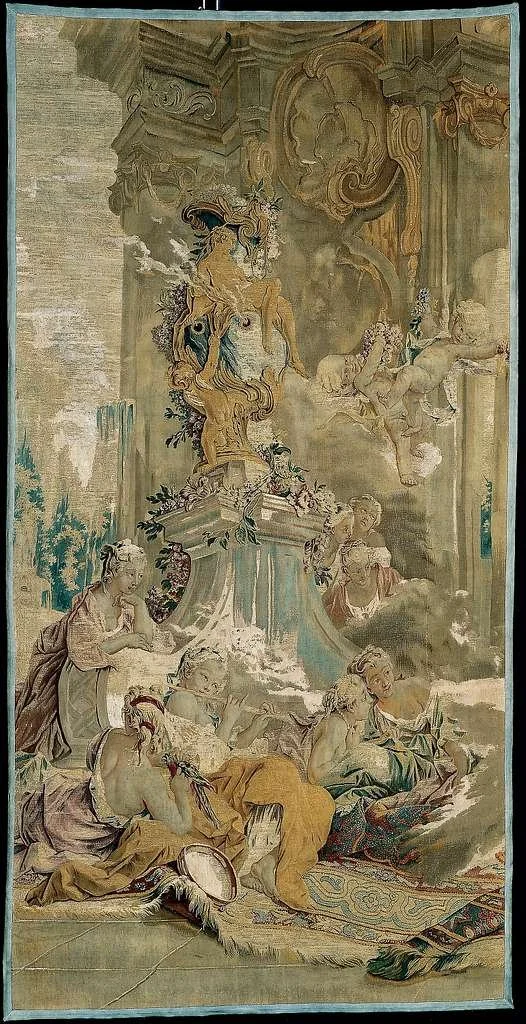
Curiosity, trust, and the desire to possess what should be approached with reverence
Psyche is not forbidden to see Cupid because knowledge is evil. She is forbidden because there are forms of knowledge that become destructive when pursued through fear, suspicion, and the need to possess.
Psyche is told one thing.
Do not look at your husband.
This is, as instructions go, almost designed to produce complications.
She lives in a splendid palace. Invisible servants attend her. At night, a husband comes to her who is tender, loving, and unseen. He tells her that she is safe, that he loves her, and that she must not attempt to discover his identity.
For a while, Psyche accepts this.
Then her sisters arrive.
The sisters see the palace, hear of the invisible husband, and do what jealous relatives have done since the beginning of human history: they become concerned.
They suggest that Psyche’s husband may not be a god or a loving protector at all. He may be a monstrous serpent waiting to devour her. They advise her to arm herself with a lamp and a knife, discover the truth, and act before she becomes the victim of a terrible deception.
Psyche listens.
That night, she lights the lamp.
And sees Cupid.
Knowledge is not the enemy
It would be easy to turn this into a warning against curiosity.
Do not ask questions. Do not investigate. Do not seek knowledge. Trust whatever you have been told, even if the arrangement involves a husband who appears only in darkness and refuses to show his face.
That would be a poor lesson, and Apuleius is too interesting a writer for such a simple one.
Psyche does not fail because she wants to know.
She fails because the form of knowing she chooses is governed by fear, suspicion, envy, and the wish to possess what should first be approached with reverence.
She does not ask Cupid openly.
She does not wait until trust has matured into understanding.
She does not investigate from courage.
She creeps toward knowledge with a lamp and a knife.
The difference matters.
There is a kind of inquiry that seeks truth.
There is another kind that seeks control.
The first asks: “What is this, and how should I respond to it?”
The second asks: “What is this, and how can I make it mine before it can threaten me?”
Psyche’s lamp belongs to the second kind.
The fear beneath the lamp
The sisters’ story gives Psyche a reason to fear. But their counsel does more than inform her. It changes the emotional atmosphere in which she interprets her life.
Before their arrival, Psyche experiences love, abundance, tenderness, and wonder.
Afterward, she experiences concealment as danger.
The same facts remain: an unseen husband, a hidden identity, a palace she did not understand. But the meaning of those facts has been altered by suspicion.
This is one of the oldest and most recognizable features of human life.
A person can be at peace until someone teaches him to fear.
A relationship can be stable until an envious voice supplies a hidden plot.
A symbol can be meaningful until someone insists that its value depends upon a secret no one else knows.
A tradition can be rich until a suspicious mind decides that everything not immediately explained must conceal betrayal.
The sisters do not give Psyche knowledge.
They give her a story that makes fear feel like wisdom.
That is more dangerous.
Seeing Cupid
When Psyche raises the lamp, she does not find a serpent.
She finds the god of love.
The sight is overwhelming. Cupid is beautiful. His weapons lie nearby. Psyche is struck not by relief alone but by desire. She has seen what she wanted to know, and what she knows now changes her.
Then she accidentally wounds herself with one of Cupid’s arrows.
This is a brilliant detail.
Psyche is not merely the object of love. She becomes wounded by love itself.
Her desire intensifies precisely at the moment she tries to make love visible and manageable. The lamp reveals beauty, but it does not give her mastery over beauty. Instead, the encounter unsettles her further.
The philosophical point is clear enough without being forced.
Beauty can awaken the soul.
It can also tempt the soul to possess.
The first response may lead upward.
The second can destroy what it seeks to hold.
The Masonic question of light
The Masonic reader will recognize a useful distinction here.
Light is not the same as exposure.
A person may demand to “know” every symbolic, spiritual, or philosophical matter before he has developed the patience, humility, discipline, or moral readiness to understand it. He may confuse premature possession of information with enlightenment.
But knowledge is not merely having the veil removed.
It is becoming capable of seeing truth without immediately turning it into an instrument of vanity, fear, or control.
The symbol calls for attention. It does not always yield its meaning to impatience.
The working tools call for use. They do not become wisdom merely because they have been named.
Psyche’s lamp gives light. Yet the light is not enough.
The soul must also learn how to look.
The drop of oil
Psyche’s betrayal is completed by accident.
A drop of hot oil falls from the lamp onto Cupid’s shoulder. He wakes. He sees the lamp, the knife, and Psyche’s broken promise. He flees.
This is the cost of knowledge pursued without trust.
Psyche has not merely seen what was hidden. She has wounded what she loved.
The lesson is not that love requires blindness. Blindness is rarely a stable basis for anything.
The lesson is that love requires a kind of vision deeper than suspicion. It requires patience, honesty, courage, reverence, and the willingness to let another person remain other—not merely a problem to be solved or an object to be possessed.
Psyche does not fail because she wants knowledge.
She fails because she wants knowledge without trust, patience, or the discipline to bear what she sees.
Endnotes and further reading
Apuleius, Metamorphoses 4.28–6.24, the narrative of Cupid and Psyche.
On Platonic and philosophical readings of Psyche’s curiosity, see recent scholarship on curiositas and Psyche’s moral development.[4]
On the tale’s philosophical, comic, and satiric complexity, see scholarship on Apuleius’ Cupid and Psyche.[2]
Related reading: “The Sisters Who Explain Everything” and “The Symbol Is Not the Thing.”