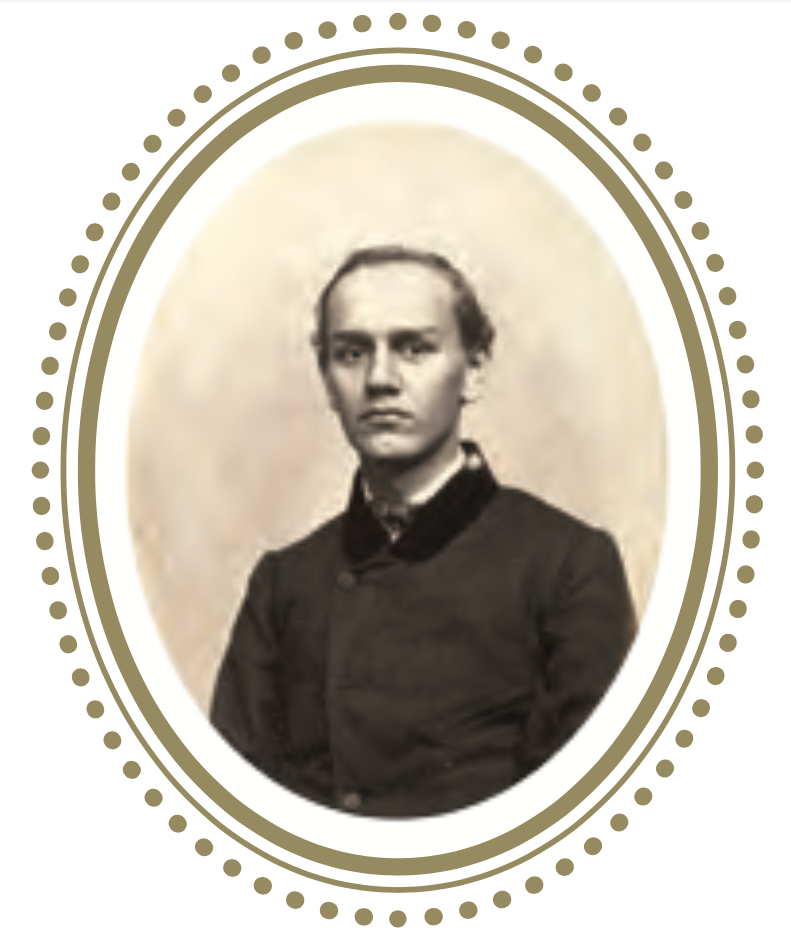
A Rutgers graduate who commanded a New Jersey regiment at Fredericksburg and Chancellorsville, William Remsen Taylor became Astoria's last village president, a public-health pioneer in Long Island City and Master of Advance Lodge No. 635 in 1884 and 1885.
When the members of Advance Lodge No. 635 printed the roll of their past masters in 1913, one entry read simply "Remsen Taylor, 1884–85." The name sat among village officials, aldermen and engineers, and nothing in it hinted at how much one man had packed into a single life. Dr. William Remsen Taylor had commanded a regiment in the Civil War. He was president of the village of Astoria on the day it ceased to exist. He spent the rest of his career trying to keep Long Island City healthy. Raised in Advance Lodge in 1880, he was sitting in its East four years later.
A Monmouth County Son
He was born on February 4, 1840, in Middletown, New Jersey, into a family of physicians. His father, Dr. Edward Taylor, practiced medicine there; his mother was Catherine Louise Forman. His older brother, Edward Forman Taylor, took his degree from Rutgers in 1850 and his medical degree from the University of Pennsylvania, then came home to practice beside their father. William followed his brother to Rutgers and graduated with the class of 1860.
Within two years the country was at war, and both brothers went. Edward was commissioned a surgeon in 1861. At Bull Run he chose to stay with the wounded as the Union army fell back, and so became New Jersey's first prisoner of war. William went into the field as an officer.
The 29th New Jersey
The [29th New Jersey Infantry](Civil War Index - 29th New Jersey Infantry
Civil War Index - 29th New Jersey Infantry 29th New Jersey Infantry in the Civil War - CivilWarIndex.com - Primary Source Material on the Soldiers and the Battles.
was raised in Monmouth County, Taylor's home county. It mustered into federal service at Freehold on September 20, 1862, as a nine-month regiment. Taylor served as its lieutenant colonel and rose to colonel, its second commander after Edwin F. Applegate.
The regiment's service was short and hard. At Fredericksburg in December 1862, four of its companies patrolled the city during the battle. On the night of December 15 the 29th was the last regiment to withdraw, crossing the upper pontoon bridges under cannon fire without losing a man. It endured the miserable "Mud March" of January 1863 and wintered at Belle Plain. In the Chancellorsville campaign that spring, its division made a feint to draw Confederate attention from General Hooker's right. On May 2 the regiment recrossed the Rappahannock under heavy fire and lost seven men killed or wounded. Its term ran out in June, and the regiment was mustered out at Freehold at the end of the month. In all, forty of its men had died in service.
Taylor was twenty-three. For the rest of his life, Astoria knew him as a colonel as well as a doctor.
The Last President of the Village
After the war he settled in Astoria and practiced medicine. The village Stephen Halsey had founded in 1839 was then a place of riverfront estates, ferries and nurseries. In the late 1860s it was being drawn, like its neighbors Ravenswood, Hunters Point and Dutch Kills, toward a single municipal government. Taylor was president of the village of Astoria when it was incorporated into the new Long Island City in 1870. He was the last man to hold that office before it was abolished.
He stayed in public life once the village was gone. In the new city he served as sanitary inspector and as a member of the Board of Health. This was hard work in a place of open ditches, tidal marsh, slaughterhouses, oil works and a population growing faster than its sewers. He was one of the organizers of Astoria Hospital, which opened on Astoria Boulevard in 1892 and moved into a new building on Crescent Street in 1896. He served a term as president of the Long Island City Medical Society. In 1886 he stood as the Republican candidate for mayor of Long Island City and lost.
In the East
Advance Lodge in the 1880s was still young and still recovering. The panic of 1873 had cut its growth sharply. New petitions stopped, brethren could not pay dues and the lodge had to drop members it could no longer carry. Even so, the lodge records from those years show the brethren paying for nursing care when there was no hospital in Astoria to send a sick man to, and covering burial costs when a family could not.
Taylor was raised a Master Mason in Advance Lodge on April 6, 1880. Grand Lodge recorded him as 40 years old, by occupation a doctor. He did not take his degree alone. That same night the lodge also raised Henry Clay Johnson, another 40-year-old, who would go on to become Astoria's postmaster, a State Assemblyman and in his turn Master of the lodge. Two men of the same age took the same degree on the same evening, and both went on to public careers and to the Master's chair.
Taylor came into a lodge whose past masters already included Robert McCoskry Graham, the village president before him. In 1884 the brethren elected Taylor their Master, and they re-elected him for 1885. He followed William K. Moote, Master in 1883. He was succeeded by Edward J. Knauer, who would hold the chair for four years. A lodge that had come through the hard years of the 1870s chose a colonel and physician to lead it. His public work on the hospital, the Board of Health and the medical society followed the same habit of care the lodge had shown in those years.
When the lodge later compiled its own account of members in public life, Taylor appeared prominently on the list. He was set down as village president, sanitary inspector, Board of Health member, an organizer of Astoria Hospital and president of the medical society.
A Tenant of the Homestead
In his later years Taylor rented his Astoria home from the Astoria Homestead Company. That is how he appears in the diary of William Steinway,
the piano maker who followed every development in the village he had transformed. On Sunday, October 4, 1896, Steinway noted between the weather and his visitors that the papers reported the death of "Dr. William Remsen Taylor, tenant of the Astoria Homestead Comp." He had died the day before at his brother's house in Middletown, New Jersey. Rutgers records give the date as October 2. He was fifty-six.
He went home to die in the town where he was born, at the home of the brother who had gone to war with him. Astoria Hospital, which he had helped to found, had opened its new building on Crescent Street only five months earlier. Two years later it closed for lack of funds.
The Colonel's Chair
On the lodge's roll of past masters, the short entry "Remsen Taylor, 1884–85" hides a long career. He commanded a regiment at Fredericksburg, presided over Astoria's last days as a village and gave much of the rest of his career to public health in the city that replaced it. In Advance Lodge he was the brother the members trusted with the gavel twice. The lodge was still finding its feet, and the town still had no hospital.
Endnotes
Grand Lodge of the State of New York membership records, Advance Lodge No. 635: W. Remsen Taylor, raised April 6, 1880, age 40, doctor; Henry Clay Johnson, raised April 6, 1880, age 40. Examined by Brete Murphy.
"Masons of Astoria to Build New Home," Brooklyn Eagle, November 30, 1913, p. 63 (roll of past masters of Advance Lodge No. 635).
Advance Lodge No. 635 history (lodge publication), "The Early Years" and "Members in Public Life," pp. 19–20.
Steven D. Glazer, "Rutgers in the Civil War,"
Journal of the Rutgers University Libraries 66, pp. 91–120: entries for William Remsen Taylor (b. February 4, 1840, Middletown, N.J.; class of 1860; Lt. Colonel and Colonel, 29th N.J. Infantry; d. October 2, 1896) and Edward Forman Taylor (class of 1850; Surgeon, 3rd N.J. Militia and 1st N.J. Infantry). 5. "29th New Jersey Infantry,"
Civil War Index, from The Union Army (1908); "29th New Jersey Infantry," from Frederick H. Dyer, A Compendium of the War of the Rebellion. 6. "Descendants of Wolphert Gerretse Van Kouwenhoven: Col. William Remsen Taylor,"
RootsWeb (parentage). 7. William Steinway Diary, [October 4, 1896](October 4, 1896 | The William Steinway Diary: 1861-1896, Smithsonian Institution
October 4, 1896 | The William Steinway Diary: 1861-1896, Smithsonian Institution The Smithsonians National Museum of American History is engaged in a long-term project to create the first publicly accessible, annotated online edition of William Steinways Diary.
-Smithsonian National Museum of American History. 8. "Queens, New York: Mayors of Long Island City,"
The Political Graveyard (1886 mayoral candidacy). 9. "History of Mount Sinai Queens,"
Mount Sinai Health System (Astoria Hospital, 1892–1898). 10. J. S. Kelsey, History of Long Island City, New York (Long Island Star Publishing Co., 1896), Library of Congress.
Related reading: Henry Clay Johnson · Robert McCoskry Graham · Edward J. Knauer · Charles Cranfield · Advance Lodge No. 635 History
← Julius von Hunerbein: Prussian Officer Who Mapped Long Island City | Advance Lodge No. 635 Members Directory | One Lodge, Six Charters: Start Here
