The Underworld Is a Moral Archive
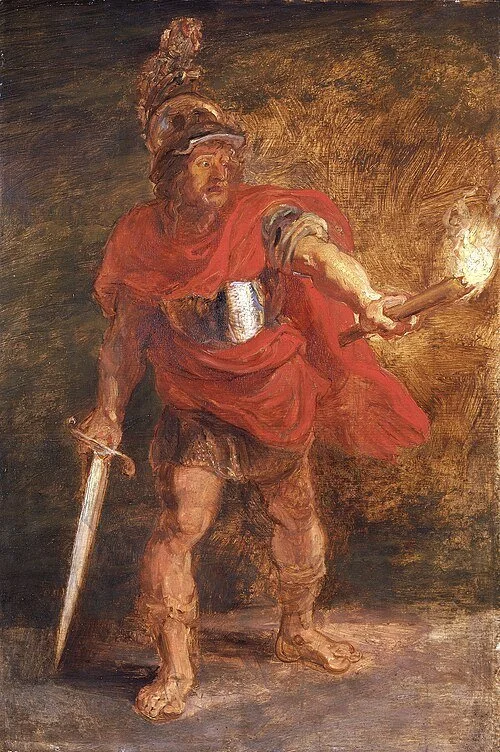
The dead remember what the living prefer to simplify
Aeneas meets the unburied, the prematurely dead, the betrayed, the warriors, the unjustly punished, the guilty, and the future-born. Virgil’s underworld remembers what the living would rather turn into a simpler story.
The underworld in Virgil is crowded.
There are infants who died before they could live. There are people condemned unjustly. There are suicides. There are those who died for love. There are warriors. There are the guilty. There are the blessed. There are people waiting to drink from Lethe and return to life.
The dead are not one anonymous mass.
They are particular.
They carry stories.
They bear consequences.
They remember.
This makes the underworld a moral archive.
An archive is not merely a storage room for old papers. It is a place where the past refuses to stay flat. Names become people again. Official stories acquire complications. Achievements reveal costs. Institutions disclose what they hid. The dead, who cannot be managed by public relations, preserve the record.
Aeneas descends into this archive.
He finds that the past is not finished simply because the living have moved on.
The unburied and the forgotten
One of the first figures Aeneas encounters is Palinurus, his helmsman.
Palinurus fell from the ship and died before reaching Italy. He has not received proper burial. He remains on the wrong side of the river, unable to cross fully into the realm of the dead.
His story is not grand in the way of kings and heroes.
That is why it matters.
The founding of a city depends not only on famous leaders but on sailors, workers, soldiers, servants, builders, messengers, and people whose names may survive only because a poet briefly remembers them.
Palinurus represents the forgotten contributor.
Every institution has them.
The person who kept records.
The one who opened the building.
The one who made the calls.
The one who taught quietly.
The one who gave money when no one knew there was a need.
The one who maintained the structure while others received recognition.
The underworld remembers them.
This is an important lesson for a lodge historian, a local historian, and anyone who studies civic life. History should not become a parade of officeholders and public monuments. It should preserve the hidden labor without which the visible achievements would not exist.
The dead complicate the story
Aeneas meets Deiphobus, a Trojan prince horribly mutilated after the fall of Troy. He meets warriors from both sides of the conflict. He meets the victims of love and betrayal. He meets souls whose appearances reveal the violence hidden behind heroic narratives.
The epic does not permit Aeneas to see the Trojan War as a clean page of glory.
The dead make that impossible.
This is what a moral archive does.
It complicates triumph.
It asks who paid.
It asks what was lost.
It asks whose story was not told because the official version had already found its hero.
A person who enters the archive honestly will not emerge with a simpler past.
He will emerge with a more responsible one.
The moral work of remembering
Memory is not neutral.
It can become nostalgia, grievance, propaganda, sentimentality, or self-congratulation. Communities often remember what flatters them and forget what troubles their preferred image.
Virgil’s underworld resists this.
The dead cannot be reduced to convenient symbols. They remain witnesses.
Dido remains wounded.
Palinurus remains unburied.
Deiphobus remains mutilated.
The children remain dead.
The guilty remain judged.
The future remains unborn.
Aeneas must pass among all of them before he can receive his vision of Rome.
This order matters.
The future city cannot be understood without confronting the moral cost of the past.
The historian’s underworld
The work of local history often resembles this descent.
One enters archives, newspapers, cemetery records, minutes, photographs, maps, deeds, old directories, family papers, and faded institutional histories. At first there are names. Then the names become people.
A building becomes a site of labor, aspiration, exclusion, accident, celebration, conflict, migration, and memory.
A lodge becomes more than a charter date and a list of Masters. It becomes a group of people who gathered, struggled, served, argued, built, moved, merged, lost members, gained members, responded to war, depression, urban change, death, and the quiet demands of fellowship.
The archive is not the underworld.
But it shares the underworld’s moral demand.
Do not simplify the dead.
The Masonic archive
A lodge’s history should not be merely ceremonial.
It should preserve service, sacrifice, hard decisions, losses, charity, architectural change, community involvement, and the names of people whose work did not place them in the center of the photograph.
This does not mean turning history into a ledger of grievances. It means refusing to make memory dishonest.
The underworld is where every simplified story becomes complicated again.
A good historian brings some of that honesty back to the living.
Endnotes and further reading
Virgil, Aeneid VI.325–476, on the unburied, the prematurely dead, suicides, victims of love, and warriors.
Virgil, Aeneid VI.337–383, on Palinurus.
Virgil, Aeneid VI.494–547, on Deiphobus and the moral memory of Troy.
Servius, commentary on Aeneid VI, for late-antique interpretive traditions.
Related reading: “The City Is a Memory Machine” and “The Builders We Never See.”