Before the Fleece
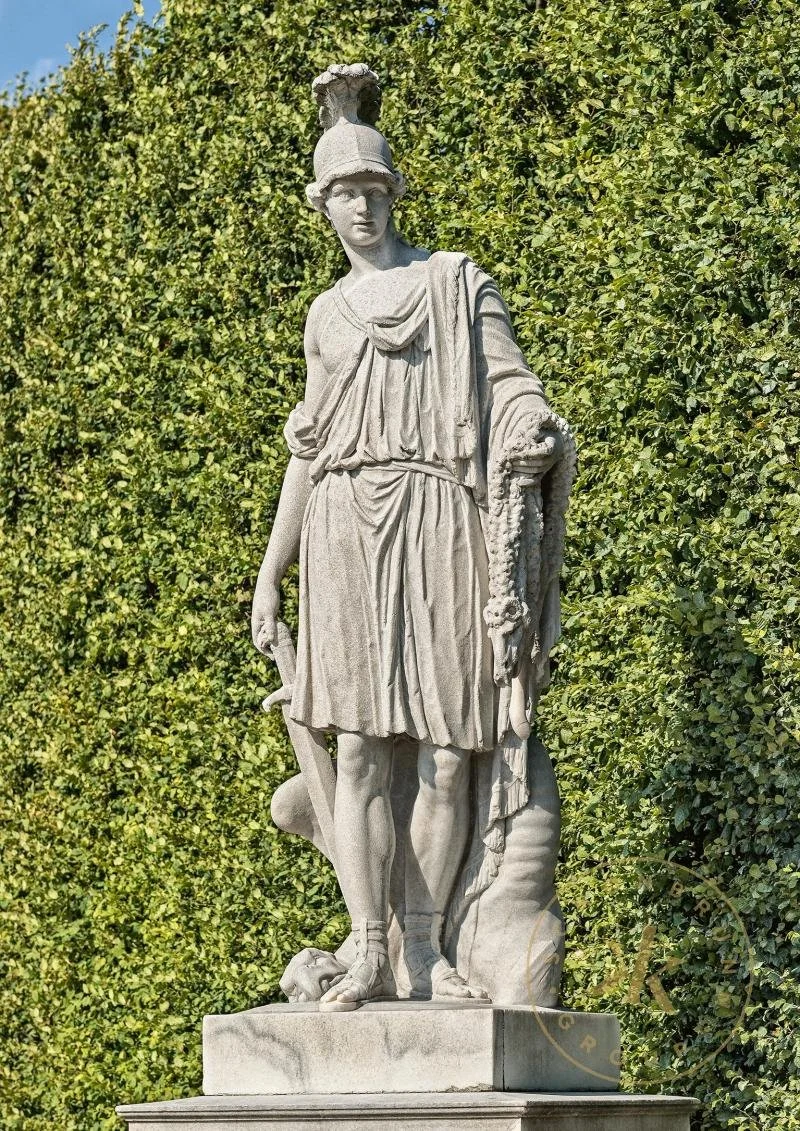
Jason and the Burden of an Inherited Task
Jason does not set out because he has an adventurous idea for a voyage. He sets out because a usurping king gives him an impossible assignment. The first lesson of the Argonautica is that maturity often begins with work one did not choose.
Jason begins with a problem that has not gone out of fashion: someone else has made a mess, and now it is his turn to deal with it.
His father, Aeson, is the rightful ruler of Iolcus. Pelias, Aeson’s half-brother, has seized the throne. Jason grows up away from the court, traditionally under the instruction of the centaur Chiron, then returns as a young man to claim what has been taken from his family.
He arrives wearing one sandal.
This is not a fashion choice.
On the way to Iolcus, Jason has helped an elderly woman across the river Anaurus. The woman is Hera in disguise, and Jason loses one sandal in the crossing. Pelias, already warned by an oracle to beware a one-sandaled man, sees him and understands that his problem has arrived wet, polite, and slightly underdressed.
Pelias does not hand back the kingdom.
He sends Jason to Colchis for the Golden Fleece.
This is not a job offer. It is an elegant attempt at murder.
The one-sandaled man
The missing sandal matters because heroic stories often announce a life through a sign.
Oedipus has swollen feet. Achilles has his vulnerable heel. Odysseus carries the scar by which he will later be recognized. Heracles has divine parentage and an alarming childhood. Jason has one sandal.
It is almost reassuring.
The sign does not make Jason a finished hero. It makes him visible to circumstance. He is marked not by perfection but by an act of decency: he helps a stranger across a river, and the act costs him something small.
This is a better beginning than most people receive.
Jason does not become significant because he has already mastered himself. He becomes significant because the demands of life have found him. The prophecy, the stolen throne, Pelias’ fear, Hera’s favor, and the impossible journey all gather around him before he can reasonably claim to be prepared.
That is often how adulthood works.
A person does not wake up one morning with a ceremonial announcement: You are now equal to the task.
The task arrives first.
A family history may need repair. A community may need service. A workplace may need someone willing to act responsibly. A promise may need to be kept. An institution may have failed. A parent may become ill. A younger person may need guidance. A longstanding injustice may become impossible to ignore.
The mature person is not always the one who chose the burden.
Sometimes he is simply the one who stopped pretending it belonged to someone else.
Pelias and the impossible assignment
Pelias’ command is deliberately impossible.
The Golden Fleece hangs in a sacred grove in Colchis, at the distant eastern edge of the Greek world. It is guarded by a sleepless dragon. Its owner, King Aeëtes, is not waiting by the harbor with a polite exchange policy. The route is dangerous, the destination hostile, and the object itself bound up with older stories of kingship, exile, sacrifice, and divine favor.
Pelias chooses the Fleece because it allows him to appear generous while arranging Jason’s death.
He does not say, “I am afraid of you, so I will kill you.”
He says, in effect, “If you are truly worthy, prove it somewhere very far away.”
This is a familiar political technique. Impossible standards can be useful to people who fear competition. The demand appears noble; the intention is less so.
Jason’s task is therefore not merely adventurous. It is political and moral. He must confront a stolen inheritance without becoming merely another claimant to power. He must accept a mission designed to destroy him without allowing Pelias to define his character.
The Fleece becomes a test not simply of daring, but of fitness.
The work we do not choose
There is a shallow version of self-improvement that assumes every important task begins with personal preference.
Find your passion. Follow your dream. Build your brand. Design a life that never requires you to answer for anything you did not select from a menu.
Jason’s story disagrees.
The defining labor may be inherited.
This does not mean that every inherited obligation is sacred. Some family expectations should be examined, resisted, or refused. Some institutions deserve reform rather than loyalty. Some old burdens are merely old burdens, and no person should make a religion of carrying every damaged piece of the past.
But Jason’s story suggests a harder truth: we become ourselves partly by responding to claims that precede us.
We inherit communities, languages, buildings, histories, promises, debts, wounds, and responsibilities. We do not choose every condition of our lives. We do choose, within limits, whether we will meet those conditions with cowardice, resentment, vanity, intelligence, courage, or service.
Jason cannot erase Pelias’ theft. He cannot make the Fleece nearby. He cannot negotiate the dragon into retirement.
He can decide whether he will accept the work.
That is the beginning of character.
A quest that cannot be completed alone
Jason is not Heracles.
Heracles’ Labors are, whatever else they become in later interpretation, feats of extraordinary solitary exertion. He confronts monsters, tyrants, and impossible physical dangers through a strength that is nearly excessive even by mythic standards.
Jason cannot do this.
He needs a ship. He needs builders. He needs seers. He needs fighters, musicians, navigators, princes, healers, and men capable of rowing when the moment comes. He needs divine assistance. He needs Medea.
His greatness, if it is greatness, must be relational.
This is the central fact of the Argo.
The quest cannot be completed by private excellence.
That gives Jason’s story an unusual relevance to fraternal, civic, and institutional life. The Argo is not a collection of identical men. It is a company of different gifts gathered around a shared undertaking. Heracles has strength. Orpheus has harmony. Argus has craft. Idmon and Mopsus have forms of foresight. The sons of Boreas have speed. Jason has the difficult task of holding the enterprise together.
Leadership, in this sense, is not being the best at everything.
It is learning how to make different strengths serve a common purpose.
The moral authority not yet earned
The Masonic comparison here should remain modest.
Jason was not a Mason. The Argo was not a lodge. The Golden Fleece was not an early version of a jewel, degree, or office.
But the philosophical resemblance is clear enough to be useful.
A man is not judged only by the title he seeks. He is judged by the work he accepts and by the people he learns to work beside.
The Fleece is not given to Jason at the beginning.
Neither is moral authority.
That authority is not inherited merely because his father had a throne. It is not granted by prophecy. It is not secured by a dramatic entrance in one sandal.
It must be tested—in counsel, difficulty, friendship, dependence, temptation, and responsibility.
The story begins before the Fleece because no prize can answer the first question.
What kind of man has accepted the task?
Endnotes and further reading
Apollonius Rhodius, Argonautica 1.1–22, begins the poem with Jason’s voyage under Pelias’ command.[3]
Pindar, Pythian 4, is the major early literary source for Jason’s encounter with Pelias, the one sandal, and the Argonautic mission.
Apollodorus, Library 1.9.16–26, gives a compact mythographic account of Jason and the Argonauts.
Apollonius’ Argonautica is the only wholly surviving Hellenistic epic and the central Greek literary account of Jason’s voyage.[1][4]
Peter Green, trans., The Argonautika (University of California Press, 1997).
Richard L. Hunter, The Argonautica of Apollonius: Literary Studies (Cambridge University Press, 1993).