City Lodge no.408
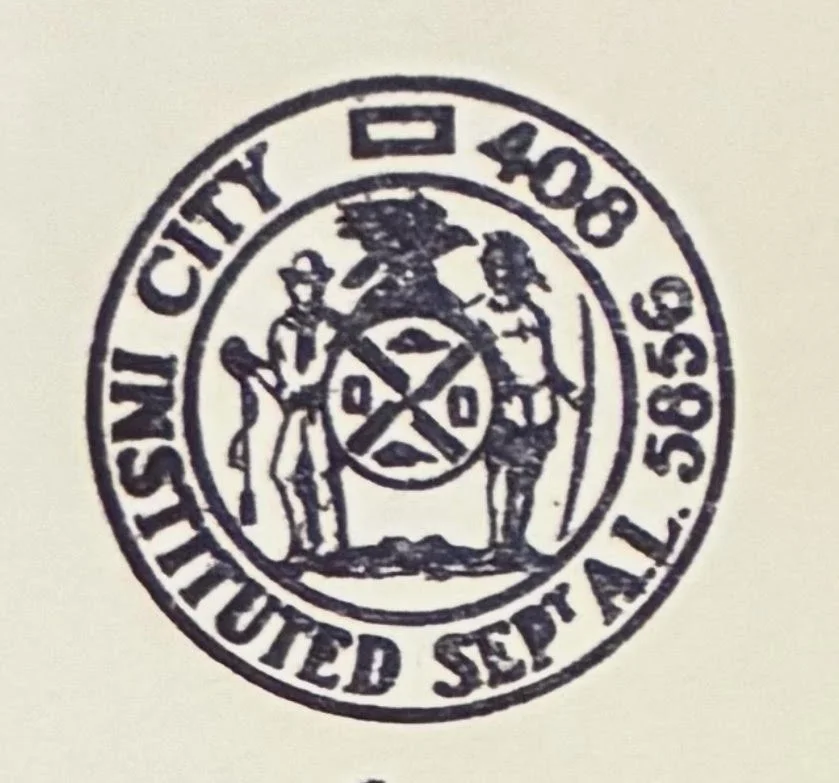
Official seal of City Lodge No.408
From Manhattan Ballrooms to Queens Service
How City Lodge No. 408 Carried the Public Face of Nineteenth-Century Masonry into the Lineage of Advance Service Mizpah Lodge No. 586
City Lodge No. 408 began in Manhattan in 1856, where its members made charity visible through balls, banquets, memorials, presentations, and public ceremony. In 1973, its legacy joined Service Lodge No. 1009—bringing a metropolitan tradition of relief into the lineage of Advance Service Mizpah Lodge No. 586.
On the night of February 15, 1870, City Lodge No. 408 transformed the Academy of Music into a Masonic ballroom.^1
Against a landscape curtain, the lodge’s name appeared in letters formed by gas jets.^2 Chandeliers hung above the stage.^3 At ten o’clock, guests began arriving; by midnight, the polished floor held an animated crowd of dancers.^4 The event had all the outward signs of metropolitan celebration—music, formal dress, prominent guests, theater-box seating, and a glittering setting in one of New York’s most important cultural venues.^5
Yet the purpose of the evening was relief.^6
City Lodge had organized the ball to raise funds for distressed Master Masons in Cuba, where political unrest and conflict had left many brethren in need.^7 The ball was a charity event, but it was also something more distinctly nineteenth-century New York: a public demonstration that fraternity could be elegant, visible, social, and useful at the same time.^8
That combination defined City Lodge No. 408 for much of its history.^9 Founded in Manhattan in 1856, it belonged to a city where public institutions made their values known through dinners, processions, memorial services, presentations, concerts, and large social gatherings.^10 When City Lodge eventually became part of Service City Lodge No. 1009 in 1973, it carried that public-minded tradition into the lineage now preserved by Advance Service Mizpah Lodge No. 586.^11
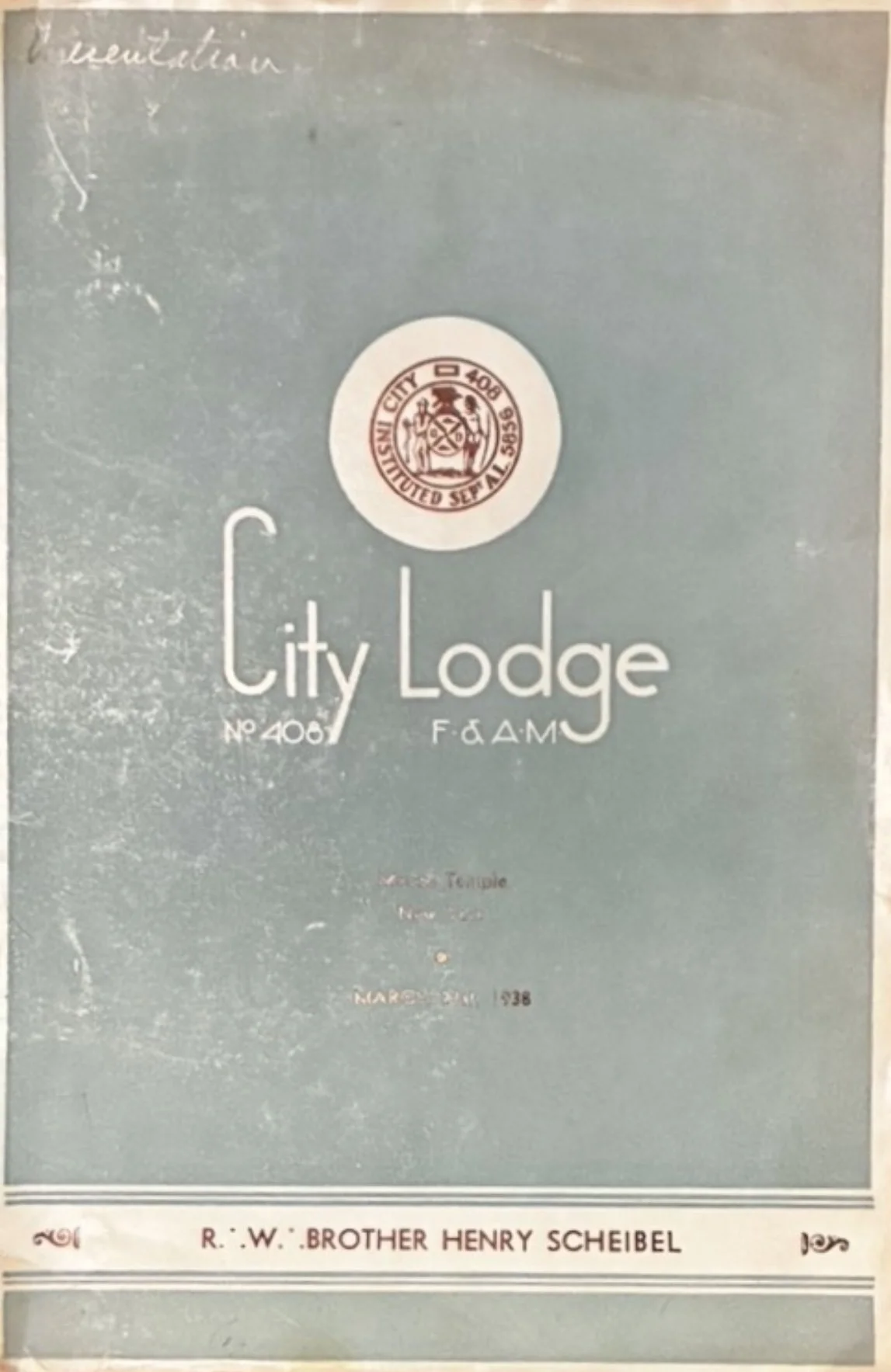
City Lodge No.408 Communication
A Lodge in a Metropolitan City
City Lodge was organized in 1856, at a time when New York was already the nation’s dominant commercial and cultural center.^12 Manhattan was dense with businesses, theaters, hotels, political clubs, churches, fraternal organizations, and public institutions.^13 A lodge operating in that environment had opportunities for visibility that were very different from those available in a village, a waterfront hamlet, or a growing Queens neighborhood.^14
The surviving record of City Lodge is filled with the characteristic forms of metropolitan Masonic life: notices in daily newspapers, formal funeral summonses, public presentations, official visits, degree work in major Masonic halls, and dinners at well-known restaurants and hotels.^15
Its members met in a succession of rooms associated with the Masonic geography of Manhattan, including the Corinthian Room at Odd Fellows Hall, the Bleecker Building, and later the Masonic Temple.^16 These locations placed the lodge within the formal social world of the city, but they also connected it to a wider network of charity and mutual aid.^17
The lodge’s notices often appeared beside news of civic affairs, theater, commerce, and politics.^18 In that sense, City Lodge was part of the public texture of nineteenth-century New York.^19
The Cuba Relief Ball
The 1870 Academy of Music ball remains the most vivid example of City Lodge’s public style.^20
The event had been planned for months.^21 Newspaper notices described the need to aid Masons in Cuba, where many brethren faced hardship after the outbreak of the Cuban insurrection.^22 Tickets were offered at five dollars for gentlemen or eight dollars for double admission.^23 The organizers planned elaborate decorations, music, and even a raffle for a costly hand-embroidered Chinese silk spread.^24
The turnout was affected by heavy rain, but the event still drew approximately 100 couples onto the floor and several hundred guests through the evening.^25 Prominent Masons and public figures attended, along with Cuban guests.^26
The details matter because they show how charity was organized in a large nineteenth-century city.^27 A lodge did not simply collect funds in private.^28 It staged an event that invited the public into its charitable purpose.^29 The social spectacle created attention, fellowship, and revenue at once.^30
City Lodge’s approach did not diminish the seriousness of the cause.^31 It gave the cause a form that New Yorkers understood: public, ambitious, and memorable.^32
Funeral Processions and the Duties of Mourning
The public life of City Lodge also included mourning.^33
Newspaper notices repeatedly summoned members to attend the funerals of brethren.^34 The lodge assembled in formal rooms, proceeded to residences, churches, and cemeteries, and paid what the notices called “the last tribute of respect.”^35
These announcements can appear routine to modern readers, but they reveal the depth of the lodge’s obligations.^36 A member’s death was not considered a private family matter alone.^37 The fraternity had a duty to attend, mourn, assist, and demonstrate that the deceased had belonged to a community larger than himself.^38
The notices also reveal the social breadth of City Lodge.^39 Its members included businessmen, public employees, professionals, military men, and men affiliated with other civic and fraternal organizations.^40 When a brother died, the lodge often appeared alongside military companies, trade associations, clubs, religious communities, or other orders.^41
In the nineteenth century, a funeral procession was a public language of respect.^42 City Lodge spoke that language fluently.^43
A City Lodge Honors Its Leaders
City Lodge also expressed esteem through formal presentations.^44
In 1883, the lodge honored its Master, Ex-Judge A. J. Dittenhoefer, after his appointment as a Commissioner of Appeals for the Grand Lodge of New York.^45 The members presented him with a jewel and apron in the Ionic Room of the Masonic Temple.^46
The jewel was elaborate: attached to a broad black silk ribbon, ornamented with gold, a laurel wreath, Masonic symbols, and a diamond.^47 The accompanying apron was white satin with gold, purple, and light-blue details.^48 Its inscription recorded the presentation as a token of appreciation and esteem from City Lodge No. 408.^49
The event may seem ceremonial, but it reflected a serious institutional culture.^50 A lodge recognized service through objects designed to endure.^51 The jewel and apron were not merely gifts; they were portable records of office, achievement, and fraternal regard.^52
Dittenhoefer remained an important figure in City Lodge history.^53 In 1912, when he celebrated his seventy-fifth birthday, the lodge presented him with a silver loving cup.^54 By then, he was identified as the only living charter member of the lodge.^55
His long connection to City Lodge offered a bridge between its early Manhattan years and its later twentieth-century life.^56
National Grief in a Masonic Room
City Lodge’s public role extended beyond its own membership.^57
In September 1881, the lodge had planned a celebration of its twenty-fifth anniversary.^58 The assassination of President James A. Garfield changed those plans.^59 Instead of a festive observance, the lodge held a “lodge of sorrow” in the Ionic Room of the Masonic Temple.^60
The room was heavily draped in mourning.^61 Ex-Judge Dittenhoefer, then Master of the lodge, conducted ceremonies that elaborated upon the Masonic burial service.^62 He delivered a eulogy for Garfield and announced his intention to propose a fund among Masons for a monument at the President’s burial place.^63
The episode illustrates how a city lodge could respond to national events.^64 City Lodge did not treat Garfield’s death as distant political news.^65 It made the national loss part of the lodge’s own ritual life.^66
This was characteristic of the era.^67 Fraternal organizations often served as civic interpreters, offering members a way to express public grief, patriotism, and moral concern through ceremonies that joined personal feeling to national history.^68
Honorary Membership and the Art of Hospitality
City Lodge had a reputation for formal hospitality.^69
In 1875, the lodge surprised Alderman Edward Gilon, then Master of Concord Lodge, by presenting him with honorary membership.^70 Grand Master Elwood E. Thorne delivered the testimonial, after which City Lodge members and their guest adjourned to the Grand Circle Restaurant for a banquet that continued into the early morning.^71
The account is lively, but its meaning is clear.^72 City Lodge treated hospitality as a Masonic art.^73 The lodge knew how to receive guests, honor visitors, celebrate achievements, and connect ceremonial work with convivial fellowship.^74
The same pattern appears throughout its history: a formal presentation followed by dinner; a degree followed by a collation; a memorial observance followed by fellowship; a public event undertaken in support of relief.^75
The lodge’s social life was not incidental to its work.^76 It was one of the ways its work became visible and durable.^77
“A Master of Humanism”
City Lodge remained active well into the twentieth century.^78
In 1936, it hosted a dinner at the Hotel Astor in honor of Jacob C. Klinck, Grand Master of Masons in the State of New York and president of Kings County Savings Bank.^79 The event drew 150 members and guests, including three Past Grand Masters and senior Grand Lodge officers.^80
The principal speaker described Klinck as a “master of humanism,” praising the breadth of his interests and his work in many fields.^81 The phrase is revealing because it captures City Lodge’s enduring sense of what Masonry could represent: not merely ritual proficiency or social connection, but an ethic of humane public service.^82
By this time, Manhattan itself had changed dramatically.^83 The city of the 1850s and 1870s had become a modern metropolis of skyscrapers, subways, expanding boroughs, and new populations.^84 City Lodge continued to adapt, holding dinners, honoring leaders, and preserving the style of fraternal life that had defined it from the beginning.^85
From City Lodge to Service City
In 1973, City Lodge No. 408 consolidated with Service Lodge No. 1009 of Flushing.^86
The union brought together two distinct Masonic histories.^87 City Lodge carried the public ceremony and metropolitan philanthropic style of nineteenth-century Manhattan.^88 Service Lodge brought the practical charity, family fellowship, educational work, and community service of twentieth-century Flushing.^89
The combined body became Service City Lodge No. 1009.^90
The order of the name was fitting.^91 “Service” spoke to the active, useful ideal of the Flushing lodge.^92 “City” preserved the older Manhattan lodge and its long tradition of public Masonic life.^93
In 1982, Service City Lodge joined Geba Lodge No. 954, creating Service City Geba Lodge No. 1009.^94 In 2018, that lodge united with Advance Island City Mizpah Lodge No. 586 to form Advance Service Mizpah Lodge No. 586.^95
City Lodge’s number, 408, no longer appears in the present name.^96 But its inheritance remains.^97
A Manhattan Legacy in Queens
It may seem surprising that a Manhattan lodge founded in 1856 is now part of a Queens lodge meeting in Astoria.^98 But that journey is entirely consistent with New York history.^99
The city has always been a place of movement: people, institutions, neighborhoods, businesses, and communities crossing borough lines and adapting to new circumstances.^100 City Lodge’s path from Manhattan to Flushing, then through Service City Geba and into Advance Service Mizpah, is not a disappearance.^101 It is a continuation.^102
The old Academy of Music ball, the jeweled presentation to Judge Dittenhoefer, the lodge of sorrow for President Garfield, the Hotel Astor dinner for Jacob Klinck—all remain part of the living inheritance of Lodge No. 586.^103
They remind us that Masonic history is not confined to a single building or neighborhood.^104 It travels with the brethren who preserve it.^105
City Lodge No. 408 brought to Advance Service Mizpah Lodge No. 586 a lesson learned in nineteenth-century Manhattan: charity can be public, fellowship can be elegant, and a fraternity can make its values visible in the life of the city.^106
End Notes
Author’s note:
I write as an individual Freemason, historian, and researcher. This article reflects my personal research and interpretation and does not represent an official statement of Advance Service Mizpah Lodge No. 586, the Grand Lodge of New York, or any other Masonic organization.
Image:
Authors private collection
Literary:
Source Notes to come - researchers, feel free to request on my contact page
Related Links
- Back to Advance Service Mizpah 586
- Discover other notable Freemasons of Queens
- Read our overview of the history of Masonic lodges in Queens
- Learn more about Queens history and Freemasonry
- Read about Service Lodge 1009 and Flushing Masonic charity history
- Learn more about Geba Lodge 954 and modern Queens history